


KA1 Mobility Akreditace

2024-2-CZ01-KA210-VET-000266645
Vzdělání pro budoucnost – Elektromobilita, doprava budoucnosti, udržitelná doprava
Erasmus+ odborné vzdělávání a příprava
Klíčová akce 2, Partnerství pro spolupráci
Projekt Erasmus+ Partnerství pro spolupráci poskytuje naší škole prostor pro mezinárodní spolupráci s naší partnerskou školou Odda vidaregåande skule/ Odda upper secondary school v Norsku. S tímto partnerem jsme se rozhodli sdílet svoje zkušenosti a společně vyvíjet nové metodiky pro učební obor Elektromobilita a inovovat tak prostředí odborného vzdělávání a zvyšovat úroveň vzdělávání v jednotlivých evropských zemích.
Po vzájemné konzultaci obou partnerských škol byly stanoveny cíle a výstupy v souladu s hlavními prioritami projektu. Těmi jsou:
- V kooperaci se zahraničním partnerem vytvořit digitální výukové materiály pro vzdělávací program Elektromobilita využitelné v rámci dalších regionů EU, který by pak mohly využívat další školy v rámci sekundárního školství,
- Tvorba vzdělávacích programů (ŠVP, tematické plány) s problematikou elektromobility ve spolupráci s terciárním školstvím (partnerské univerzity v ČR a Norsku) a partnerskými firmami,
- Propojení obou partnerských škol při přípravě projektu Erasmus+ mobilit studentů a zaměstnanců,
- Aktivní spolupráce se zaměstnavateli v regionech, sledování vývoje v oblastech techniky i zaměstnanosti. Spolupráce s partnerskými VŠ,
- Vytvoření Gamebooku v Aj pro Expozici energií,
- Vybudování Expozice energií – interaktivní showroom pro veřejnost a žáky základních škol,
- Realizace konkrétních školních projektů,
- Příprava a realizace E-twinning projektu,
- Vytvoření online prostředí pro umístění elektronických učebních materiálů.
Financováno Evropskou unií. Názory vyjádřené jsou názory autora a neodráží nutně oficiální stanovisko Evropské unie či Evropské výkonné agentury pro vzdělávání a kulturu (EACEA). Evropská unie ani EACEA za vyjádřené názory nenese odpovědnost.
Funded by the European Union. Views and opinions expressed are however those of the author(s) only and do not necessarily reflect those of the European Union or the European Education and Culture Executive Agency (EACEA). Neither the European Union nor EACEA can be held responsible for them.
WP1.1 Kulaté stoly | Round tables
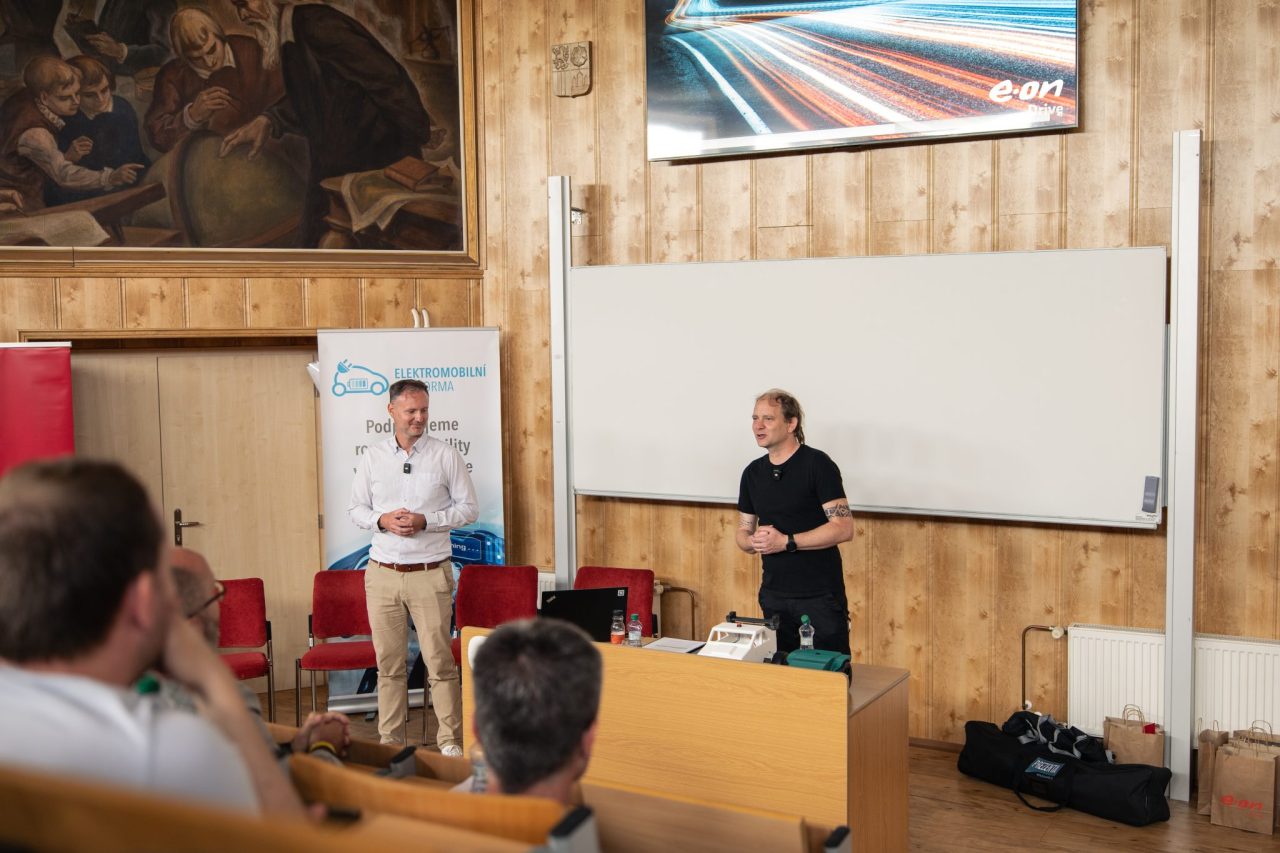
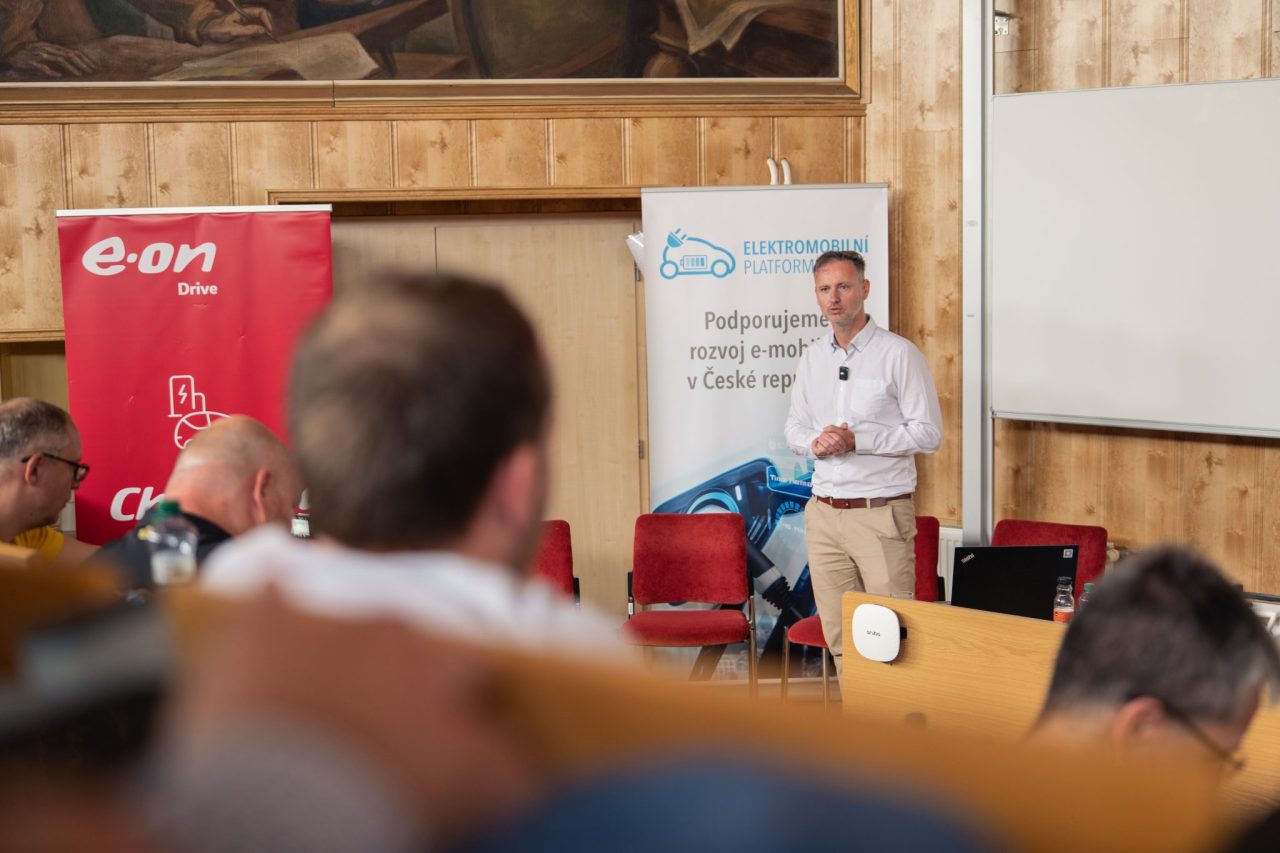
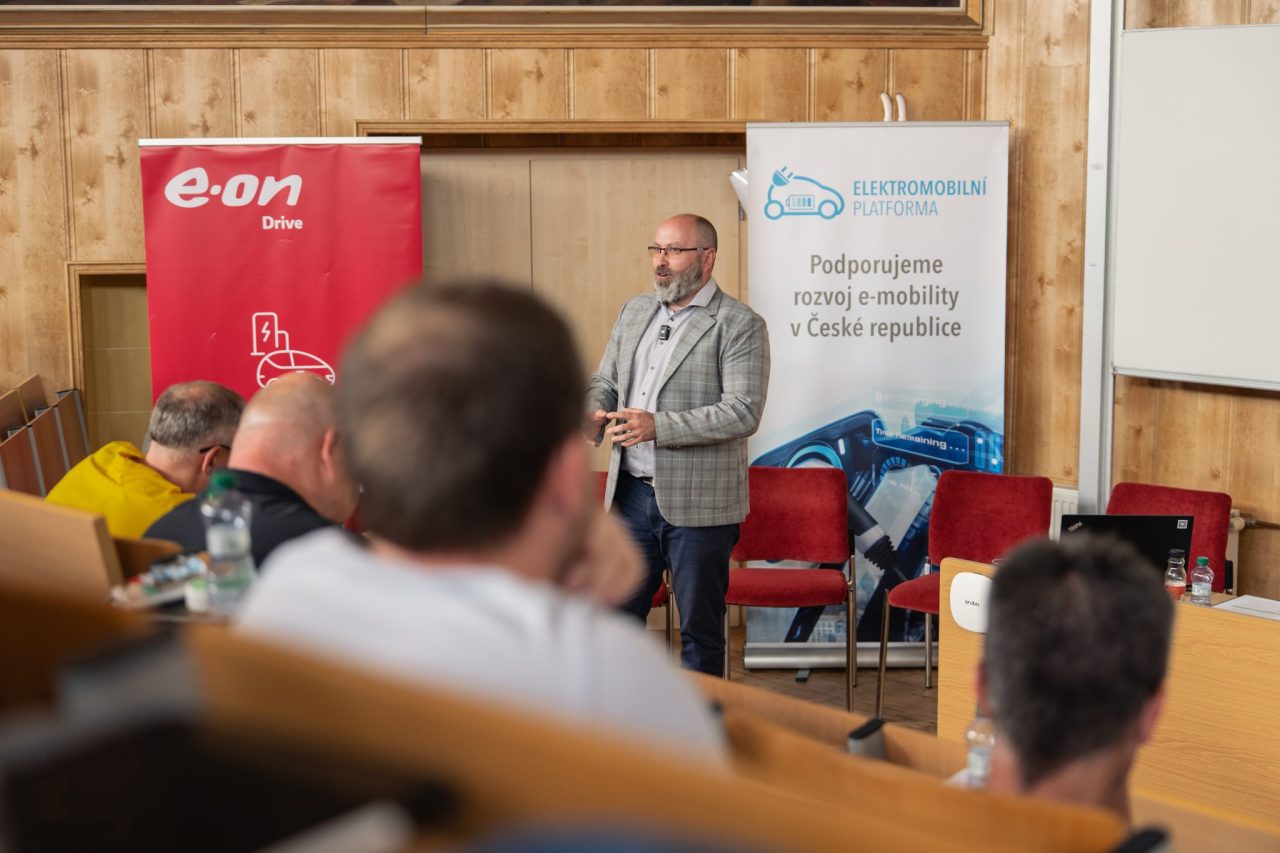
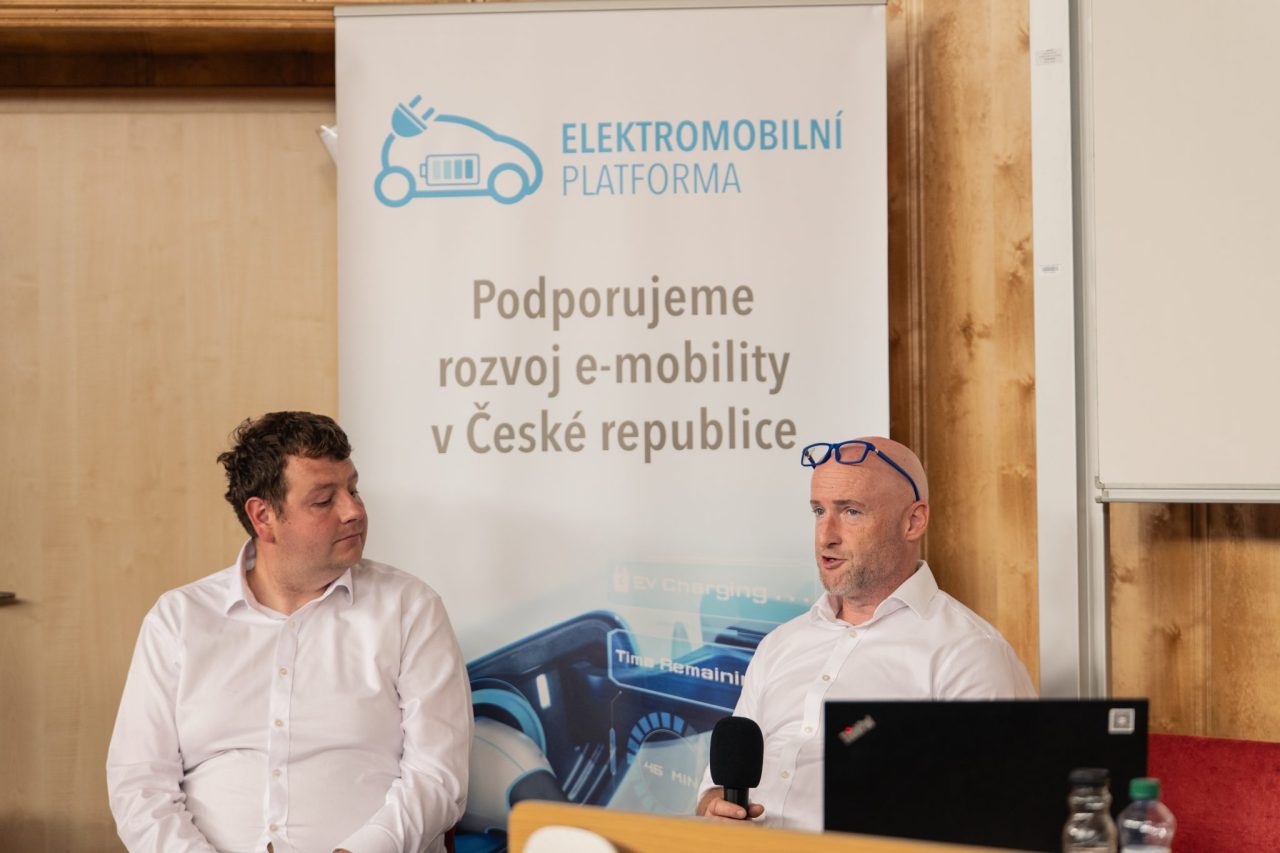
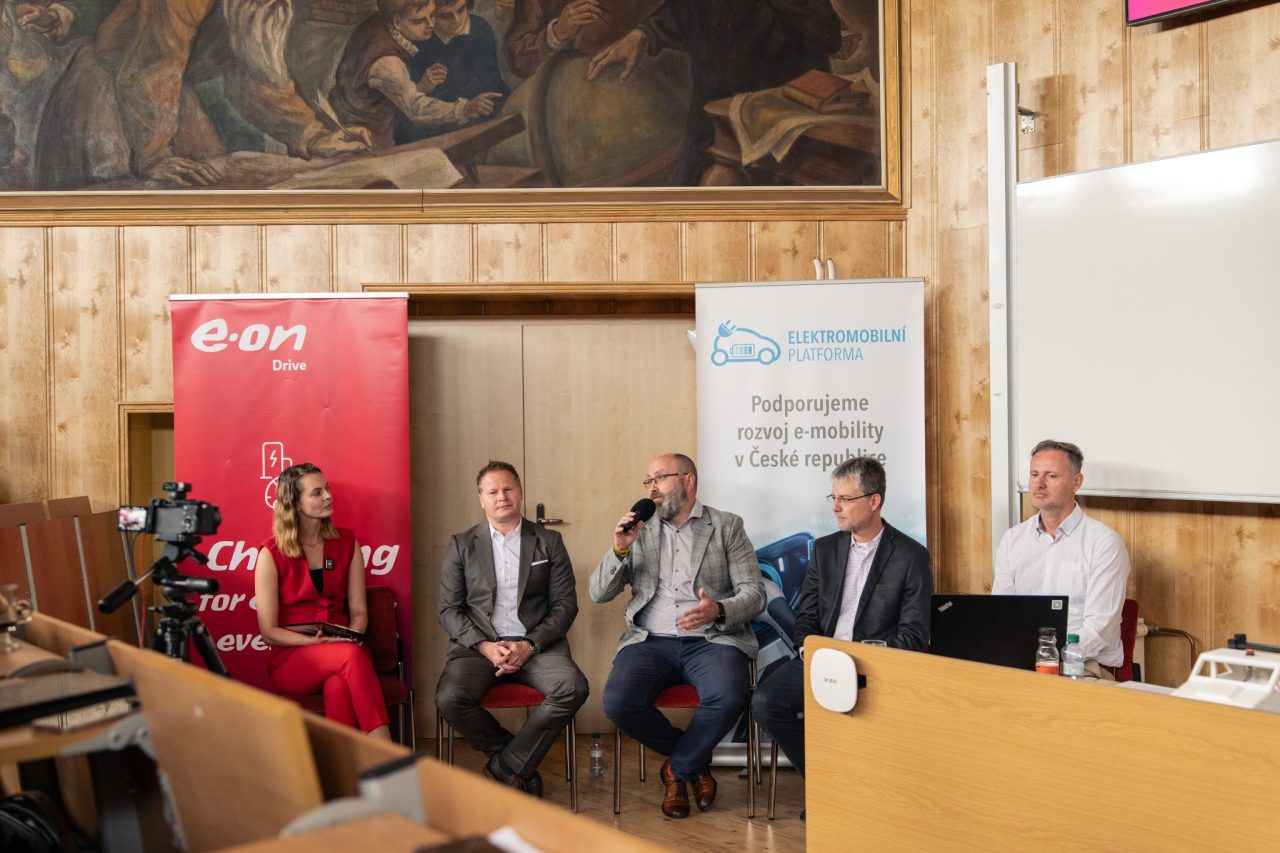
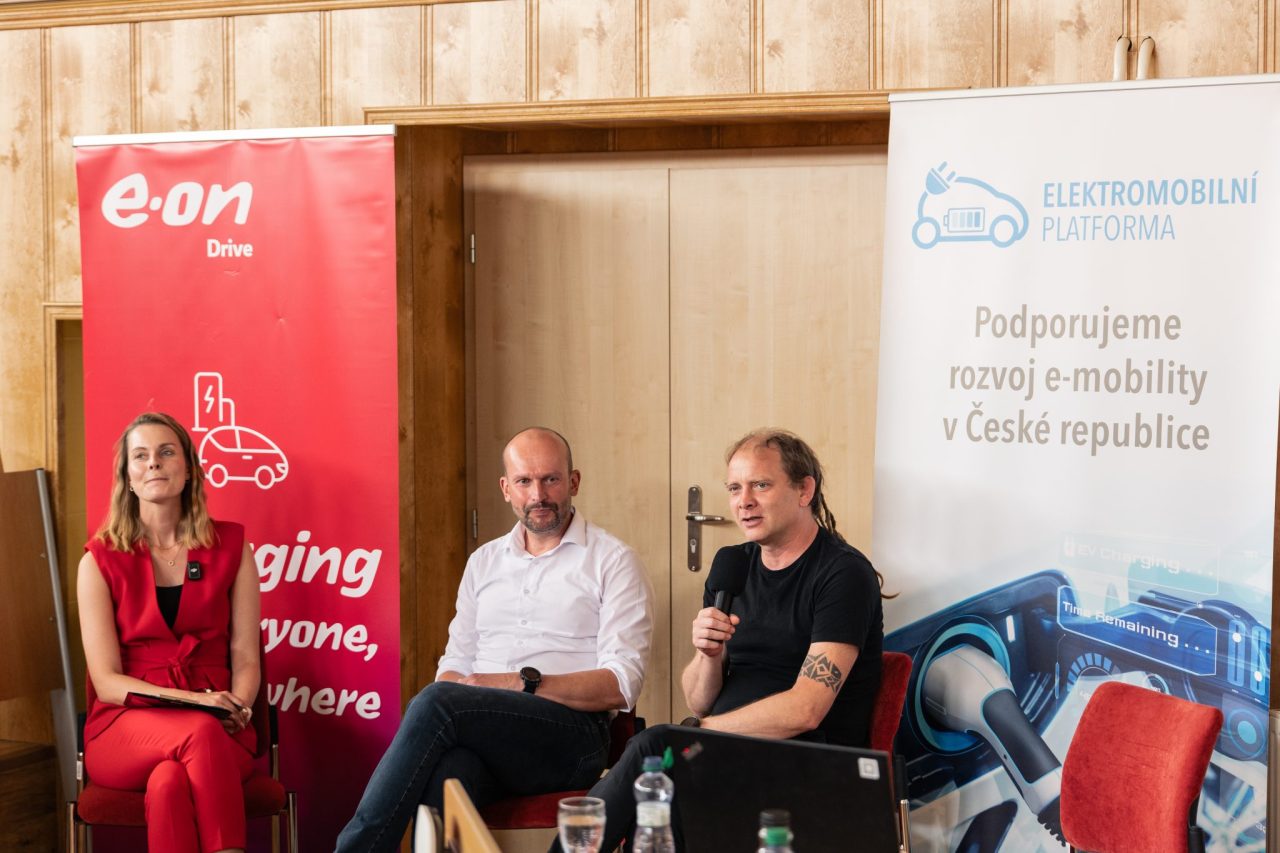
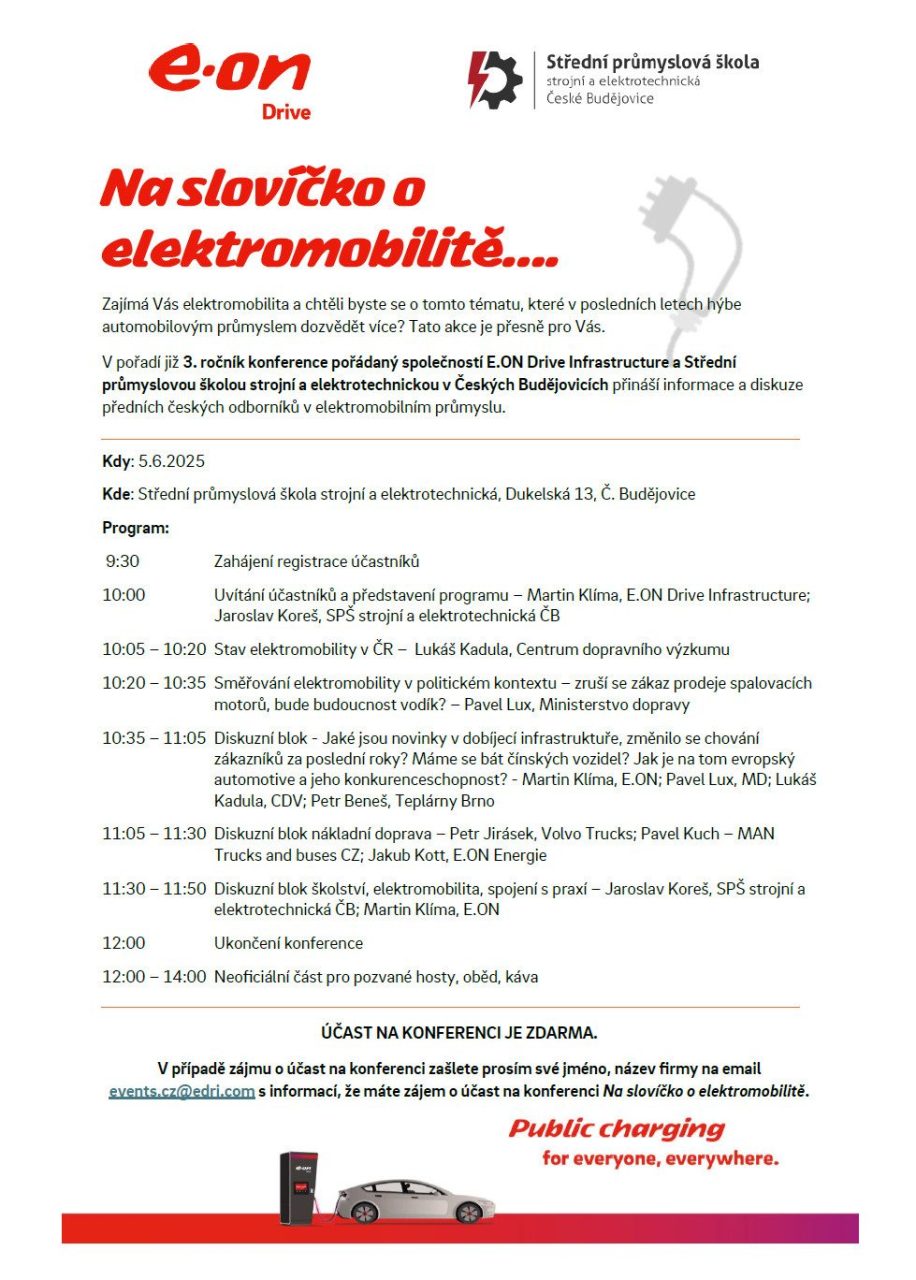
5. 6. 2025 Kulatý stůl – konference „Na slovíčko o elektromobilitě”
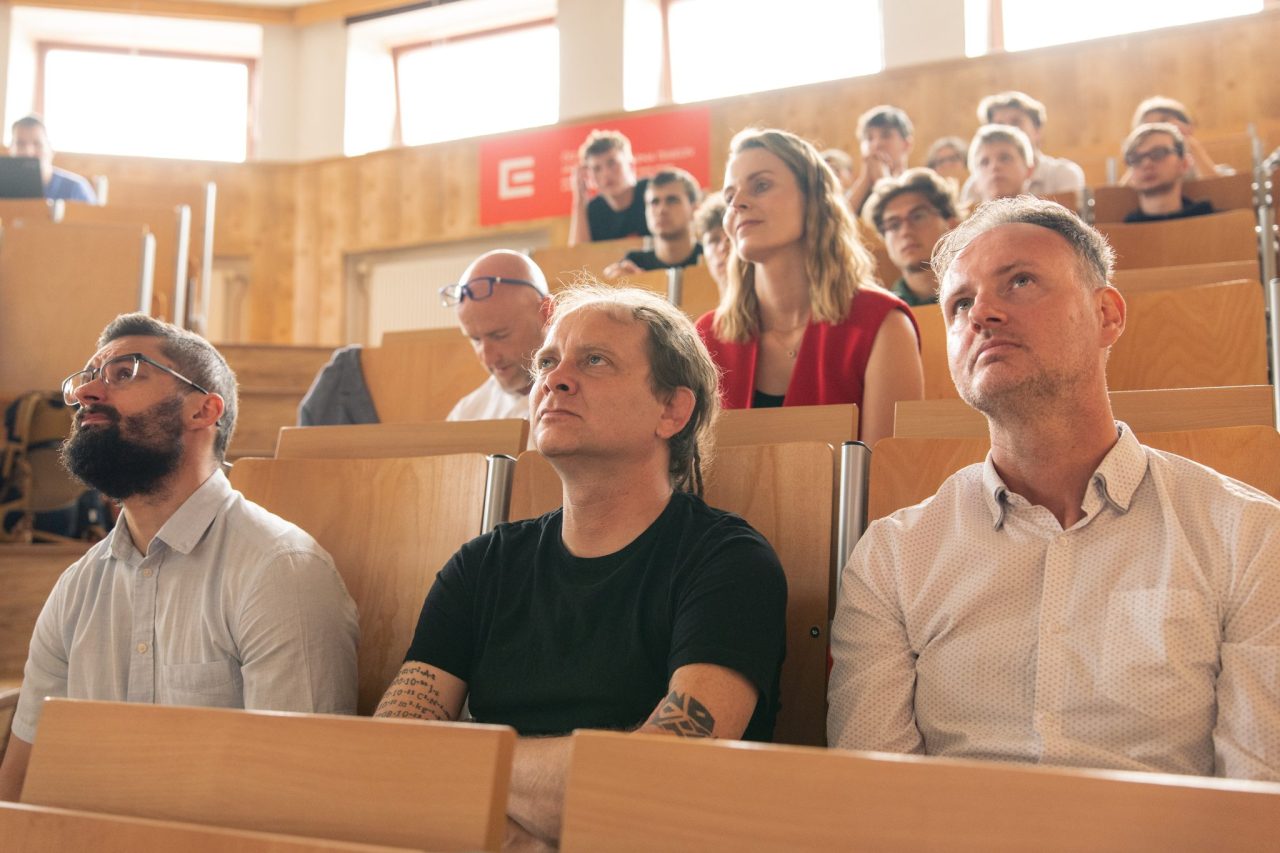
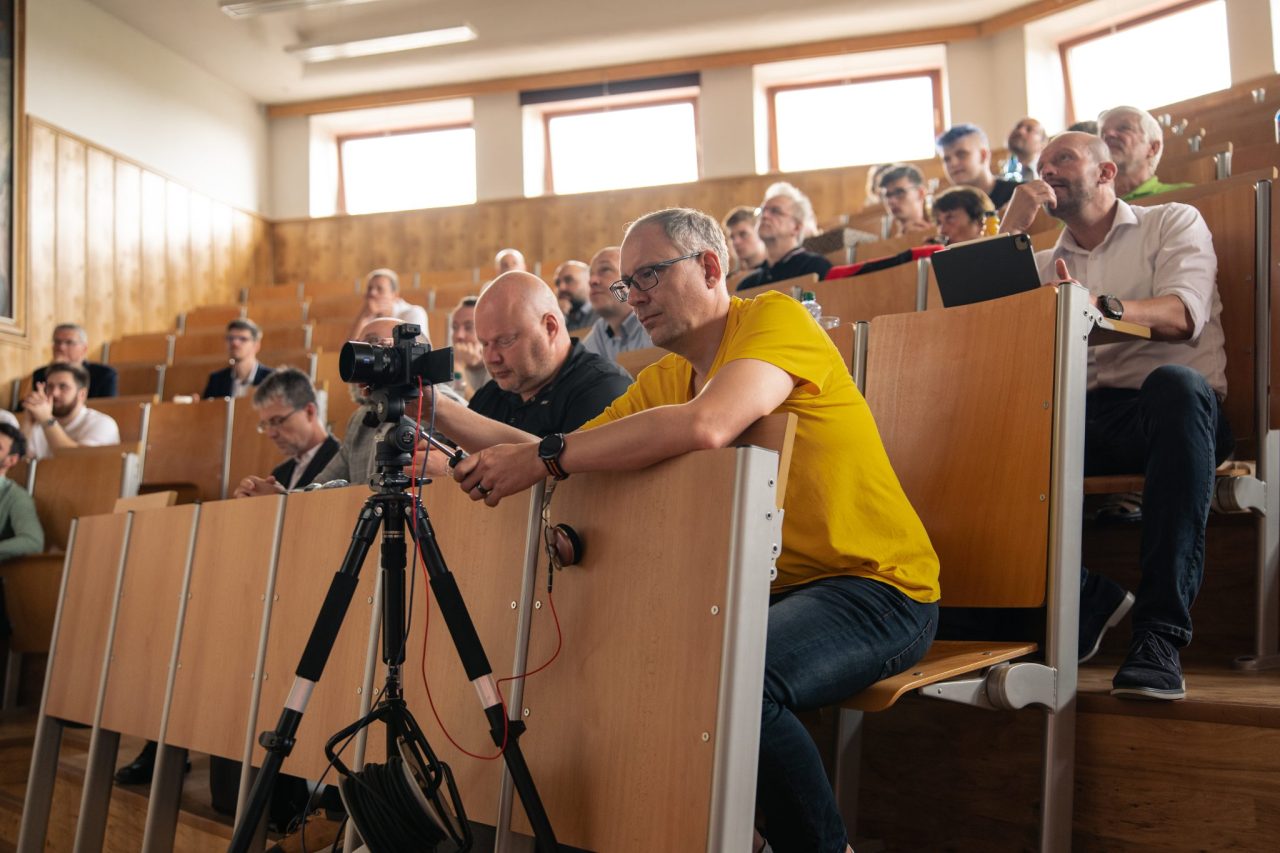
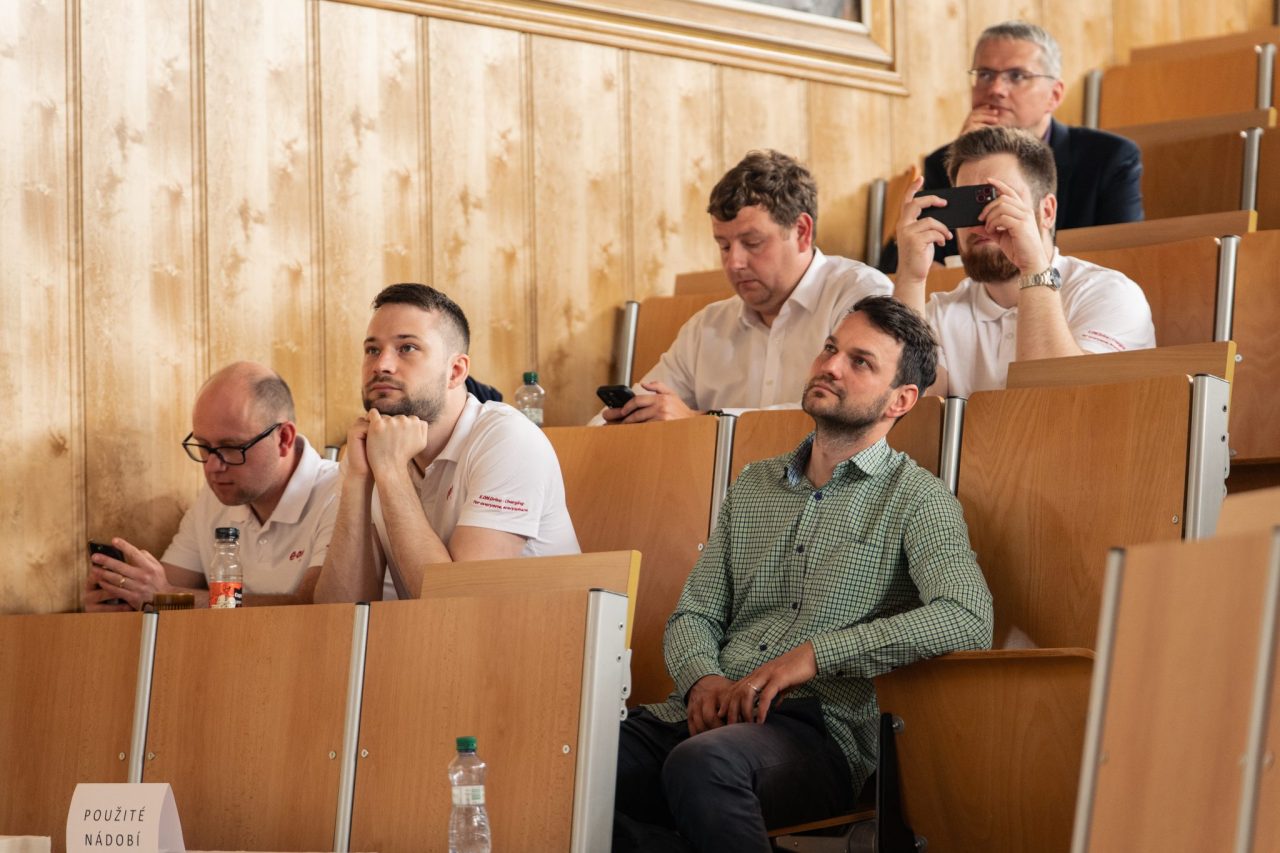
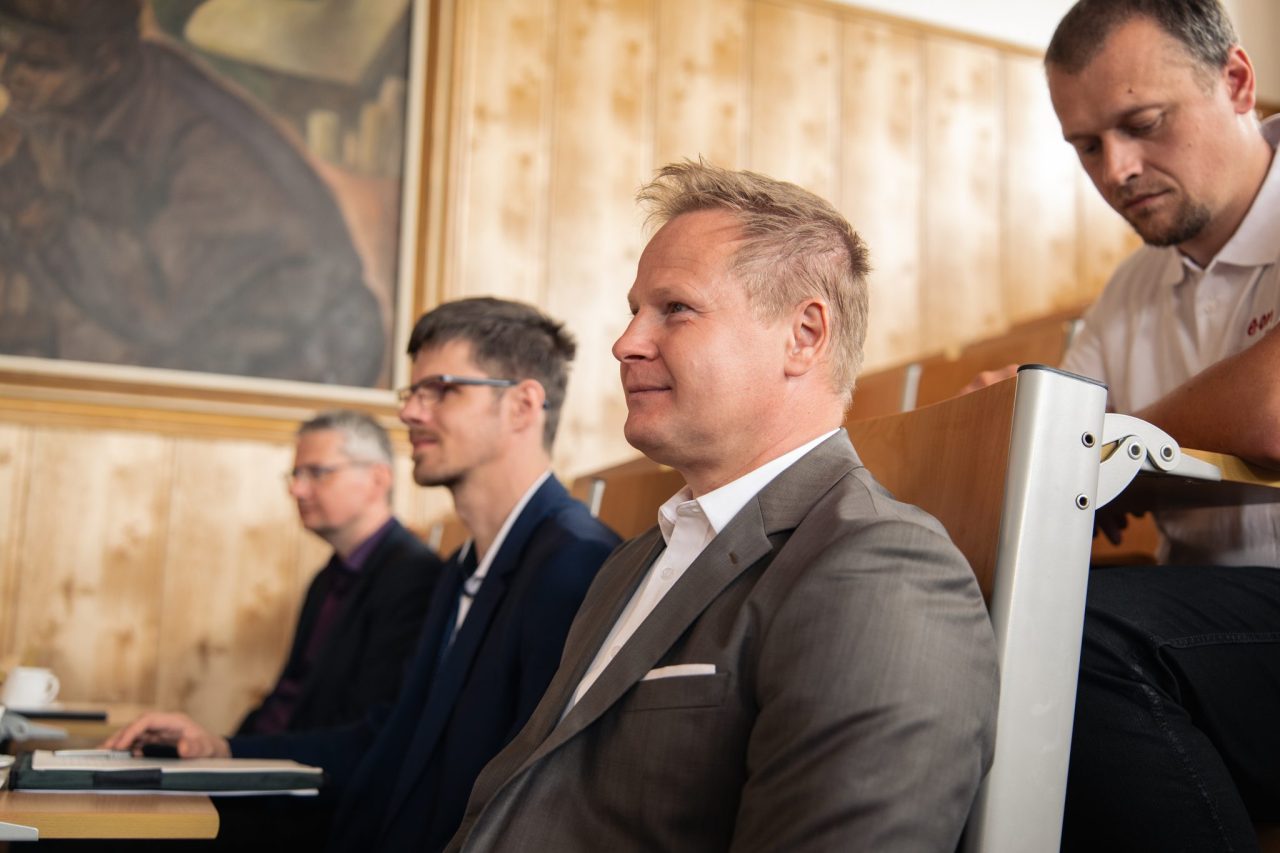
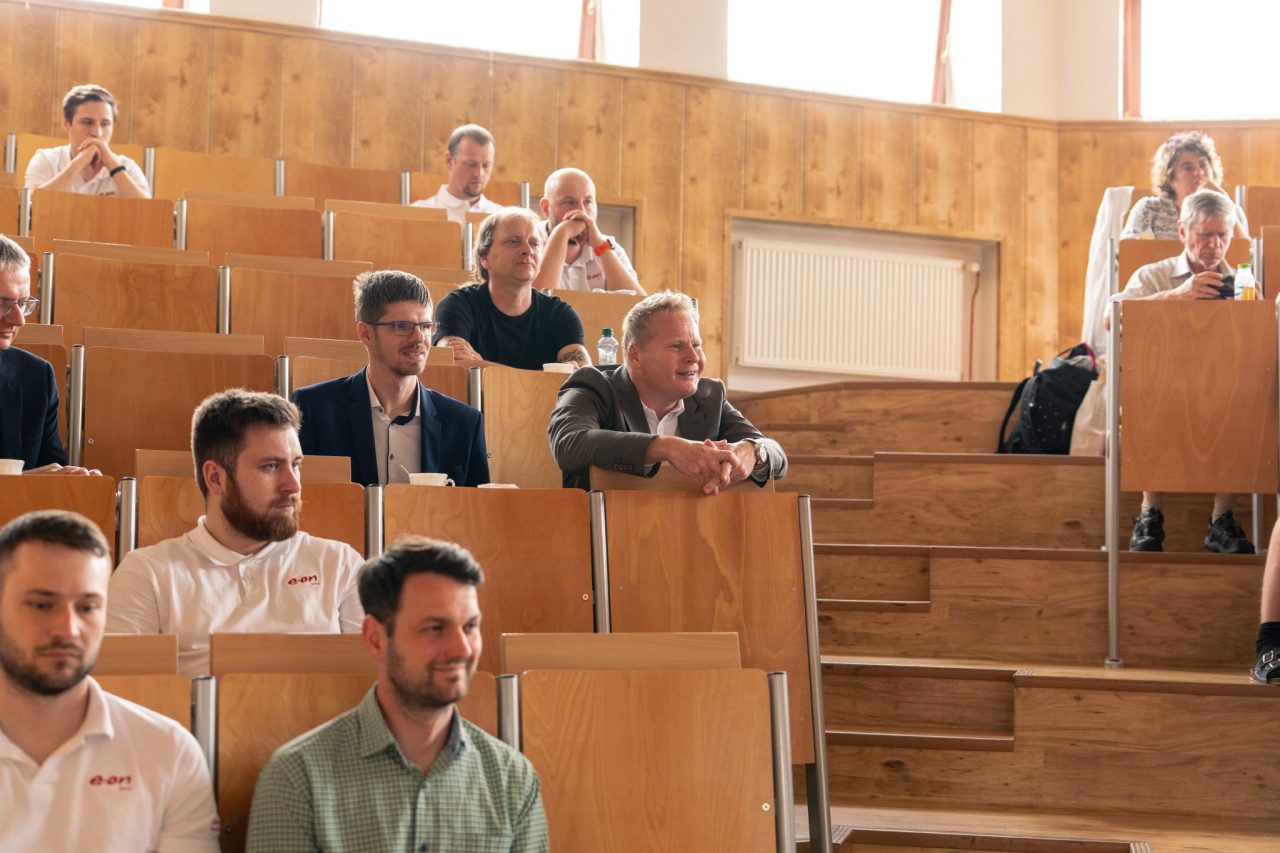
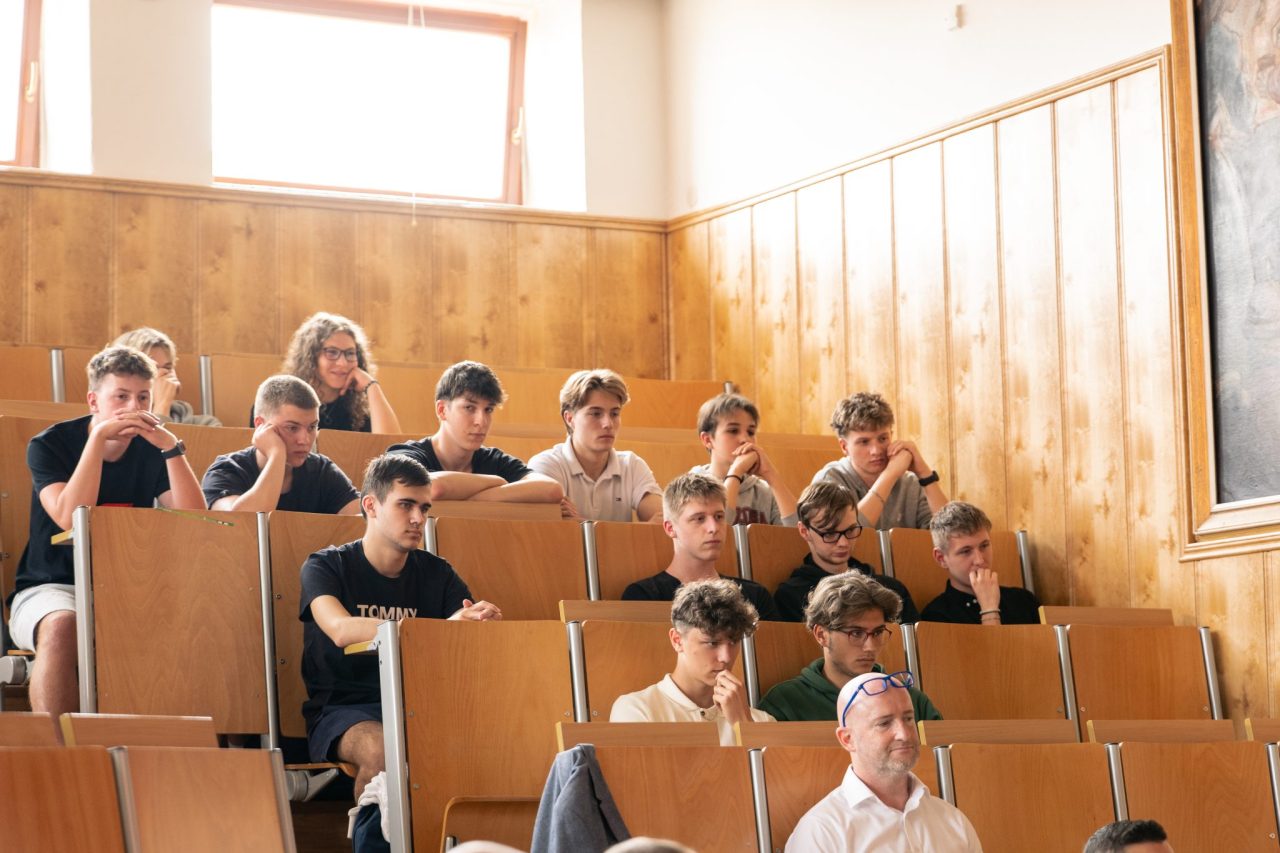
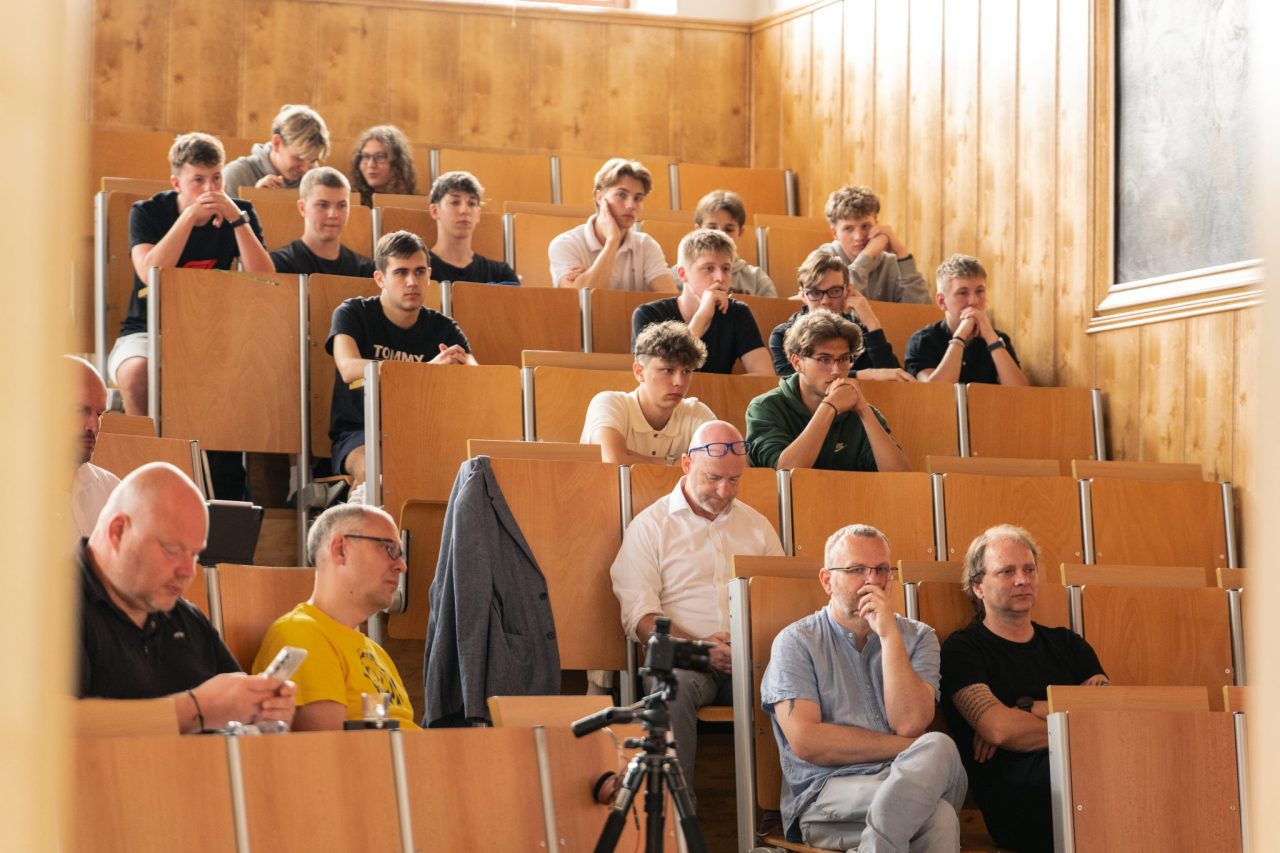
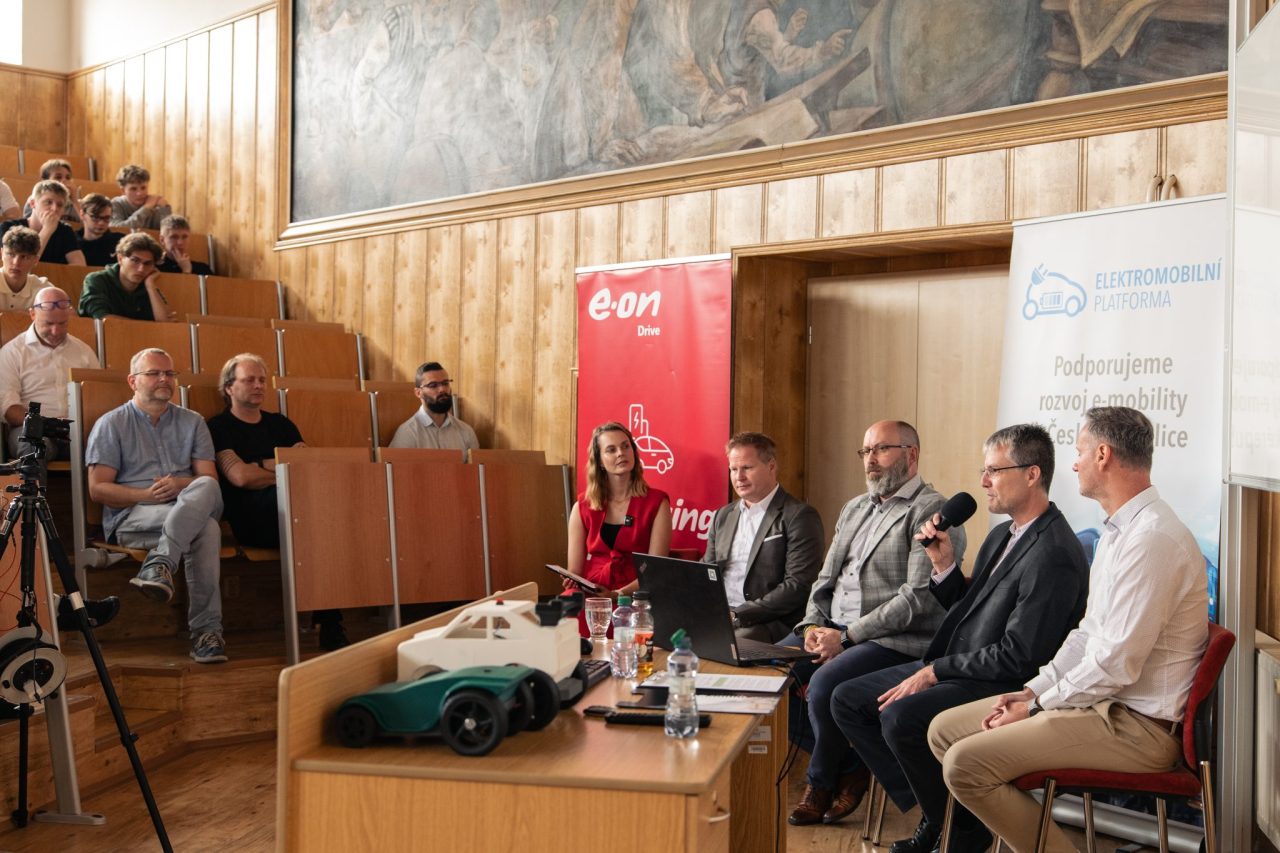
Ve čtvrtek 5. června 2025 se v posluchárně naší školy SPŠ SE konala již třetí konference „Na slovíčko o elektromobilitě…“, která spojila špičkové odborníky s nadšenými studenty a ukázala, kam směřuje automobilový průmysl.
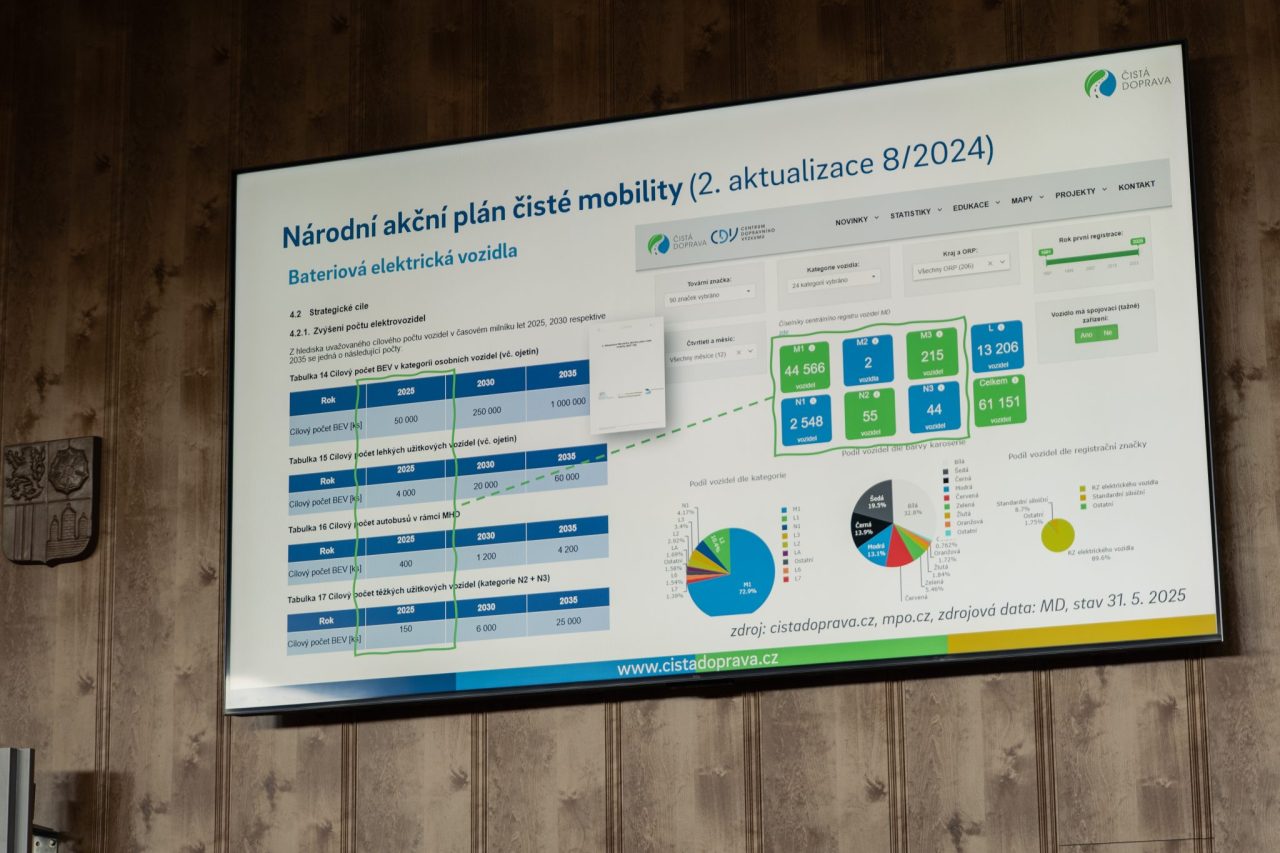
Od 9:30 se posluchárna školy plnila účastníky, kteří se těšili na informace o fenoménu, jenž v posledních letech mění svět dopravy. Se svými příspěvky postupně vystoupili přední čeští experti, kteří se podělili o své vize a data – přednášky řešily aktuální stav elektromobility v České republice, směřování elektromobility v politickém kontextu, novinky v dobíjecí infrastruktuře, výzvy a příležitosti elektrifikace kamionů a autobusové dopravy a v neposlední řadě i spojení školství a praxe v oblasti elektromobility.
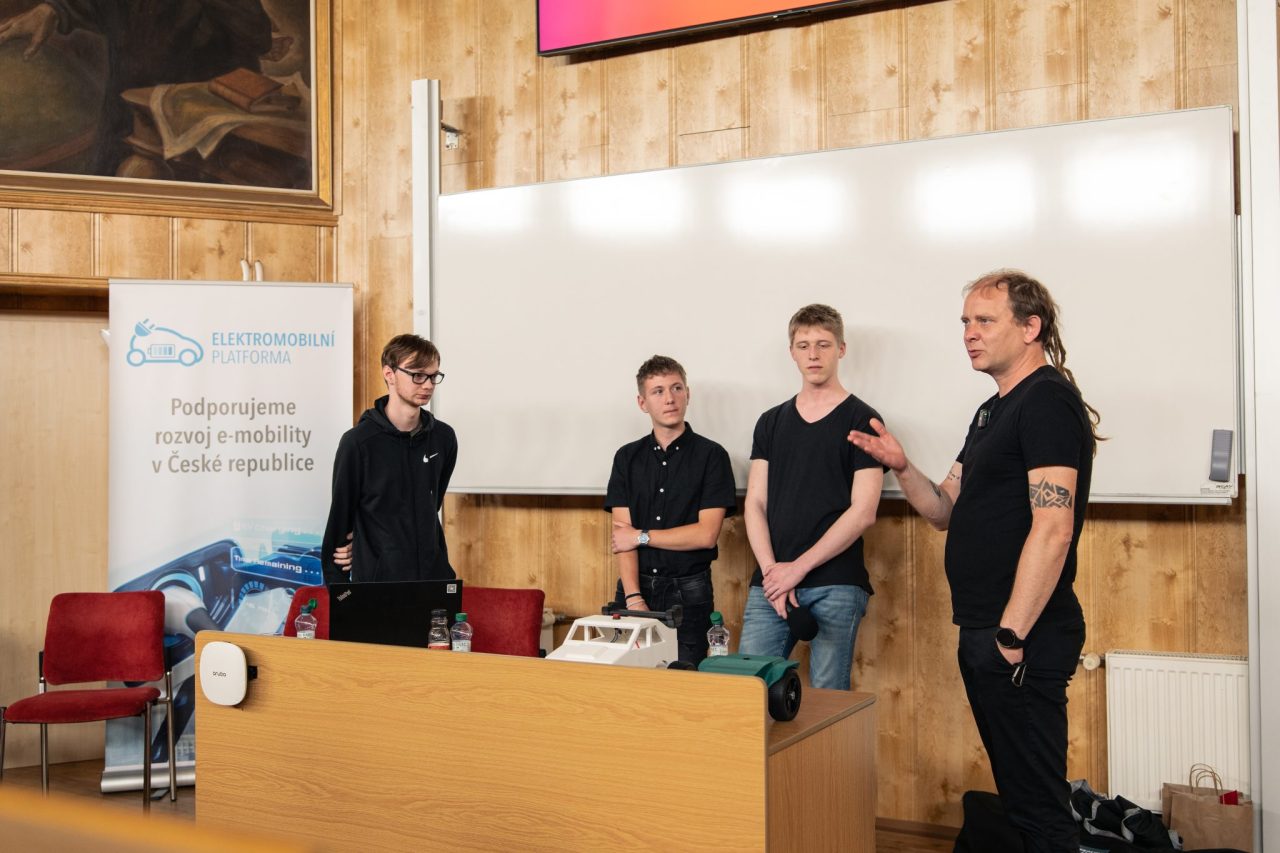
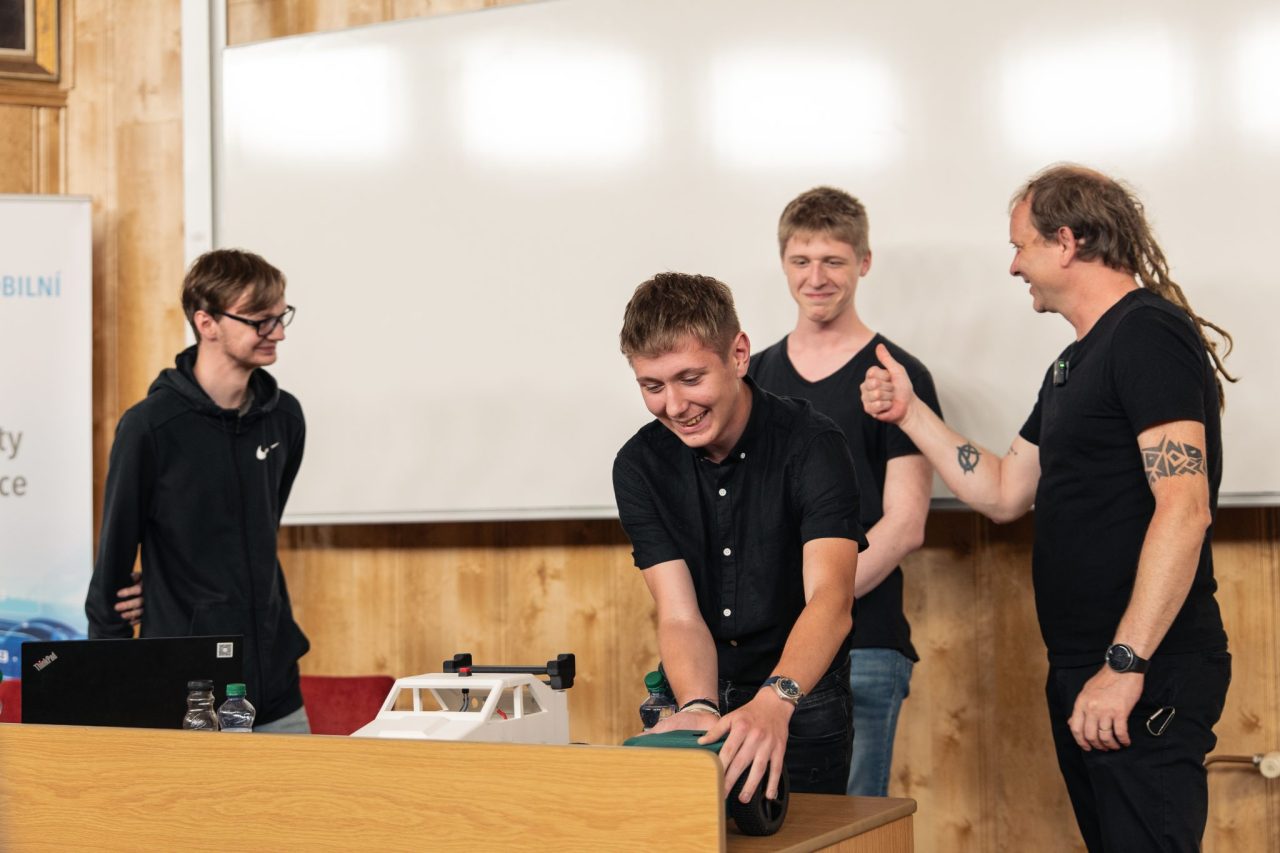
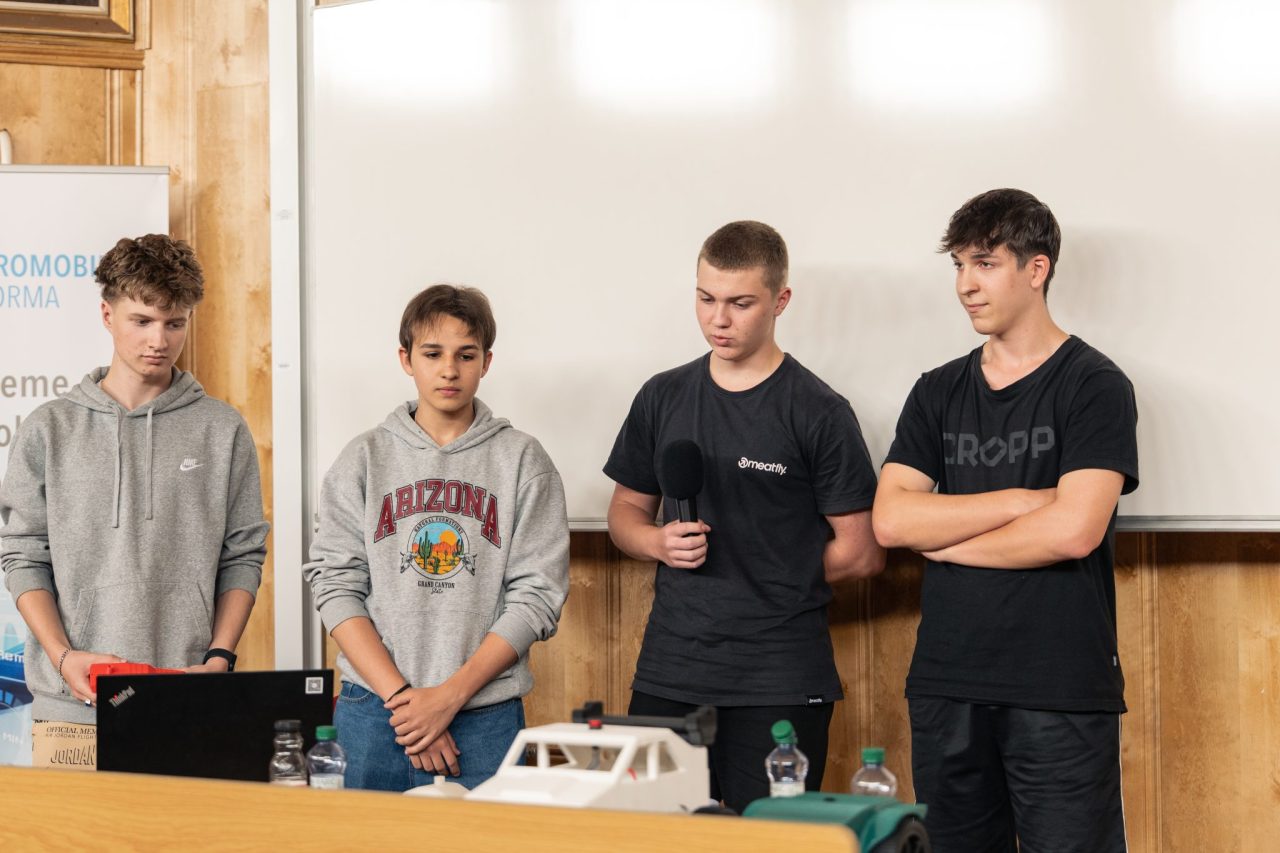
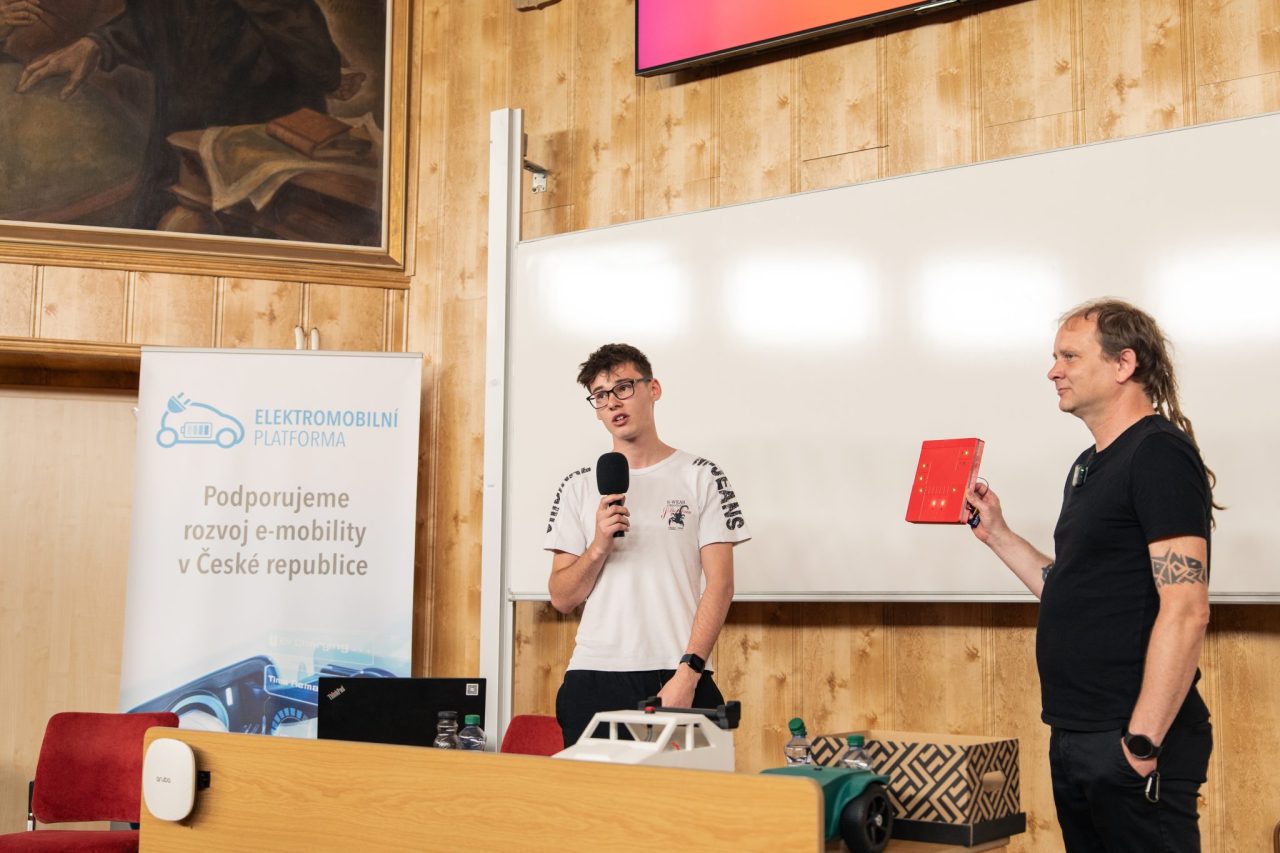
Po dopolední dávce informací a diskusí přišlo zakončení konference – prezentace studentských projektů. Žáci oboru Elektromobilita postupně ukázali své ročníkové práce a modely, kombinující znalosti z elektrotechniky a strojírenství:
- Samostatně navržené a následně vytištěné modely autíček na balónkový pohon, které nebyly jen hračkami, ale funkčními prototypy, předvedli žáci 1. ročníku.
- Model křižovatky simulující řízení dopravy předvedl žák 2. ročníku.
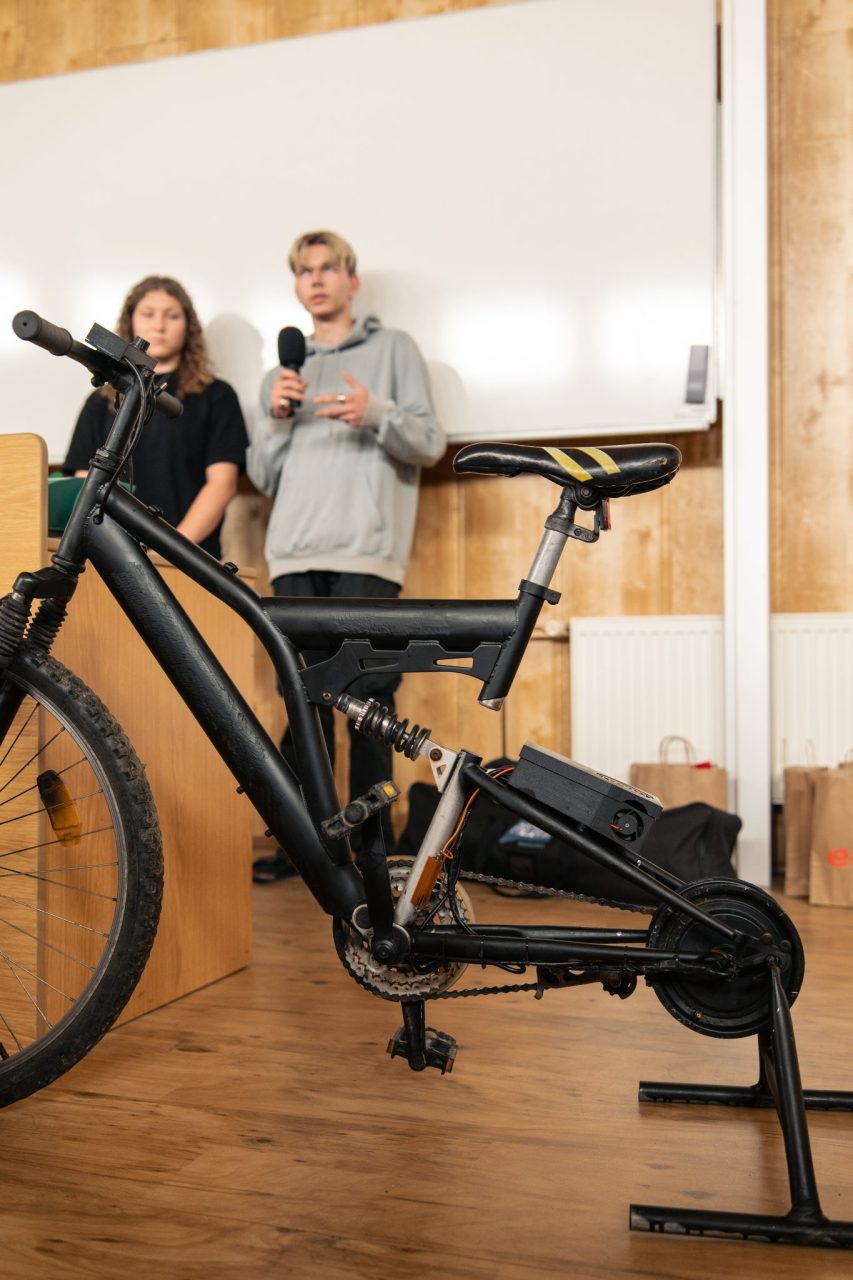
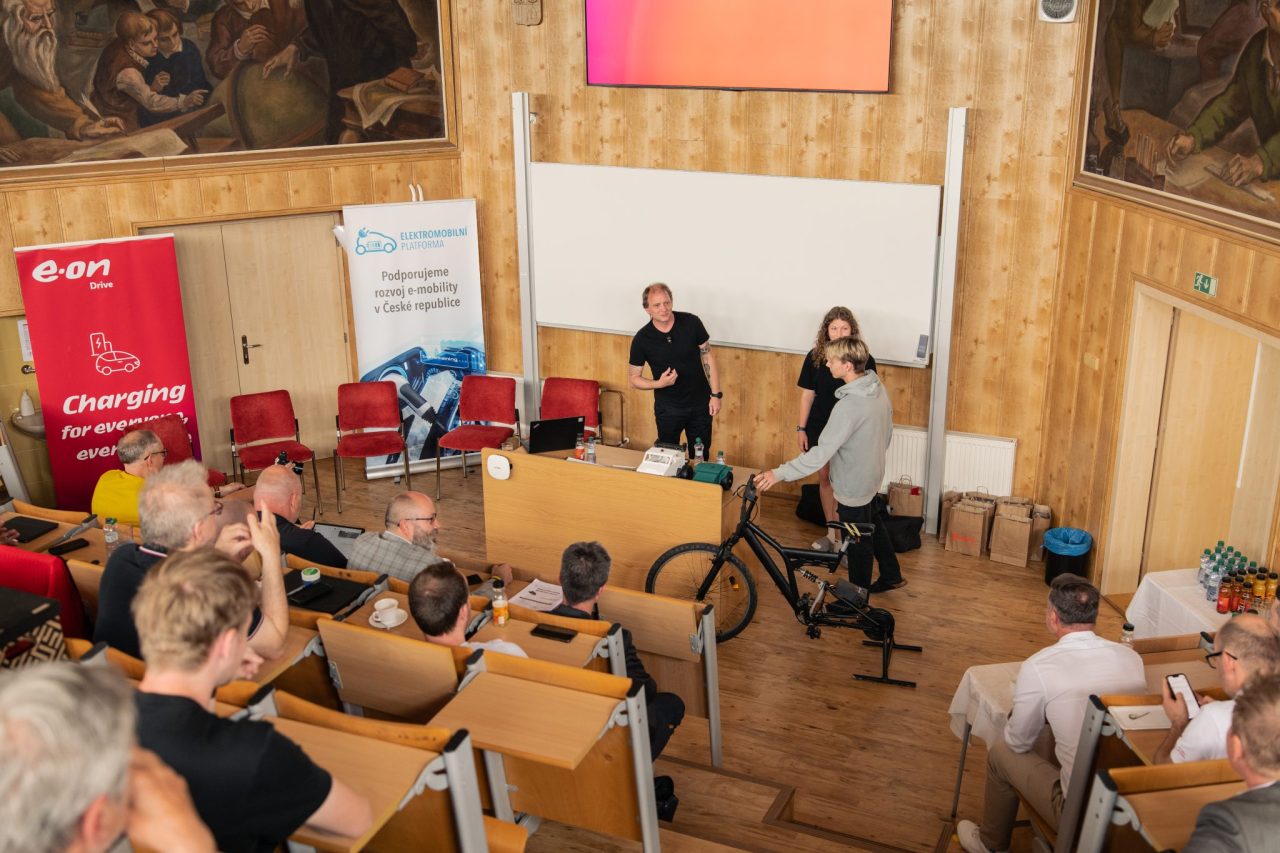
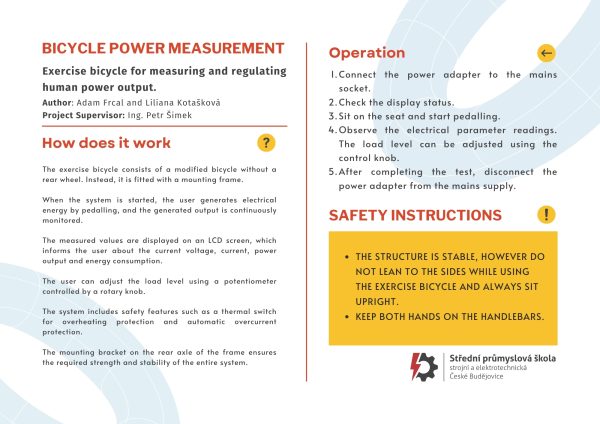
- Kolo měřící práci vykonanou při šlapání, které názorně demonstrovalo fyzikální principy přeměny energie, předvedla dvojice žáků 3. ročníku.
Tyto projekty také názorně ukázaly, jak důležitá je praktická výuka a propojení teorie s reálnými aplikacemi.
5. 6. 2025 Round table – conference “A word about electromobility”
The 3rd conference “A Word About Electromobility…” took place on Thursday, June 5, 2025, in the lecture hall of our SPŠ SE school. This conference brought together some of the top experts with enthusiastic students, and gave a glimpse into where the automotive industry is headed.
With the event starting at 9:30 a.m., the school lecture hall filled with attendees looking forward to learning about a phenomenon that has been reshaping transportation in recent years. The presentations were given by prominent Czech experts, who shared insightful data and elaborated on their visions for the future. The lectures addressed the current state of electromobility in the Czech Republic, the direction of electromobility in the political context, news in charging infrastructure, the challenges and opportunities of electrifying trucks and bus transport, and, last but not least, the connection between education and practice in the field of electromobility.
Following the morning session full of useful info and discussions, the conference wrapped up with a presentation of student projects. The Electromobility students showcased their year-long projects and models, combining their knowledge of electrical engineering and mechanical engineering:
- First-year students presented their independently designed and printed fully-functional prototypes of balloon-powered toy cars.
- A second-year student introduced their model of an intersection that simulated traffic control.
- Drawing on the physical principles of energy conversion, a team of two third-year students presented their project – a bicycle that measured the work performed while pedalling.
These projects clearly showed the importance of practical teaching and linking theory with real-world applications.
WP1.2 Legislativa | Legislation
18. 2. 2026 Elektromobilita – legislativa, rámcové vzdělávací programy, školní vzdělávací programy a koncepce výuky elektromobility
Nejprve je nutné vymezit základní pojmy, které souvisejí se vzdělávacím systémem České republiky.
Školní vzdělávací program (dále jen ŠVP) je dokument, který si každá škola vytváří na základě rámcového vzdělávacího programu. Slouží jako základ pro výuku, umožňuje škole přizpůsobit vzdělávání svým podmínkám a zájmům žáků. Rovněž obsahuje rozvržení učiva, způsob hodnocení, pravidla organizace výuky a další aspekty vzdělávacího procesu. Každá škola si schvaluje vlastní ŠVP, přičemž tento dokument musí být veřejně přístupný.
Rámcový vzdělávací program (dále jen RVP) je obecně závazný dokument, který na státní úrovni stanovuje rámec pro tvorbu ŠVP. Definuje cíle, obsah, formy a délku vzdělávání pro jednotlivé obory a stupně vzdělávání, včetně podmínek pro vzdělávání žáků se speciálními vzdělávacími potřebami. Na základě RVP si každá škola vytváří vlastní ŠVP, který může lépe zohlednit její specifické zaměření.
Elektromobilita a bateriový průmysl jsou klíčovými sektory pro budoucnost dopravy a energetiky. Rychlý rozvoj těchto technologií způsobuje zvýšenou poptávku po kvalifikované pracovní síle. V České republice, kde automobilový průmysl hraje strategickou roli, je nutné posilovat odborné vzdělávání a přizpůsobovat ho novým výzvám.
Zrychlený rozvoj technologií elektrických vozidel znamená, že se mění tradiční automobilové produkty a s nimi i potřeby průmyslu. Investice do bateriových technologií a vývoj nových materiálů a řešení jsou klíčové pro udržitelnost tohoto odvětví. Z tohoto důvodu je nutné systematicky podporovat výzkum a vzdělávání v těchto oblastech.
Jaký je však současný stav?
- nedostatečné pokrytí moderních technologií v nabídce odborných škol a univerzit
- omezená spolupráce mezi vzdělávacími institucemi a průmyslovými podniky i jejich zahraničními partnery
- nedostatečná standardizace profesních certifikací v oblasti bateriových technologií
Ministerstvu školství se bohužel dosud nepodařilo vytvořit studijní obor zaměřený na elektromobilitu v rámci odborného učňovského vzdělávání, natož pak v rámci maturitních oborů.
Vznikem zákona č. 250/2021 Sb. a nařízení vlády č. 194/2022 Sb. přestala platit vyhláška č. 50/1978 Sb. Pro nás školy to podle uvedených legislativních rámců znamená, že žáci mohou ve škole pracovat pouze s bezpečným napětím, pokud nejsou plnoletí. Do budoucna to znamená nutnou změnu legislativního rámce v podobě možnosti, aby žáci mohli pracovat s vyšším napětím pod dohledem pedagoga. Pokud ke změně legislativy nedojde, znamená to, že nezletilí žáci se budou učit pouze na bezpečných modelech. Vždy je však nutné mít na paměti, že bezpečnost je na prvním místě a je samozřejmě prioritou. Dnes jsou elektrická vozidla již vybavena architekturou 400 V a některá dokonce 800 V.
Pojem elektromobilita je pro většinu lidí spjat s přechodem na elektromobily a s rozvojem autonomních vozidel, což přináší řadu technických, regulačních i společenských výzev. Nabíjecí infrastruktura, dlouhodobá udržitelnost dodávek kritických materiálů pro baterie, otázky bezpečnosti a právní rámec pro autonomní vozidla jsou jen některé z překážek, které je třeba překonat. Elektromobily a autonomní vozidla představují revoluci v dopravě, která má potenciál změnit nejen způsob, jakým se pohybujeme, ale i celkovou kvalitu našeho života. Zatímco elektromobily nabízejí cestu k čistší dopravě, autonomní vozidla slibují bezpečnější a efektivnější cestování. Společně vytvářejí vizi budoucnosti, v níž jsou dopravní systémy udržitelné, inteligentní a přizpůsobené potřebám 21. století. Aby se však tato vize stala skutečností, je zapotřebí koordinovaného úsilí výrobců, politiků, výzkumných institucí i veřejnosti. My však chceme našim žákům, jejich rodičům i veřejnosti ukázat, že nejde pouze o elektromobily.
Jsme si velmi dobře vědomi, že nástup elektromobility je již nezastavitelný. Počet elektromobilů na silnicích i elektrických koloběžek ve městech roste, avšak chybí odpovídající servisní síť pro následné opravy, síť nabíjecích stanic je stále nedostatečná a především chybí kvalifikovaná pracovní síla. Zaznamenáváme rostoucí zájem rodičů i žáků zejména o oblast elektromobility. Rodiče vnímají elektromobilitu jako průmysl budoucnosti. I proto spolu s našimi sociálními partnery pracujeme na koncepci pilotního ověřování vzdělávacího programu vznikajícího elektrotechnického oboru se zaměřením na elektromobilitu, a to také díky našemu dlouhodobému zapojení do projektů financovaných Evropskou unií nebo Českou republikou (Erasmus, IROP, OPVK, IKAP a další). V neposlední řadě je důležité zmínit významnou podporu našeho zřizovatele – Jihočeského kraje, případně i samotného města České Budějovice – kde naše škola sídlí.
V souladu s aktuální legislativou se nám podařilo v rámci spolupráce společnosti ČEZ a zřizovatele pořídit elektromobil a neveřejnou nabíjecí stanici. Dále nám byl pro výukové účely společností Škoda a.s. darován elektromobil, který žáci a učitelé využívají v rámci praktické výuky ve školních dílnách. Cílem tohoto projektu je zlepšit ekonomickou situaci školy, snížit znečištění ovzduší v Českých Budějovicích, podporovat elektromobilitu a zlepšit mobilitu školních týmů. Žáci pracují na projektech, jako jsou elektrické koloběžky, drony, motokáry apod. Jelikož jsme nenarazili na školu, která by se elektromobilitě věnovala komplexně, a protože bychom se rádi stali pan-evropským lídrem v této oblasti, vytvořili jsme elektronické výukové materiály zaměřené na elektromobilitu. Materiály jsou dvojjazyčné (v češtině i angličtině) a jejich následné využití přesahuje nejen náš region a celou Českou republiku, ale také Evropskou unii. Díky projektům Erasmus pak předáváme naše know-how partnerským školám v Evropě a získáváme od nich zpětnou vazbu k takto koncipované výuce. V neposlední řadě každoročně v červnu pořádáme konferenci zaměřenou na elektromobilitu za účasti zástupců firem, zřizovatelů, Ministerstva dopravy, Ministerstva školství apod.
Věříme, že tímto způsobem významně přispíváme k podpoře konkurenceschopnosti podniků a udržitelnosti české ekonomiky prostřednictvím zavádění inovativních technologií v oblasti elektromobility a ke zvyšování využívání účinnějších a spolehlivějších nízkouhlíkových technologií, které zatím nejsou v České republice běžně využívány.
V neposlední řadě je třeba zmínit, že vzdělávací systém České republiky bohužel není plně připraven na dynamické změny Průmyslu 4.0, mezi které patří elektromobilita, dobíjecí a bateriové systémy. Proto je důležité podporovat rychlou adaptaci studijních programů, vědeckých programů a odborných kurzů. V České republice neexistují podpůrné materiály ani jednotná koncepce, která by koordinovala dílčí aktivity směřující k zajištění kvalifikovaných pracovníků pro elektromobilitu a bateriový průmysl. Vedení škol, učitelé, studenti i jejich rodiče v současnosti nemají dostatek informací o vzdělávacích a kariérních možnostech v oblasti e-mobility a baterií.
Objevují se však první pilotní projekty, které mají tuto situaci změnit: například vznik a rozvoj Technologické platformy TPBeMobility – Battery and E-mobility Technology Platform, jejímž posláním bude podporovat koncepční rozvoj vzdělávání v oblasti bateriové elektromobility v České republice. TPBeMobility se zaměří na komplexní podporu zajištění vzdělávacích a kvalifikačních potřeb elektromobilního a bateriového průmyslu v České republice a tím přispěje ke koncepčnímu rozvoji elektromobility v České republice. Hlavní důraz bude kladen zejména na osvětu, vhodné nastavení související legislativy, vzdělávací aktivity a celkové budování silného ekosystému bateriové elektromobility v České republice propojením jednotlivých aktérů – podniků se vzdělávacími institucemi, státní správou a samosprávou. V rámci TPBeMobility budou dále vyhledávána a vytvářena nová partnerství, zejména s podobnými technologickými platformami v EU i mimo ni, a to za účelem vzájemné diskuse, sdílení informací, přípravy společných témat a projektů přispívajících k porozumění a rozvoji elektromobility nejen v českých podmínkách, ale i v mezinárodním měřítku.
Pevně věříme, že naše aktivity a projekty v oblasti elektromobility přispějí k efektivnějšímu řešení problematiky elektromobility v rámci České republiky i Evropské unie a že svou činností přispějeme také k vyvracení mýtů a dezinformací o elektromobilitě, které se ve veřejném prostoru často objevují.
18. 2. 2026 Electromobility – legislation, curriculum framework and school educational programs, the concept of electromobility education
First, it is necessary to specify the basic terms that are connected with the educational system in the Czech Republic.
The school education program (hereinafter referred to as the SEP) is a document that each school creates based on the curriculum framework. It serves as a foundation for teaching, allows the school to adapt education to its conditions and the interests of the pupils, and contains the layout of the curriculum, the method of assessment, rules for the organization of teaching and other aspects of the educational process. Each school approves its own SEP, and it must be publicly accessible.
Curriculum framework (hereafter referred to as CF) is a generally binding document that establishes the framework for the creation of school educational programs (SEP) at the state level. It defines the goals, content, forms and duration of education for individual fields and levels, including the conditions for the education of pupils with special educational needs. Based on the CF, each school creates its own SEP, which can better consider its specific focus.
Electromobility and the battery industry are key sectors for the future of transport and energetics. The rapid development of these technologies causes an increased demand for skilled labor. In the Czech Republic, where the automotive industry plays a strategic role, it is necessary to strengthen vocational education and adapt it to new challenges.
The accelerated development of electric vehicle technologies means that traditional automotive products are changing, and with them, the needs of the industry. Investments in battery technology and the development of new materials and solutions are key to the sustainability of the sector. For that reason, it is necessary to systematically support research and education in these areas.
But what is the current status?
- Insufficient coverage of modern technologies in the offer of vocational schools and universities.
- Limited cooperation between educational institutions and industrial enterprises as well as their foreign partners.
- Lack of standardization of professional certifications in the field of battery technology.
Unfortunately, the Ministry of Education and Culture has so far failed to establish a field focused on electromobility within vocational-apprenticeship education, let alone vocational-baccalaureate education.
With the creation of Act No. 250/2021 Coll. and NV No. 194/2022 Coll. Decree No. 50/1978 expired. For us schools, this means, according to the mentioned legislative frameworks, that pupils can only work at a safe voltage at school, unless they are of legal age. In the future, this means a necessary change in the legislative framework in the form of the possibility for pupils to work with higher voltage, under the supervision of the teacher. If a change in the legislative framework is not adopted, then this means that minors will learn only on safe models. Always remember that safety comes first and is of course a priority. Today, electric vehicles are already equipped with 400V architecture, and some even with 800V.
Most people associate the term electromobility with the transition to electric cars and the development of autonomous vehicles, which brings a number of technical, regulatory and social challenges. Recharging infrastructure, long-term supply sustainability of critical battery materials, safety concerns and the legal framework for AVs are just some of the hurdles to overcome. Electric cars and autonomous vehicles represent a revolution in transportation that has the potential to transform not only the way we move, but also our overall quality of life. While electric cars offer a path to cleaner transport, autonomous vehicles promise safer and more efficient journeys. Together they create a visionary future in which transport systems are sustainable, intelligent and adapted to the needs of the 21st century. However, making this vision a reality requires a coordinated effort by manufacturers, politicians, research institutions and the public. However, we want to show our pupils, their parents and the public that it is not just about electric cars.
We are very well aware that the rise of electromobility is already unstoppable, the number of electric cars on the road, electric scooters of the cities, etc. is increasing, but there is a lack of a adequate service network for subsequent repairs, the network of charging stations is still insufficient, and above all, there is a lack of qualified labor. We note the increasing interest of parents and pupils especially in the field of electromobility, parents perceive electromobility as the industry of the future. That is also why we are working with our social partners on the concept of pilot verification of the educational program of the emerging field of electrical engineering, focusing on electromobility, thanks also to our long-term involvement in projects financed by the European Union or the Czech Republic (Erasmus, IROP, OPVK, IKAP and others). Last but not least, it is important to mention the significant support of our establisher – the South Bohemian region, or even the city of České Budějovice itself, in which our school is based.
In accordance with the current legislation, we managed to purchase an electric car and a non-public charging station within the framework of cooperation between ČEZ and the establisher. Furthermore, for teaching purposes, an electric car was donated to us by Škoda a.s., pupils and teachers use it as part of practical lessons in school workshops. The aim of this project is to improve the economic situation at the school, reduce air pollution in České Budějovice, promote electromobility and improve the mobility of school teams. Pupils work on projects such as electric scooters, drones, go-karts, etc. Since we did not come across a school that was dedicated to electromobility comprehensively and we would like to be a Pan-European leader in this field, we created electronic educational materials for teaching focused on elektromobility. The materials are bilingual – they are both in our mother tongue and in English, the subsequent use of which goes beyond the scope of not only our region and the entire Czech Republic, but also the European Union. Thanks to the Erasmus projects, we then transfer our know-how to partner schools in Europe and obtain feedback from them on the teaching conceived in this way. Last but not least, every year in June we organize a conference focusing on electromobility with the participation of company representatives, founders, the Ministry of Transport and Ministry of Education, etc.
We believe that in this way we contribute significantly to supporting the competitiveness of businesses and the sustainability of the Czech economy through the introduction of innovative technologies in the field of electromobility, and to increasing the use of more efficient and reliable low-carbon technologies that are not yet commonly used in the Czech Republic.
Lastly, the education system of the Czech Republic is unfortunately not fully prepared for the dynamic changes of Industry 4.0, which include electromobility, rechargeable and battery systems. Therefore, it is important to support the rapid adaptation of curricula, scientific programs and professional courses. In the Czech Republic, there are no background materials or a unified concept that would coordinate partial activities aimed at securing qualified workers for the electromobility and battery industry. School management, teachers and students and their parents currently do not have enough information about educational and career opportunities in the field of e-mobility and batteries.
There are the first pilot projects that are supposed to change this – for example, the TPBeMobility Technology Platform – Battery and E-mobility Technology Platform will be created and developed, the mission of which will be to support the conceptual development of education in the field of battery electromobility in the Czech Republic. TPBeMobility will be focused on comprehensive support for the provision of educational and qualification needs for the electromobility and battery industry in the Czech Republic and thereby contribute to the conceptual development of electromobility in the Czech Republic. The focus is mainly aimed at awareness, appropriate setting of related legislation, educational activities and overall building of a strong ecosystem of battery e-mobility in the Czech Republic by connecting stakeholders – businesses with educational institutions, state administration and self-government. Furthermore, within the framework of TPBeMobility, new partnerships will be sought and created, especially with similar technological platforms in the EU and abroad for mutual discussions, information, preparation of common topics and projects contributing to the understanding and development of electromobility not only in Czech conditions, but also on an international scale.
We firmly believe that our activities and projects in the field of electromobility will contribute to a more efficient solution to the issue of electromobility within the Czech Republic and the EU, and with our activity we will contribute to dispelling myths and misinformation about electromobility that are often mentioned in the public space.
WP1.3 Setkání partnerů | Meeting of partners
25. 9. 2025 Pracovní návštěva partnerské školy v Norsku (Odda vidaregåande skule)
V rámci projektu byly naplánovány vzájemné návštěvy realizátorů projektu. Na 25. 9. byla naplánována návštěva členů projektového týmu v norské škole – Odda vidaregåande skule.
Na návštěvu jel pan ředitel Mgr. Jaroslav Koreš, Ph.D. – jako zástupce WP1. V rámci návštěvy navštívil jak samotnou školu, tak i blízké muzeum – vodní elektrárnu Tyssedal.
Během návštěvy se setkal i s vedením školy, shlédl vybavení školy a byl seznámen i s nabídkou studijních oborů. Oddská škola je spíše spádovou školou a potýká se s menším počtem uchazečů o studium. Škola má zhruba 200 studentů a nabízí široké spektrum oborů – strojírenství, elektrotechniku, všeobecné vzdělávání, pečovatelství či tesařství. Spolupráce s naší školou je v Oddě vnímána jako příležitost nabídnout žákům nový obor vzdělávání, inspirovaný naším oborem elektromobilita.
Velká část návštěvy byla věnována samotnému projektu, byly diskutovány konkrétní představy o naplnění cílů, možnosti zapojení žáků obou škol, propojení formou eTwinningových projektů a exponáty do plánované expozice energie.
Zajímavé bylo srovnání přístupu k žákům se speciálními vzdělávacími potřebami – v norské škole je 8členné poradenské pracoviště, které se potřebným žákům věnuje. Přitom cílem není dovést žáky k úspěšnému ukončení studia, ale připravit je na život ve společnosti. Vzdělání pro norskou školu není cílem a nevznikají tak tlaky mezi žáky, kteří mohou vnímat zjednodušení studia pro žáky se speciálními potřebami jako nespravedlivé.
Během prohlídky partnerské školy mohl pan ředitel porovnat vybavení obou škol a dle jeho názoru má každá škola co nabídnout. Vybavení naší školy je jak modernější, tak i pestřejší, například práce s CNC stroji je na norské škole spíše okrajová. Na druhou stranu je zázemí žáků i učitelů v norské škole na mnohem lepší úrovni.
Jak z návštěvy učitelů z Norska na naší škole, tak i z návštěvy v Oddě máme potěšující poznání v tom, že naše škola je pro partnery v Norsku inspirativním partnerem s pokročilým technickým zázemím, dovednými žáky a úspěšnými předchozími výstupy. V následujícím roce plánujeme přípravu dalšího pokračování tohoto projektu se zapojením další zahraniční školy a chtěli bychom být evropským leaderem v oblasti vzdělávání v technice a v elektromobilitě obzvlášť.
25. 9. 2025 Working visit of our partner school in Norway (Odda vidaregåande skule)
Mutual visits by project partners were also organized as part of the project. On September 25, members of the Czech project team visited the Norwegian school – Odda vidaregåande skule.
Our director, Mgr. Jaroslav Koreš, Ph.D., visited our partner school as a representative of WP1. As part of his visit, he toured the school areal, as well as a nearby museum – the Tyssedal hydroelectric power plant.
He met with the school management, viewed the school facilities, and was introduced to the range of study programs on offer. Being a catchment school, Odda School has a smaller number of applicants in its area. The school has approximately 200 students and offers a wide range of fields of study, including engineering, electrical engineering, general education, nursing, and carpentry. The cooperation with our school provides Odda with an opportunity to introduce a new field of study to its students, inspired by our field of electromobility.
A large part of the visit was devoted to planning of the project itself, with discussions focusing on specific ideas for achieving the objectives, opportunities for involving pupils from both schools, links in the form of eTwinning projects, and exhibits for the planned energy exhibition.
An interesting aspect of the Norwegian educational system is their care for special needs students. Norwegian schools have an eight-member counselling team that provides support to pupils in need. In comparison to our system, the goal of Norwegian education is not to lead students to successfully complete their studies by fulfilling the curricular objectives, but to prepare them for life in society. By backgrounding academic performance in favour of better social inclusion, the simplification of studies for students with special needs is not perceived as unfair by their abled peers.
Our Headmaster was able to compare the equipment at both schools during the tour of the partner school. According to him, the strengths of each school lay in different areas: for example, our school’s equipment is both more modern and more diverse, while working with CNC machines is rather marginal at the Norwegian school. On the other hand, the facilities for students and teachers at the Norwegian school are of a much higher standard.
Both from the visit of teachers from Norway to our school and from the visit to Odda, we have gained the encouraging understanding that our school is an inspiring partner for our partners in Norway, with advanced technical facilities, skilled students, and successful previous outputs.
In the coming year, we intend to elaborate on this project with the involvement of another foreign school. Our goal is to become a European leader in the field of education in technology and electromobility.
26. – 27. 5. 2025 Erasmus+ projekt Elektromobilita: Pracovní návštěva z partnerské školy z Norska
Ve dnech 26. a 27. května 2025 jsme na naší škole přivítali delegaci z partnerské školy v norském městě Odda. Návštěva proběhla v rámci mezinárodního projektu Vzdělání pro budoucnost – Elektromobilita, doprava budoucnosti, udržitelná doprava a zaměřila se na sdílení zkušeností z odborné výuky a koordinaci výstupů.
Harmonogram návštěvy a doprovázení zajišťovali převážně členové pracovní skupiny WP1 (Koreš, Chochol) a WP4 (Šímová, Marková). Během prvního dne jsme hostům představili zázemí školy i ukázky praktické výuky oboru Elektromobilita (WP2 a WP3). Návštěva nahlédla do hodin informatiky pana Růžičky a prohlédla si odborné učebny v nové přístavbě školy, kde jim kolega Franta představil historické i moderní měřicí přístroje využívané ve výuce. Kolegové Šimek a Vyhnal (WP2) hostům následně přiblížili praktickou část maturitní zkoušky. Velký ohlas sklidila prezentace studentských projektů; koloběžku zkonstruovanou studenty v běhu předchozího projektu hostům představil kolega Strnad (WP3), dílnami Duklalabs hosty pak provedli studenti spolu s kolegou Petráškem. Studenti hostům ukázali své školní i osobní projekty a také funkční automat na svačiny, jehož software sami naprogramovali.
Odpolední část programu byla věnována pracovnímu setkání týmů zapojených do realizace projektu. Diskutovány byly zejména výstupy pracovních skupin WP3 a WP4.
Hlavním tématem bylo směřování digitálního gamebooku pro obor Elektromobilita, na jehož tvorbě se budou podílet obě školy, a který bude využíván jak při výuce, tak v rámci interaktivní Expozice energií. Dále byl upřesněn časový harmonogram a organizační zajištění překladu materiálů, které bude probíhat ve spolupráci s norskou stranou.
Druhý den návštěvy se norská delegace seznámila s partnerskými institucemi školy. Kolegové například navštívili provozy společnosti E.ON, která je jedním z důležitých zaměstnavatelů v regionu a dlouhodobým partnerem školy v oblasti odborných praxí a spolupráce na obsahu výuky.
Těší nás zájem norské školy o naši výuku i studentské projekty a věříme, že tato spolupráce přispěje k rozvoji moderní výuky technických oborů, podpoří internacionalizaci obou škol a umožní vznik dlouhodobého partnerství napříč Evropou.
26. – 27. 5. 2025 Erasmus+ project Electromobility: working visit of our partner school from Norway
On May 26 and 27, 2025, our school welcomed a delegation from our partner school in the Norwegian town of Odda. The visit took place as part of the international project Education for the Future – Electromobility, Transport of the Future, Sustainable Transport and focused on sharing experiences in vocational education and coordinating project outputs.
The visit schedule and accompanying activities were mainly organized by members of Working Group WP1 (Koreš, Chochol) and WP4 (Šímová, Marková). On the first day, we introduced our guests to the school facilities and showcased examples of practical teaching in the Electromobility program (WP2 and WP3). The delegation observed an IT lesson taught by Mr. Růžička and toured the specialized classrooms in the school’s new building, where our colleague Mr. Franta presented both historical and modern measuring instruments used in instruction. Colleagues Mr. Šimek and Mr. Vyhnal (WP2) then introduced the guests to the practical component of the school leaving exam (maturita).
A highlight of the day was the presentation of student projects. A scooter built by students during a previous project cycle was presented by Mr. Strnad (WP3). Guests were also guided through the Duklalabs workshop Mr. Petrášek and his students. The students presented both their school and personal projects, including a functional snack vending machine with software they had programmed themselves.
The afternoon portion of the program was dedicated to a working meeting of the teams involved in the project. Discussions focused primarily on the outputs of Working Groups WP3 and WP4.
The main topic was the direction of the digital gamebook for the Electromobility program, which will be co-developed by both schools and used both in teaching and within the interactive Energy Exhibition. Additionally, the timeline and organizational arrangements for the translation of materials—carried out in cooperation with the Norwegian team—were finalized.
On the second day of the visit, the Norwegian delegation was introduced to the school’s partner institutions. For example, they visited the facilities of E.ON, a major regional employer and a long-term partner of the school in the area of vocational training and curriculum collaboration.
We are pleased with the Norwegian school’s interest in our teaching and student projects, and we believe that this collaboration will contribute to the advancement of modern technical education, support the internationalization of both schools, and foster the creation of a long-term partnership across Europe.
Electromobility Project – Summary of Activities
As part of the Electromobility project, several interdisciplinary learning activities were carried out, involving both vocational students and practical, research-based approaches to sustainability and energy awareness.
Four students from different vocational programmes (Electrical Engineering and Technical and Industrial Production – TIP) participated in a focused activity using a thermal camera. Their task was to explore both the practical use of the equipment and its pedagogical applications. The students developed an English user manual for the thermal camera and worked systematically with its application in teaching. This included identifying relevant use cases, exploring how thermal imaging can be used in educational contexts, and reflecting on its value as a pedagogical tool in both theoretical and practical instruction.
In addition, sensors were purchased and installed to measure heat loss in classrooms and other areas of the school. A full TIP class participated in this part of the project. The students collected data using the sensors and transferred the results to computers, where they processed and analysed the data. The collected data was then used to create statistics and visualisations.
The aim of this work was to increase students’ understanding of climate-neutral buildings and energy efficiency. Through hands-on investigation, they explored how to detect heat loss, understand its causes, and consider measures to reduce emissions. The project combined theoretical knowledge with practical application and included concrete examples of how such activities can be integrated into teaching.
Learning outcomes and impacts from our end
The Electromobility project
has contributed to significant learning outcomes for both students and teachers, in line with the objectives of strengthening vocational relevance, sustainability awareness, and innovative teaching practices.
Impact on students
Our students developed practical and transferable skills through hands-on activities involving thermal imaging and sensor-based data collection. They gained increased awareness of energy efficiency, climate-neutral buildings, and the causes and consequences of heat loss in real-life contexts. The project also strengthened students’ digital competence through data processing, analysis, and visualization, as well as their ability to interpret technical information.
Furthermore, students improved their communication skills, particularly through the development of an English user manual, supporting subject-specific language learning. The interdisciplinary nature of the project encouraged collaboration across vocational programs, fostering problem-solving skills, critical thinking, and a deeper understanding of how theoretical knowledge can be applied in practice.
Impact on teachers and teaching practices
Teachers gained experience in implementing innovative, research-based teaching methods that combine theoretical instruction with practical application. The project supported the development of interdisciplinary approaches, particularly between Electrical Engineering and TIP (Technical and Industrial Production), and contributed to stronger collaboration across subject areas.
In addition, the project resulted in concrete teaching resources, including instructional materials, datasets, and examples of pedagogical use of thermal cameras and sensors. These outputs provide sustainable value beyond the project period and can be integrated into future teaching.
Overall, the project strengthened teachers’ competence in sustainability education and demonstrated how climate-related topics can be taught in an applied and engaging way within vocational education and training.
Odda VGS – Project Outputs for Final Reporting
Odda Upper Secondary School has participated in the Erasmus+ Electromobility project through the development and implementation of learning activities related to smart buildings, energy efficiency, and sensor-based learning. The project included planning and installation of temperature and motion sensors, data collection and analysis, the use of thermal imaging cameras, and energy monitoring activities within the school building. Students worked with real-world data sets to investigate energy consumption and identify possible measures for improving building efficiency.
Participants, Subjects and Student Groups
The project involved both teachers and students at Odda Upper Secondary School. In particular, students from the Electrical Engineering and Computer Technology programme and the Technology and Industrial Production (TIP) programme actively participated in sensor installation, data collection, data analysis, and the development of proposals for energy-efficient solutions.
The activities were carried out in collaboration with students from:
- Electrical Engineering and Computer Technology
- Technology and Industrial Production (TIP)
The project combined elements of technology, sustainability, energy management, digital tools, and practical problem-solving.
Attached Documents and Outputs
The following materials are included in this submission:
- English presentation: Electromobility – Smart Buildings and Energy-Efficient Use
- Norwegian version/summary of the teaching materials
- Student assignment on energy analysis and smart buildings
- Photographic documentation of sensors, equipment, and project activities
- Screenshots of time series data and visualizations
- Examples of student work and analysis results
- Materials prepared for the Energy Exhibition
- Sample Gamebook Scenario: The Energy Advisor
- Final summary report on the project activities.
Contribution to Work Packages (WP)
| Work Package | Contribution from Odda VGS |
| WP1 | Planning, coordination, sensor setup and documentation |
| WP2 | Teaching material on smart buildings, energy efficiency and sensor-based learning |
| WP3 | Student project with temperature and motion sensors, data collection, and energy analysis |
| WP4 | English and Norwegian learning materials, screenshots, and a sample gamebook scenario |
Conclusion
Through these activities, Odda Upper Secondary School has contributed to strengthening students’ understanding of energy use, smart building technologies, sensor-based monitoring, and sustainable solutions. The project combined practical hands-on work with technological knowledge and European collaboration, providing students with valuable experience in data-driven analysis, energy efficiency, and problem-solving in authentic learning environments.
Odda VGS – Prosjektleveranser for sluttrapportering
Odda videregående skole har deltatt i Erasmus+-prosjektet Electromobility gjennom utvikling og gjennomføring av læringsaktiviteter knyttet til smarte bygg, energieffektivisering og sensorbasert læring. Prosjektet omfattet planlegging og installasjon av temperatur- og bevegelsessensorer, datainnsamling og dataanalyse, bruk av termiske kameraer og aktiviteter knyttet til energiovervåking i skolebygningen. Elevene arbeidet med reelle datasett for å undersøke energiforbruk og identifisere mulige tiltak for å forbedre bygningens energieffektivitet.
Deltakere, fag og elevgrupper
Prosjektet involverte både lærere og elever ved Odda videregående skole. Spesielt deltok elever fra utdanningsprogrammene elektro og datateknologi samt teknologi- og industrifag (TIP) aktivt i sensorinstallasjon, datainnsamling, dataanalyse og utarbeidelse av forslag til energieffektive løsninger.
Aktivitetene ble gjennomført i samarbeid med elever fra:
- Elektro og datateknologi
- Teknologi- og industrifag (TIP)
Prosjektet kombinerte elementer av teknologi, bærekraft, energiledelse, digitale verktøy og praktisk problemløsning.
Vedlagte dokumenter og leveranser
Følgende materiell er inkludert i denne innleveringen:
- Engelsk presentasjon: Electromobility – Smart Buildings and Energy-Efficient Use
- Norsk versjon/sammendrag av undervisningsmateriellet
- Elevoppgave om energianalyse og smarte bygg
- Bildedokumentasjon av sensorer, utstyr og prosjektaktiviteter
- Skjermbilder av tidsseriedata og visualiseringer
- Eksempler på elevarbeid og analyseresultater
- Materiell utarbeidet til energiutstillingen (Energy Exhibition)
- Eksempel på spillbokscenario: Energirådgiveren (Sample Gamebook Scenario: The Energy Advisor)
- Avsluttende sammendragsrapport om prosjektaktivitetene
| Arbeidspakke | Contribution from Odda VGS |
| WP1 | Planlegging, koordinering, montering av sensorer og dokumentasjon |
| WP2 | Undervisningsmateriell om smarte bygg, energieffektivisering og sensorbasert læring |
| WP3 | Elevprosjekt med temperatur- og bevegelsessensorer, datainnsamling og energianalyse |
| WP4 | Engelske og norske læremidler, skjermbilder og et eksempel på et spillbokscenario (gamebook scenario) |
Konklusjon
Gjennom disse aktivitetene har Odda videregående skole bidratt til å styrke elevenes forståelse av energibruk, teknologi for smarte bygg, sensorbasert overvåking og bærekraftige løsninger. Prosjektet kombinerte praktisk arbeid med teknologisk kunnskap og europeisk samarbeid, og ga elevene verdifull erfaring med datadrevet analyse, energieffektivisering og problemløsning i autentiske læringsmiljøer.
Odda VGS Electromobility Project Documentation Report
WP2 Tvorba a aktualizace výukových materiálů | Creation and updating of teaching materials (WP4 – Překlad materiálů | Translation of materials)
Tvorba a aktualizace výukových materiálů představuje jednu z klíčových aktivit projektu. Cílem bylo porovnat zkušenosti českých a norských partnerů, aktualizovat stávající vzdělávací obsah a vytvořit nové elektronické výukové materiály pro odborné vzdělávání v oblasti elektromobility, energetiky a moderních technologií. Vzniklé materiály propojují poznatky ze strojírenství, elektrotechniky, energetiky a dopravy budoucnosti. Důraz je kladen na praktické využití znalostí, řešení reálných technických problémů, a propojení školy s průmyslovou praxí. Výstupy projektu jsou určeny nejen žákům partnerských škol, ale mohou sloužit také jako inspirace a podpora pro další školy, které chtějí rozvíjet moderní technické vzdělávání a připravovat studenty na profesní výzvy budoucnosti.
The creation and updating of educational materials is one of the project’s key activities. The goal was to compare the experiences of Czech and Norwegian partners, update existing educational content, and create new digital educational materials for vocational training in the fields of electromobility, energy, and modern technologies. The resulting materials integrate knowledge from mechanical engineering, electrical engineering, energy, and the transportation of the future. Emphasis is placed on the practical application of knowledge, solving real-world technical problems, and connecting schools with industry. The project’s outputs are intended not only for students at partner schools but can also serve as inspiration and support for other schools seeking to develop modern technical education and prepare students for the professional challenges of the future.
Teaching Materials
🔗Classification and Types of Road Vehicles 🔗Construction Structure of Road Vehicles and Basic Vehicle Specifications🔗Vehicle Bodies and Frames🔗Safety and Testing of Road Vehicles🔗Road Vehicle Axles🔗Vehicle Suspension and Damping System 🔗Steering Mechanisms of Road Vehicles 🔗Braking System of Road Vehicles 🔗Wheels and Tyres of Road Vehicles 🔗Single-track motor vehicles
🔗Milling 🔗Turning 🔗Machining 🔗Planing and Shaping 🔗Finishing operations in Machining 🔗Drilling and boring 🔗Grinding 🔗Broaching and Extrusion 🔗Additive Technologies 🔗Composite Materials 🔗Modern Technologies 🔗Plastics 🔗Unconventional Machining Methods
🔗 Introduction to Electromobility 🔗Electric drives – Energy and Mobility 🔗 History of Electromobility 🔗 Radio Telephone Systems 🔗 Navigation 🔗Traction in Railway Transport 🔗 Dependent Traction in Railway Transport 🔗Signalling and Safety Systems in Railway Transport 🔗Road Electromobility 🔗Model Railways 🔗 Protection 🔗 Synchronous Motor 🔗 Asynchronous Motor
🔗 Fundamentals of Automation Technology 🔗 System Descriptions 🔗 Basic Standard Elements – Static Systems 🔗 Basic Standard Elements – Astatic Systems 🔗 Basic Standard Elements – Derivative Systems 🔗 Block Algebra 🔗 Transfer Functions in a Control Loop 🔗 Controllers 🔗 Implementation of Controllers 🔗 Controlled Plants 🔗 Controller Tuning 🔗 Stability of Control Loops 🔗 Sensors 🔗 Accuracy and Control Quality 🔗 Temperature Sensors 🔗 Introduction to Electronics 🔗 Electronic Circuits 🔗 Circuit Components 🔗 Electrical Sources 🔗 Resistors 🔗 Capacitors 🔗 Inductors 🔗 Transformers 🔗 Solutions of Electronic Circuits 🔗 Conductivity of Semiconductors 🔗 PN Junction 🔗 Semiconductor Diode 🔗 Types of Diodes 🔗 Optoelectronic Components 🔗 Semiconductor Switches 🔗Operational Amplifier
Summary: Introduction to Thermography and the Use of Thermal Cameras
This presentation introduces thermography and the use of thermal cameras as tools for visualizing and analyzing temperature differences in the environment. Thermal cameras detect infrared radiation emitted by objects and convert this information into images where temperature variations are represented by different colors or shades.
The presentation explains the fundamental principles of heat transfer, infrared radiation, and how thermal cameras operate. Emphasis is placed on the fact that all objects with a temperature above absolute zero emit thermal energy, which can be detected by thermal sensors. Participants gain an understanding of how reflections and environmental conditions can influence measurements and why accurate interpretation of thermographic images is essential.
The presentation also demonstrates how thermal cameras can be applied in practice for energy efficiency and smart building management. Thermal imaging can reveal heat loss through poorly insulated building components, thermal bridges, air leakage, moisture problems, and faults in technical installations. Through practical examples, students learn how thermography can help identify energy waste and support the development of measures for more efficient energy use.
In addition, the presentation highlights the use of thermography for technical maintenance and troubleshooting. Abnormally hot electrical components, overloaded circuits, or mechanical parts affected by excessive friction can be detected before they develop into serious failures. This makes thermography an important tool in electrical engineering, industry, and building operations.
Finally, students are introduced to the safe and correct use of thermal cameras, as well as methods for documenting and analyzing thermographic observations. The overall aim is to provide students with a basic understanding of modern measurement technology and its applications in energy management, sustainability, and technical systems. Through practical activities, theoretical knowledge is linked to real-world challenges related to energy efficiency and smart building operation.
Sammendrag: Introduksjon til termografi og bruk av termiske kameraer
Denne presentasjonen introduserer termografi og bruk av termiske kameraer som verktøy for å visualisere og analysere temperaturforskjeller i omgivelsene. Termiske kameraer registrerer infrarød stråling som sendes ut av objekter, og omdanner denne informasjonen til bilder der temperaturvariasjoner representeres med ulike farger eller nyanser.
Presentasjonen forklarer de grunnleggende prinsippene for varmeoverføring, infrarød stråling og hvordan termiske kameraer fungerer. Det legges vekt på at alle objekter med en temperatur over det absolutte nullpunkt sender ut termisk energi som kan registreres av termiske sensorer. Deltakerne får en forståelse av hvordan refleksjoner og omgivelsesforhold kan påvirke målinger, og hvorfor nøyaktig tolkning av termografiske bilder er avgjørende.
Presentasjonen viser også hvordan termiske kameraer kan anvendes i praksis for energieffektivisering og smart bygningsdrift. Termografering kan avdekke varmetap gjennom dårlig isolerte bygningskomponenter, kuldebroer, luftlekkasjer, fuktproblemer og feil i tekniske installasjoner. Gjennom praktiske eksempler lærer studentene hvordan termografi kan bidra til å identifisere energisløsing og støtte utviklingen av tiltak for mer effektiv energibruk.
I tillegg belyser presentasjonen bruken av termografi til teknisk vedlikehold og feilsøking. Unormalt varme elektriske komponenter, overbelastede kretser eller mekaniske deler påvirket av for høy friksjon kan oppdages før de utvikler seg til alvorlige feil. Dette gjør termografi til et viktig verktøy innen elektroteknikk, industri og bygningsdrift.
Avslutningsvis introduseres studentene for trygg og riktig bruk av termiske kameraer, samt metoder for å dokumentere og analysere termografiske observasjoner. Det overordnede målet er å gi studentene en grunnleggende forståelse av moderne måleteknologi og dens anvendelser innen energiledelse, bærekraft og tekniske systemer. Gjennom praktiske aktiviteter kobles teoretisk kunnskap til reelle utfordringer innen energieffektivisering og smart bygningsdrift.
Odda VGS Electromobility Smart Buildings
Energy Audit of a School Building Using a Thermal Camera
Energikartlegging av skulebygg med termisk kamera
WP3 Expozice energie | Energy Exposition (WP4 Překlad panelů v expozici | Translation of panels in the exhibition)
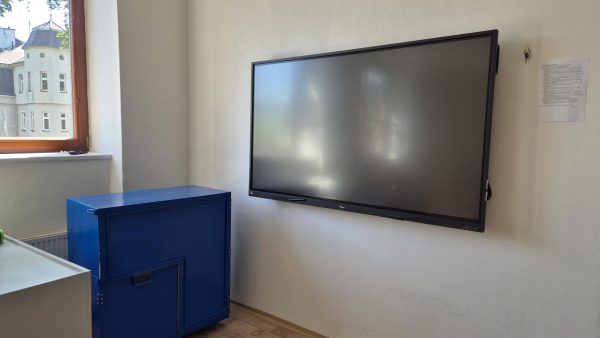
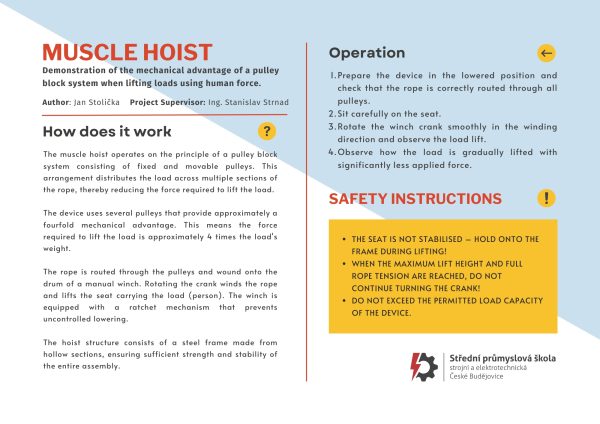
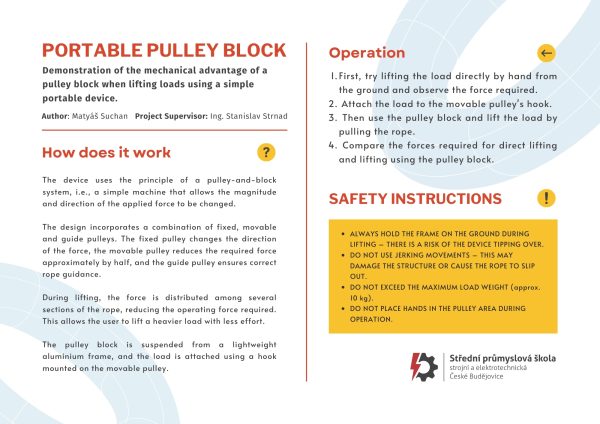
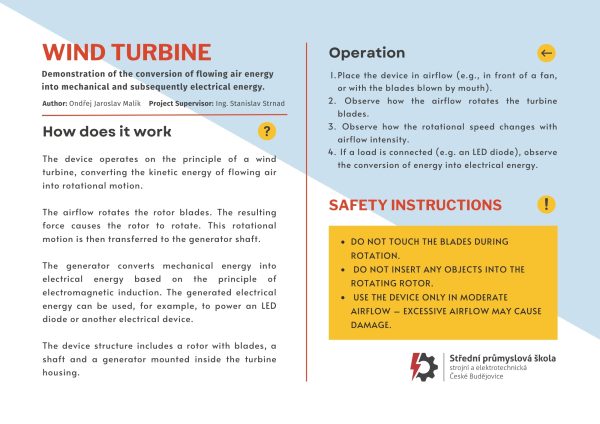
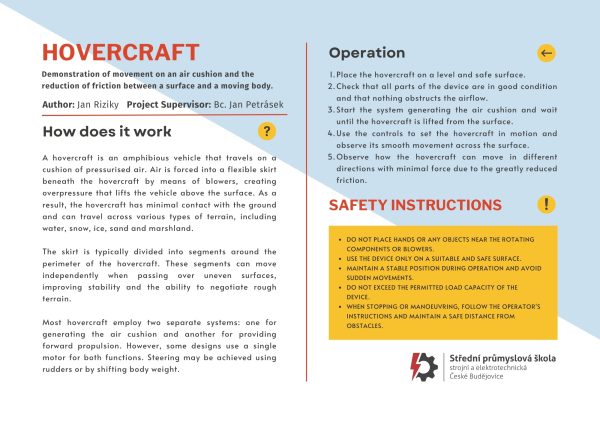
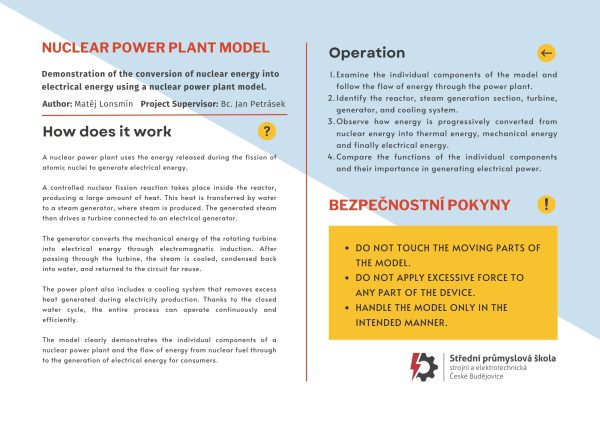
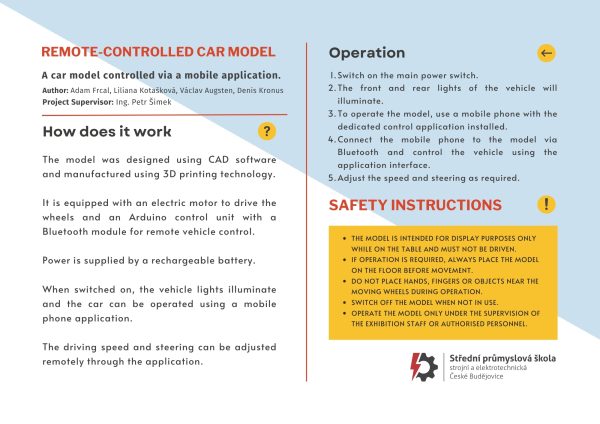
Expozice energie představuje interaktivní modely a zařízení navržené a vyrobené studenty, na kterých si návštěvníci mohou prakticky vyzkoušet základní fyzikální principy související s energií, výkonem a přenosem síly. V rámci Expozice energie si mohou návštěvníci na počítači projít také interaktivní gamebook.
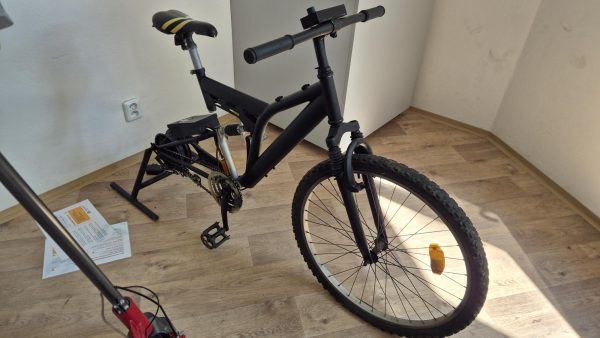
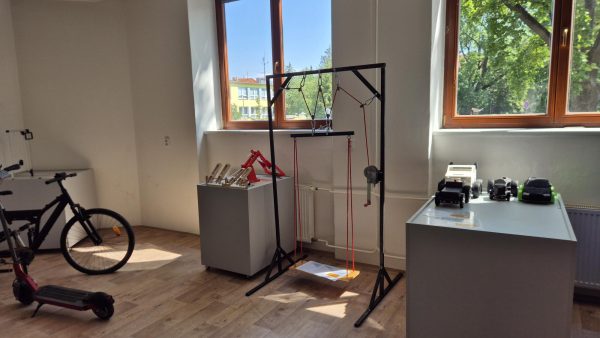
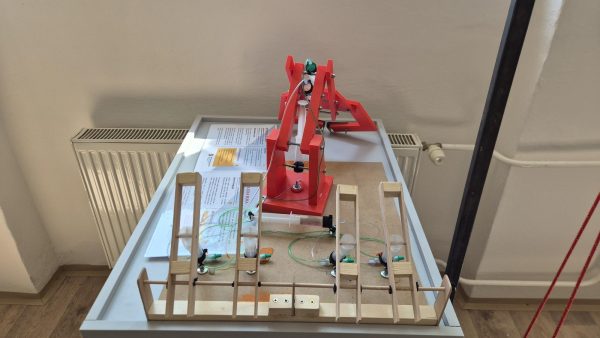
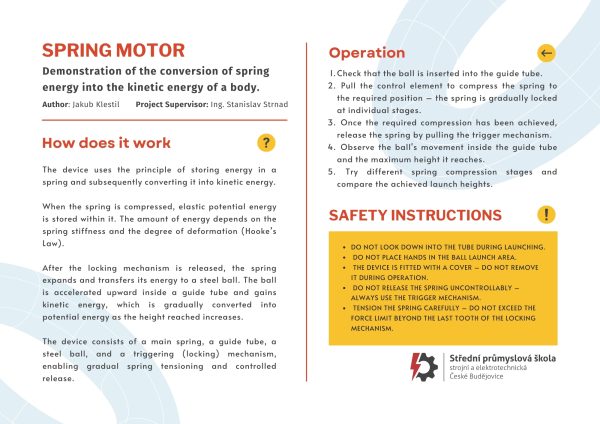
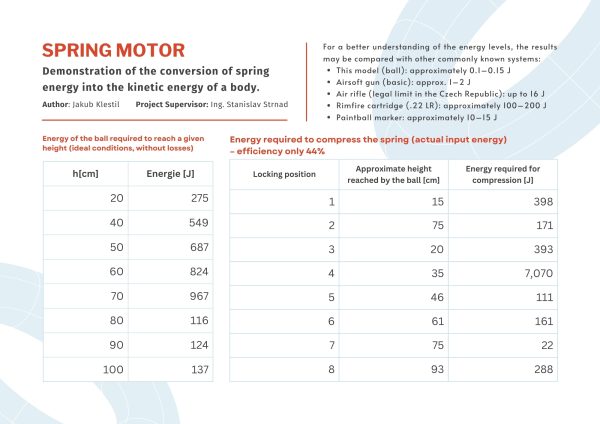
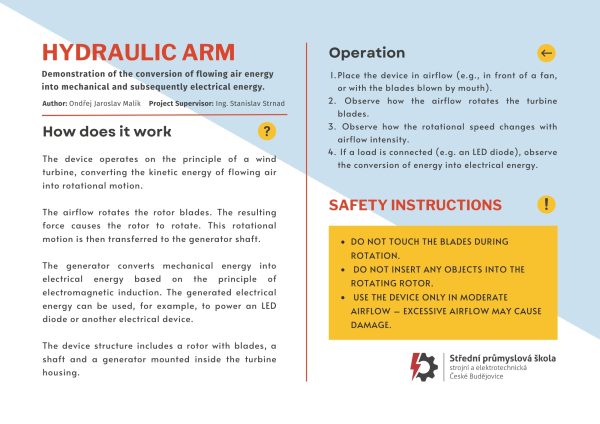
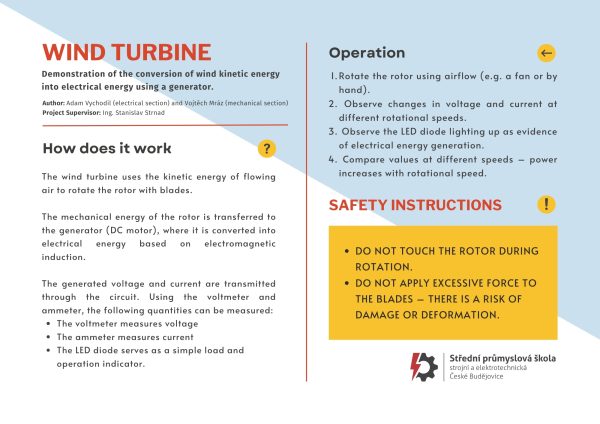
Součástí expozice jsou například kladkostroje demonstrující mechanickou výhodu, hydraulická ruka využívající Pascalův zákon, pružinový motor ukazující přeměnu potenciální energie na pohybovou, větrné turbíny vyrábějící elektrickou energii nebo rotoped umožňující měření lidského výkonu. Expozice slouží jako interaktivní učebna pro žáky základních a středních škol i jako prostor pro popularizaci technického vzdělávání, energetiky, elektromobility a udržitelného využívání energie.
Popisky k exponátům v Expozici energie
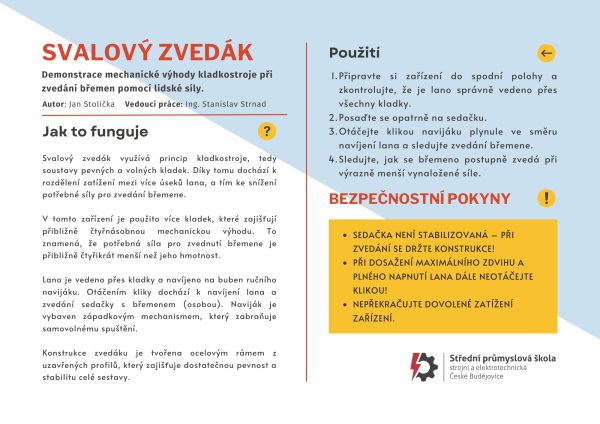
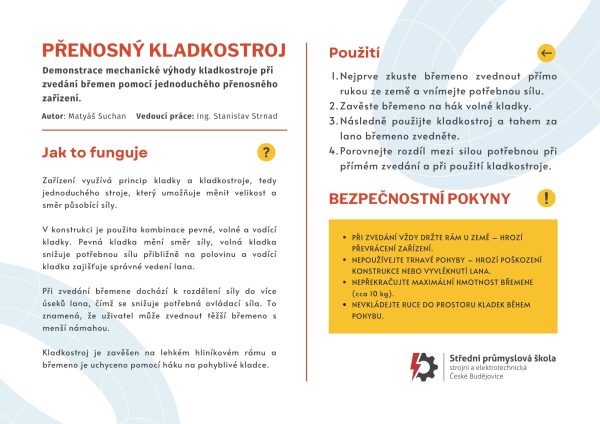
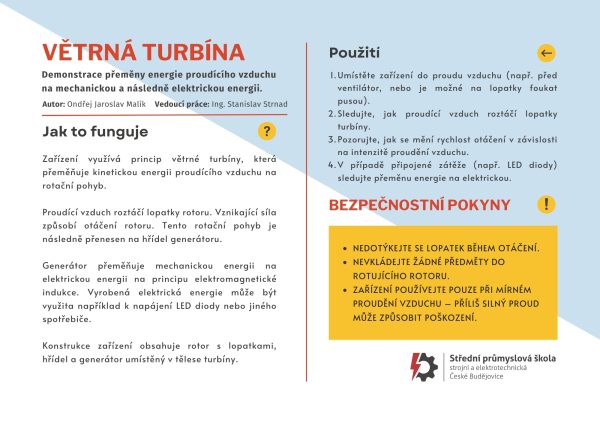
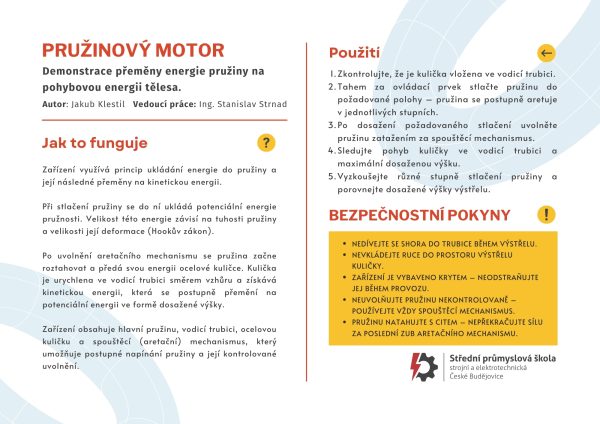
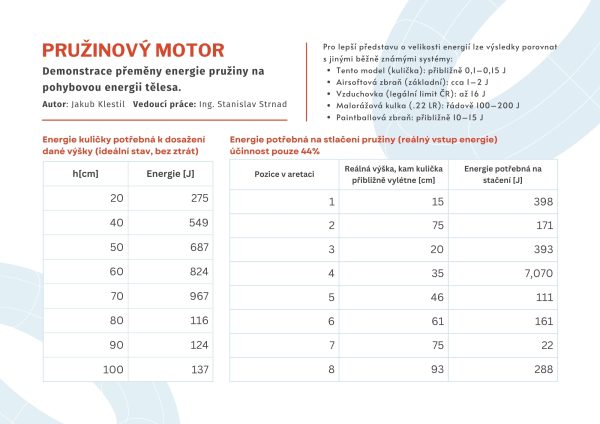
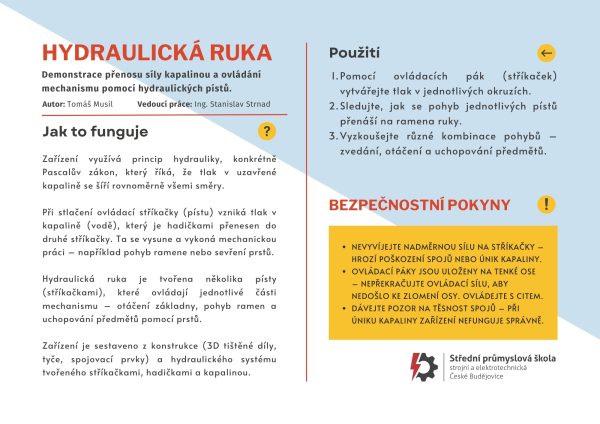
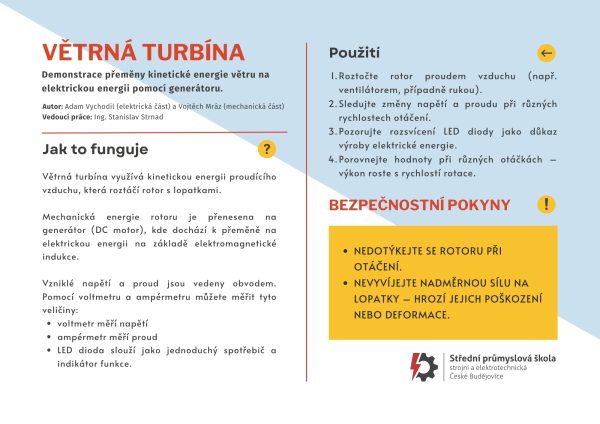
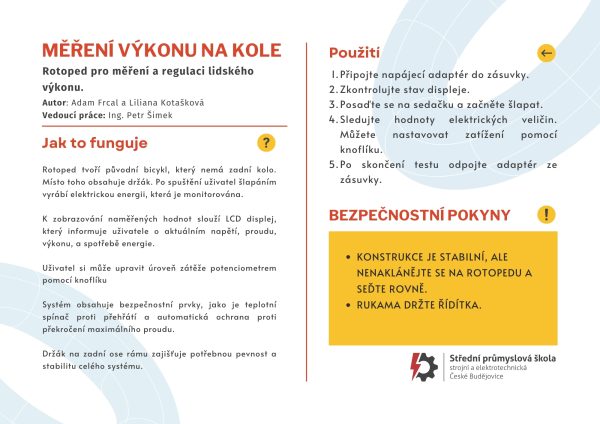
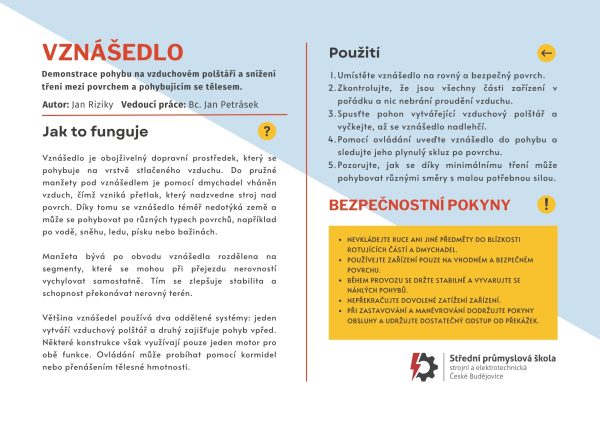
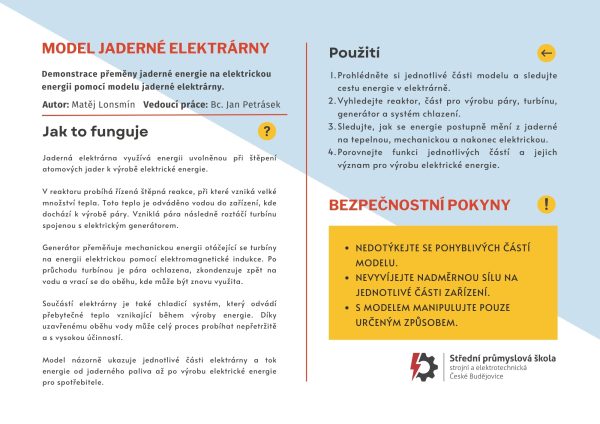
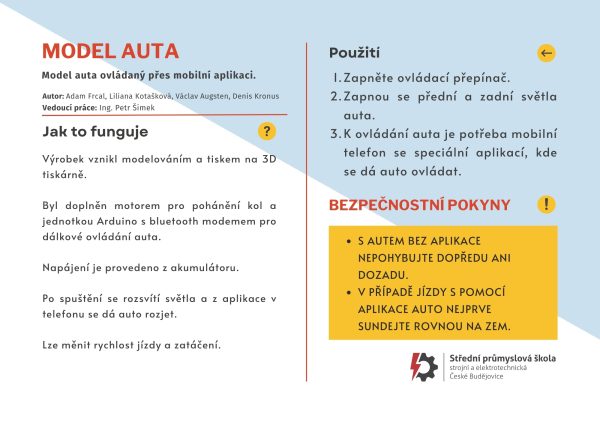
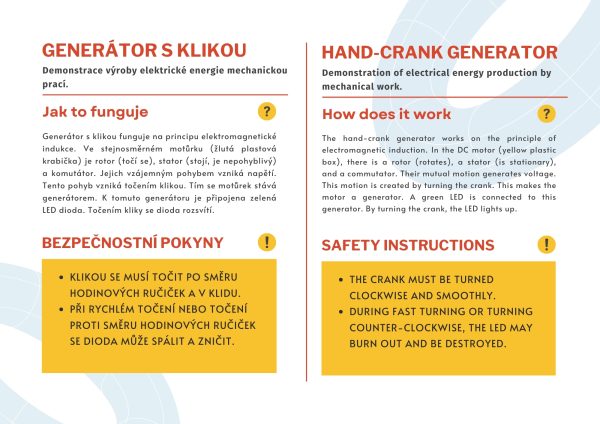
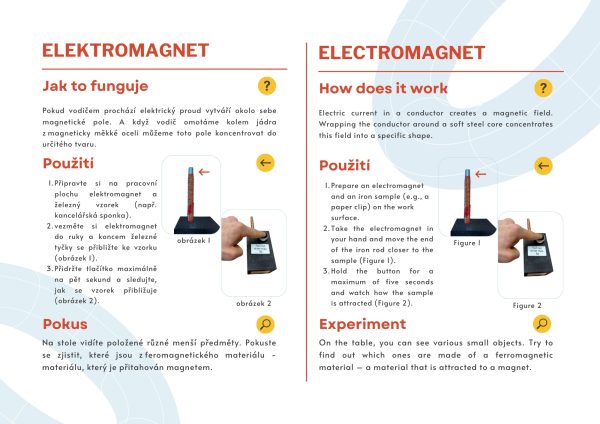
The Energy Exhibit features interactive models and devices designed and built by students, allowing visitors to hands-on explore the basic physical principles related to energy, power, and the transmission of force.
The exhibition includes, for example, pulley systems demonstrating mechanical advantage, a hydraulic arm utilizing Pascal’s law, a spring-powered motor showing the conversion of potential energy into kinetic energy, wind turbines generating electricity, and an exercise bike for measuring human power output. The exhibition serves as an interactive classroom for elementary and high school students, as well as a space for promoting technical education, energy, electromobility, and sustainable energy use.
Exhibit Labels: Energy Exhibition
Results of the School Project of the Norwegian Partner
The students received both theoretical and practical training in the use of thermal cameras. Through the project, they developed an understanding of the relationship between infrared radiation and temperature measurement, and they learned how thermal imaging can be applied in building technology, electrical engineering, energy efficiency, and search-and-rescue operations.
During the practical phase, the students installed the necessary software, connected the thermal cameras, and carried out their own thermal investigations. They documented temperature differences in various objects and environments, analyzed the results, and presented their findings through images, written reports, and oral presentations.
The project also resulted in user guides developed by the students, explaining how the equipment works and how it can be used safely and effectively. This strengthened both their technological understanding and their ability to produce professional technical documentation.
Through reflection and discussion, the students became more aware of how thermography can contribute to sustainable solutions, for example by identifying heat loss and improving energy efficiency. At the same time, they gained insight into ethical issues related to privacy and the responsible use of technology.
Overall evaluation: The project provided students with valuable practical skills, enhanced their digital competence, and improved their understanding of how modern sensor technology can be used to address challenges in energy, environmental, and technical fields.
Resultater fra studentprosjektet
Studentene fikk både teoretisk og praktisk opplæring i bruk av termiske kameraer. Gjennom prosjektet utviklet de en forståelse av sammenhengen mellom infrarød stråling og temperaturmåling, og de lærte hvordan termografi kan anvendes innen bygningsteknologi, elektroteknikk, energieffektivisering og søk- og redningsoperasjoner.
I den praktiske fasen installerte studentene nødvendig programvare, koblet til de termiske kameraene og utførte egne termiske undersøkelser. De dokumenterte temperaturforskjeller på ulike objekter og i ulike omgivelser, analyserte resultatene og presenterte funnene sine gjennom bilder, skriftlige rapporter og muntlige presentasjoner.
Prosjektet resulterte også i brukerveiledninger utarbeidet av studentene, som forklarer hvordan utstyret fungerer og hvordan det kan brukes trygt og effektivt. Dette styrket både deres teknologiske forståelse og deres evne til å utarbeide profesjonell teknisk dokumentasjon.
Gjennom refleksjon og diskusjon ble studentene mer bevisste på hvordan termografi kan bidra til bærekraftige løsninger, for eksempel ved å identifisere varmetap og forbedre energieffektiviteten. Samtidig fikk de innsikt i etiske problemstillinger knyttet til personvern og ansvarlig teknologibruk.
Samlet vurdering: Prosjektet ga studentene verdifulle praktiske ferdigheter, styrket deres digitale kompetanse og forbedret forståelsen av hvordan moderne sensorteknologi kan brukes til å møte utfordringer innen energi, miljø og tekniske fagområder.
WP4.1 Tvorba gamebooku Elektromobilita a Energie | Creation of the gamebook Electromobility and Energy
15. 1. 2026 – Dokončili jsme interaktivní gamebook pro výuku elektromobility
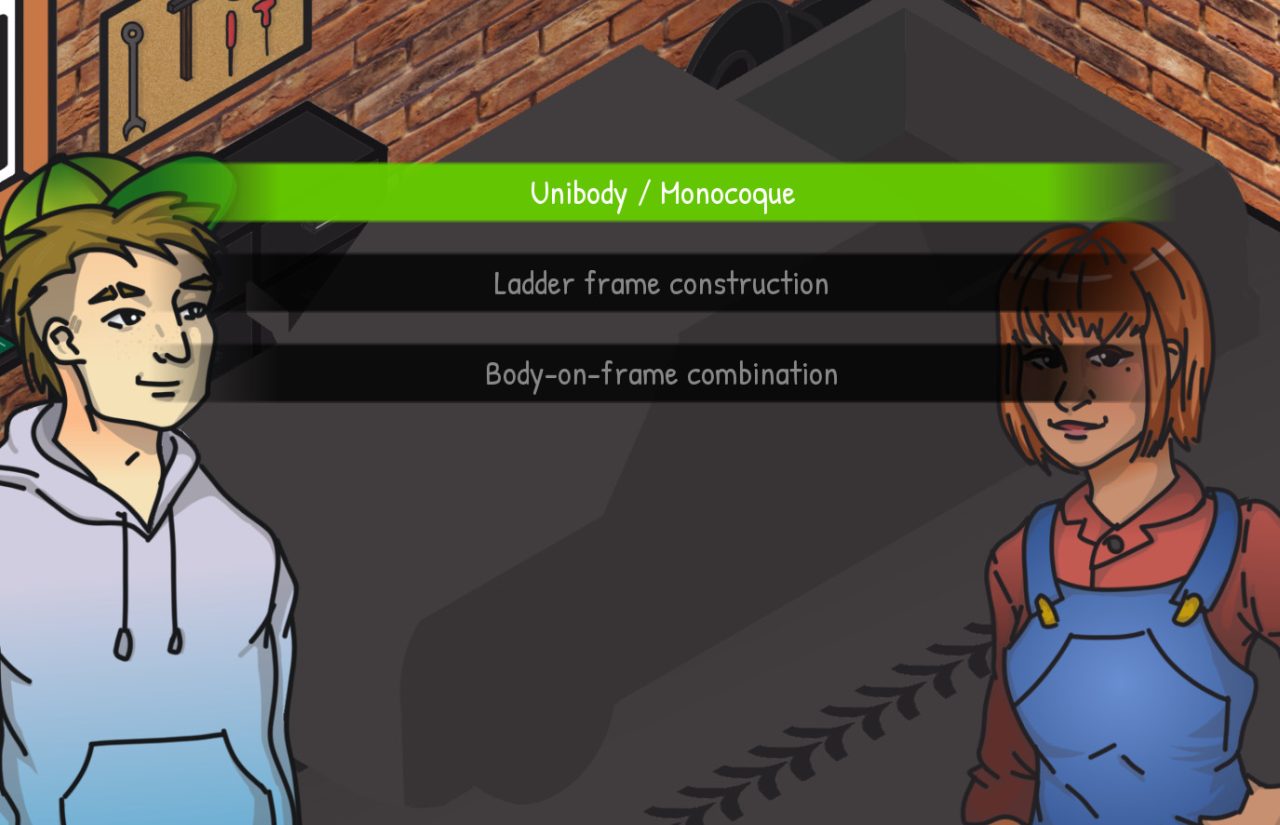
Jedním z významných výstupů projektu Erasmus+ se stal interaktivní gamebook zaměřený na elektromobilitu, energii a dopravu, který byl v těchto dnech úspěšně dokončen. Na jeho přípravě se studenty spolupracovali vyučující informatiky, anglického jazyka i odborných předmětů. Gamebook vznikal jako součást pracovního balíčku WP4 a navazuje na další výukové materiály vytvářené v rámci projektu. Zábavnou formou seznamuje studenty se základy konstrukce automobilů i elektromobilů a pomáhá jim lépe pochopit principy jejich fungování.
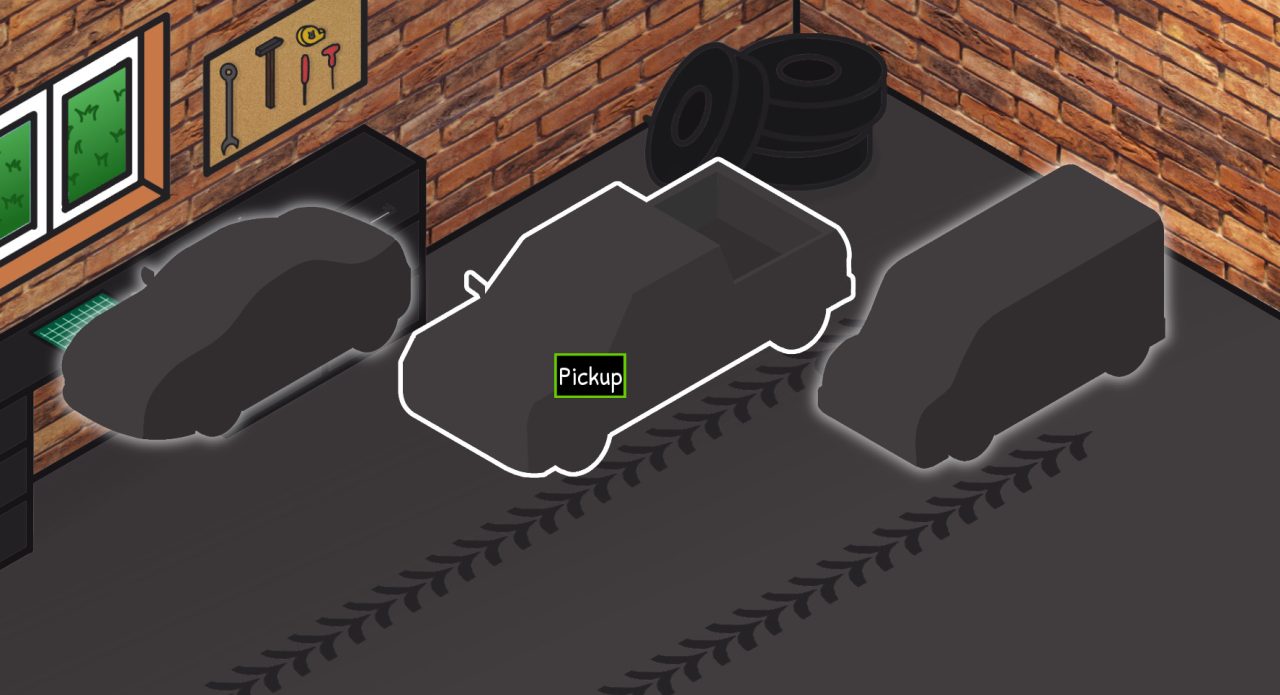
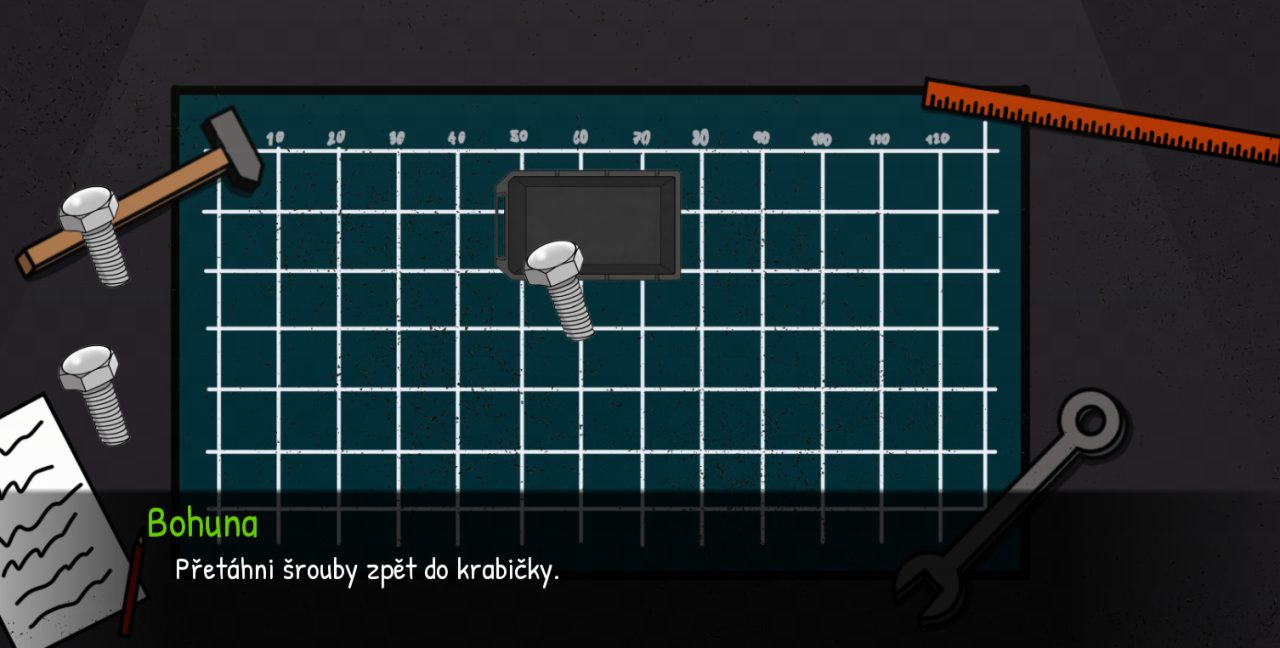
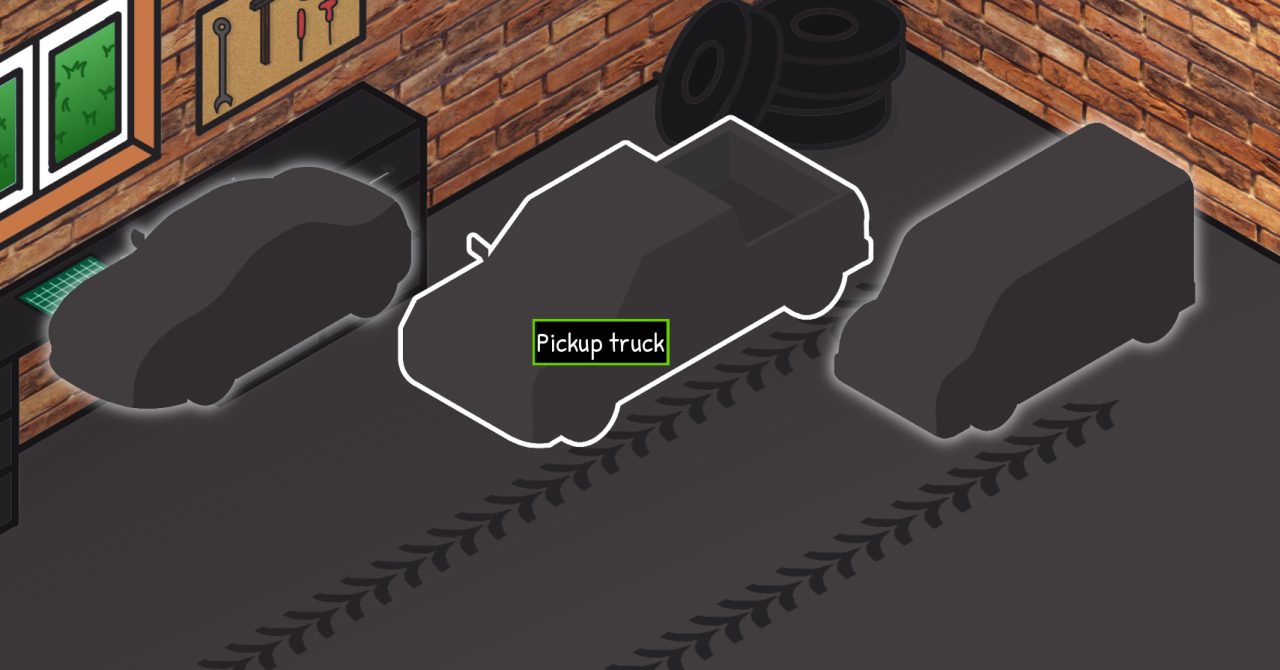
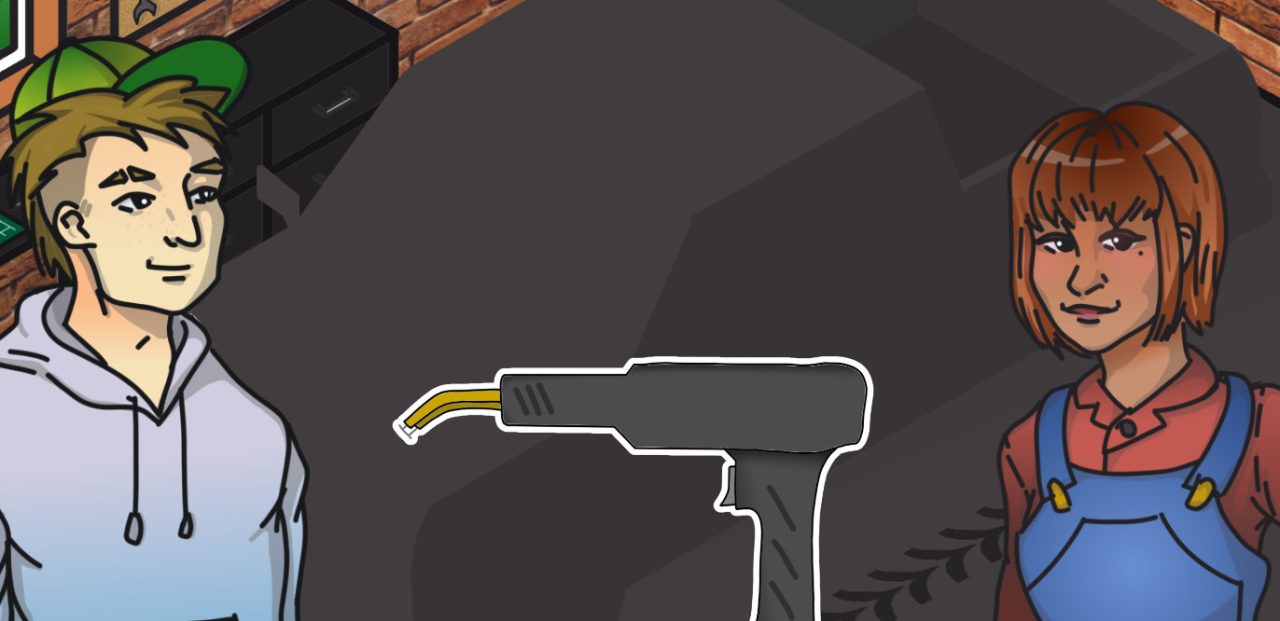
Před samotným příběhem by žáci nejprve měli být seznámeni se základními částmi automobilu a jejich funkcemi. Získané znalosti následně využijí při řešení hlavního úkolu hry. Na začátku hry si zvolí jeden ze tří typů vozidel a jejich cílem je vybrat správné součástky tak, aby výsledný automobil odpovídal zvolenému účelu a byl plně funkční. Součástí gamebooku jsou také interaktivní minihry, které zpestřují průchod příběhem. Díky kombinaci příběhu, rozhodování a herních prvků se studenti učí aktivně přemýšlet nad technickými souvislostmi místo pouhého memorování informací.
Gamebook představuje moderní výukovou pomůcku, kterou lze využít jak při běžné výuce, tak při projektových dnech nebo prezentaci školy veřejnosti. Přispívá k rozvoji digitálních kompetencí studentů a podporuje atraktivní výuku témat spojených s elektromobilitou a udržitelnou dopravou. Gamebook je součástí online materiálů i Expozice energie. Aplikace se nachází na stránkách gamebook.spssecb.cz.
15. 1. 2026 – We have completed an interactive gamebook for teaching electromobility
One of the key outputs of the Erasmus+ project is an interactive gamebook focused on electromobility, energy, and transportation, which was recently successfully completed. Teachers of computer science, English, and specialized subjects collaborated with students on its development. The gamebook was created as part of Work Package 4 (WP4) and builds on other educational materials developed within the project. In an entertaining way, it introduces students to the basics of car and electric vehicle design and helps them better understand how they work.
Before diving into the story itself, students should first become familiar with the basic parts of a car and their functions. They will then apply this knowledge to solve the game’s main challenge. At the start of the game, they choose one of three vehicle types, and their goal is to select the correct components so that the resulting car meets the chosen purpose and is fully functional. The gamebook also includes interactive mini-games that add variety to the story. Thanks to the combination of narrative, decision-making, and game elements, students learn to actively think about technical concepts rather than simply memorizing information.
The gamebook is a modern teaching tool that can be used in regular classes, during project days, or for school presentations to the public. It contributes to the development of students’ digital competencies and supports engaging instruction on topics related to electromobility and sustainable transportation. The gamebook will be included in the online materials as well as in the Energy Exhibition.
15. 12. 2025 Gamebook jako vzdělávací nástroj
Jedním z výstupů spolupráce je vytvoření vzdělávacího gamebooku, který obsahuje některé ze základních principů elektromobility. Cílem gamebooku je seznámit jeho hráče s oborem tak, že jim ukáže, jak lze odborné znalosti uplatnit v simulovaném úkolu. Využitím formátu nelineární fikce svěřuje gamebook studentům/hráčům úkol postavit automobil formou větvených rozhodnutí a miniher.
Za tímto účelem skupina našich studentů pracuje na tvorbě tohoto výukového materiálu. Na gamebooku žáci pracují v rámci kroužku, a někteří se dokonce rozhodli věnovat tomuto společnému projektu svou ročníkovou práci.
Jejich úkoly zahrnují:
- výběr programu, ve kterém bude gamebook vytvořen
- sepsání scénáře příběhu
- vytvoření diagramu větveného příběhu se všemi možnými cestami
- zajištění potřebných audiovizuálních komponentů
- naprogramování gamebooku
- beta testování produktu
- zveřejnění finální verze online, aby byla snadno dostupná všem zájemcům o oblast elektromobility
Přínosy projektu jsou mnohé. Kromě toho, že vznikne finální produkt určený pro veřejnost, samotný tvůrčí proces přináší našim studentům také přináší příležitost k naučení se nových dovedností dle jejich zájmu. Díky bezprostřední spolupráci při návrhu a tvorbě gamebooku mohou získat rozsáhlé zkušenosti s různými softwary, platformami a médii. Zároveň mohou v každé fázi významně ovlivňovat obsah gamebooku tak, aby byl relevantní pro cílovou skupinu – své vrstevníky. V neposlední řadě jejich dovednosti přispějí k předávání znalostí, protože budou moci své know-how sdílet s dalšími studenty (naší nebo partnerské školy).
15. 12. 2025 Gamebook as a learning tool
One of the outputs of the collaboration is the creation of an educational gamebook to cover some of the essential principles of electromobility. The objective of the gamebook is to acquaint the player with the field by showing them how to implement the specialised knowledge in a simulated task. Employing the format of non-linear fiction, the gamebook entrusts the students/players with building a car through a series of decisions and minigames.
To this end, a group of our students has been working on bringing this learning material to life. They are currently working on the gamebook as part of their extracurricular activity, some have even decided to dedicate their year-long project to this joint effort.
Their tasks include:
- selecting an engine to run the gamebook in
- drafting a script of the storyline
- creating a story-chart with all the possible routes
- obtaining the necessary audio-visual components
- programming the gamebook
- beta-testing the product by playing through various paths
- placing the finalised product online for an easy access to anybody interested in the field of electromobility
The benefits of the project are manifold; aside from the final product being brought to life for the public to enjoy, the creative process provides a learning opportunity for our students. By working closely on designing and creating the gamebook, they can gain extensive experience with varied software, platforms, and media. Moreover, they can significantly impact the gamebook’s content at every step, making it relevant to the target audience – their peers. Lastly, their skills will contribute to knowledge transfer, as they will be able to share their know-how with other (our or partner school) students.
Financováno Evropskou unií. Názory vyjádřené jsou názory autora a neodráží nutně oficiální stanovisko Evropské unie či Evropské výkonné agentury pro vzdělávání a kulturu (EACEA). Evropská unie ani EACEA za vyjádřené názory nenese odpovědnost.
Funded by the European Union. Views and opinions expressed are however those of the author(s) only and do not necessarily reflect those of the European Union or the European Education and Culture Executive Agency (EACEA). Neither the European Union nor EACEA can be held responsible for them.
 Czech
Czech  English