


KA1 Mobility Accreditation

2024-2-CZ01-KA210-VET-000266645
Education for the Future - Electromobility, Future Transport, Sustainable Transport
Erasmus+ VET
Key Action 2, Partnership for Cooperation
The Erasmus+ Partnership for Cooperation project provides our school with the opportunity for international cooperation with our partner school Odda vidaregåande skule/ Odda upper secondary school in Norway. With this partner, we decided to share our experience and jointly develop new methodologies for the teaching field of Electromobility, thus innovating the vocational education environment and raising the level of education in the different European countries.
After mutual consultation between the two partner schools, the objectives and outputs were set in line with the main priorities of the project. These are:
- In cooperation with a foreign partner, create digital teaching materials for the Electromobility curriculum that could be used in other EU regions and then used by other schools in secondary education,
- Creation of educational programmes (curricula, thematic plans) with the issue of electromobility in cooperation with tertiary education (partner universities in the Czech Republic and Norway) and partner companies,
- Linking the two partner schools in the preparation of an Erasmus+ project for student and staff mobility,
- Active cooperation with employers in the regions, monitoring developments in technology and employment. Cooperation with partner universities,
- Creation of a Gamebook in Aj for the Exposition of Energies,
- Establishment of the Energy Exposition - an interactive showroom for the public and primary school pupils,
- Implementation of specific school projects,
- Preparation and implementation of the E-twinning project,
- Creation of an online environment for the placement of e-learning materials.
Funded by the European Union. The views expressed are those of the author and do not necessarily reflect the official position of the European Union or the European Agency for Education and Culture (EACEA). Neither the European Union nor the EACEA accepts responsibility for the views expressed.
Funded by the European Union. Views and opinions expressed are however those of the author(s) only and do not necessarily reflect those of the European Union or the European Education and Culture Executive Agency (EACEA). Neither the European Union nor EACEA can be held responsible for them.
WP1.1 Round tables | Round tables
5 Jun 2025 Round table - conference "A word about electromobility"
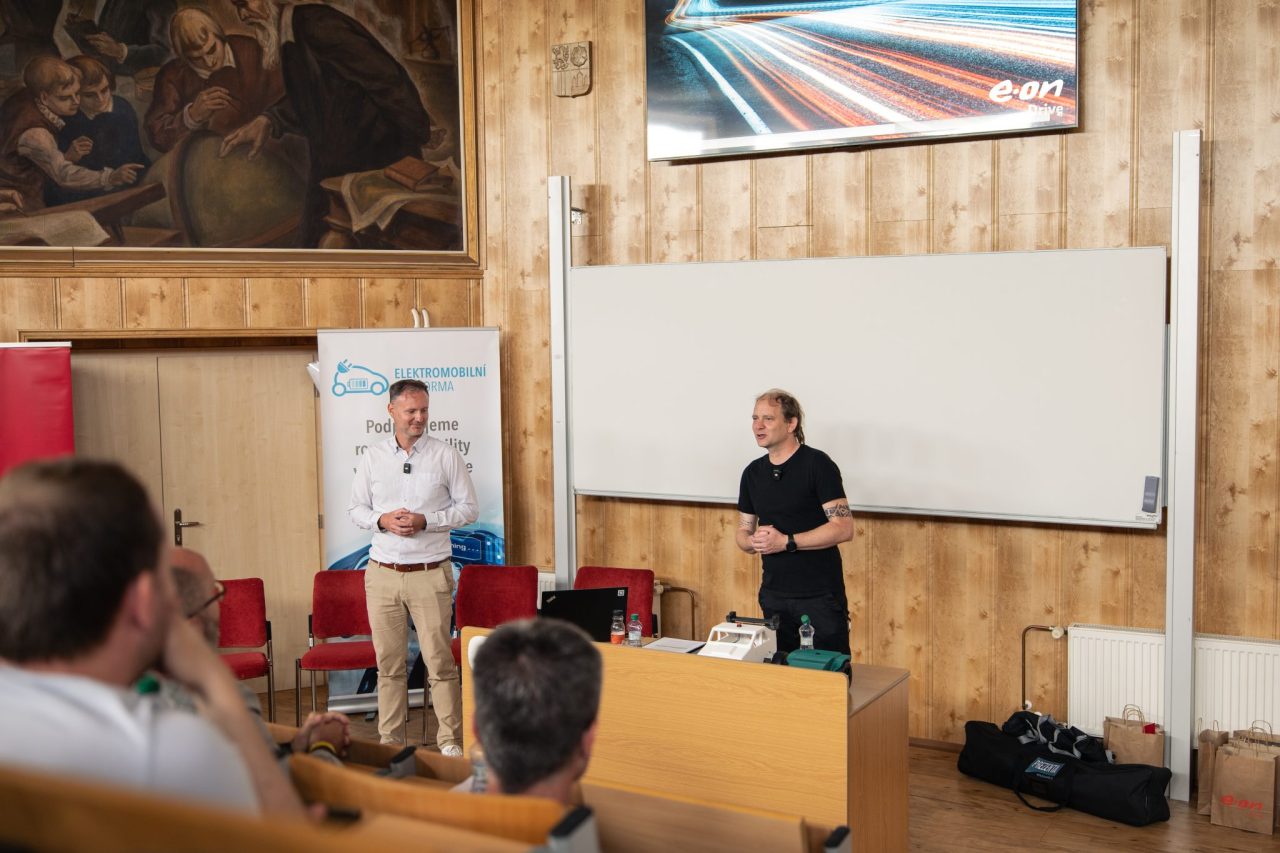
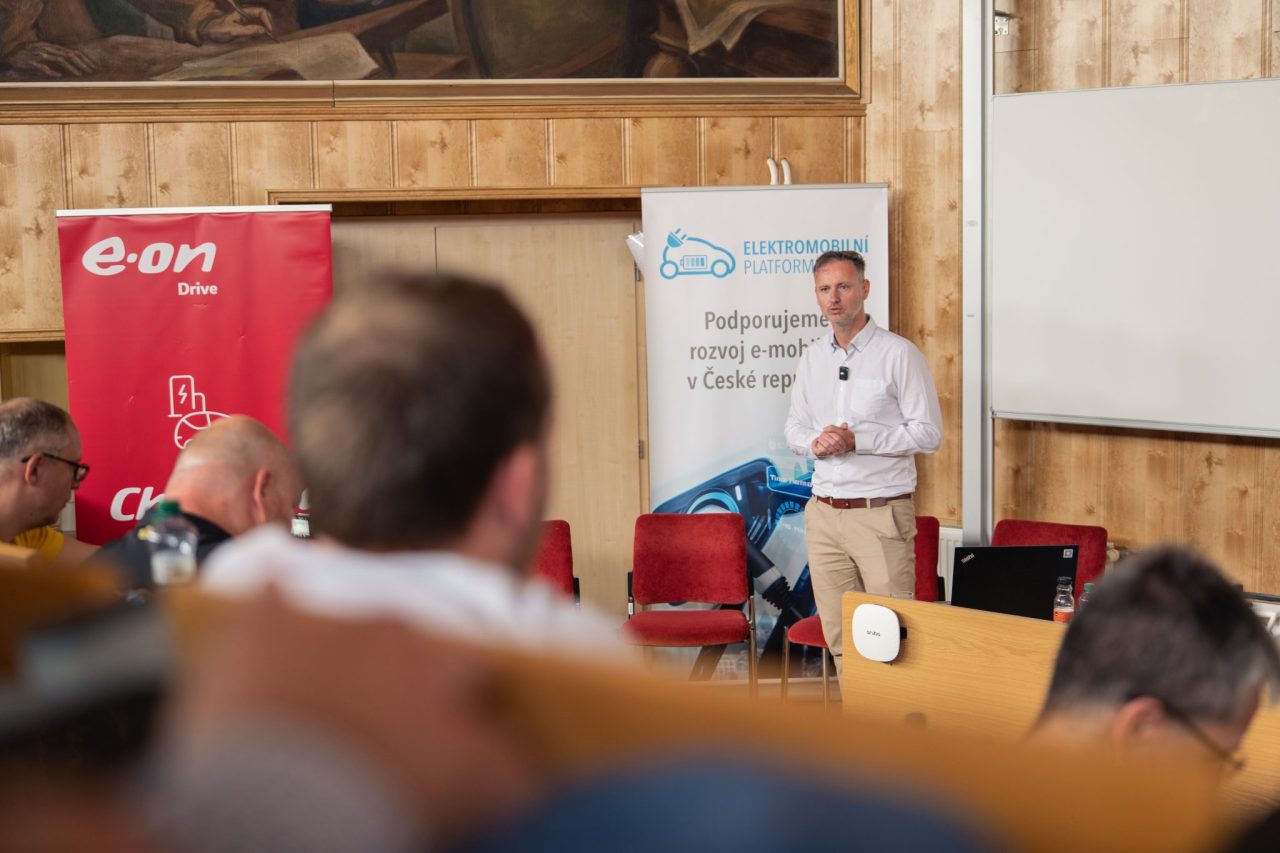
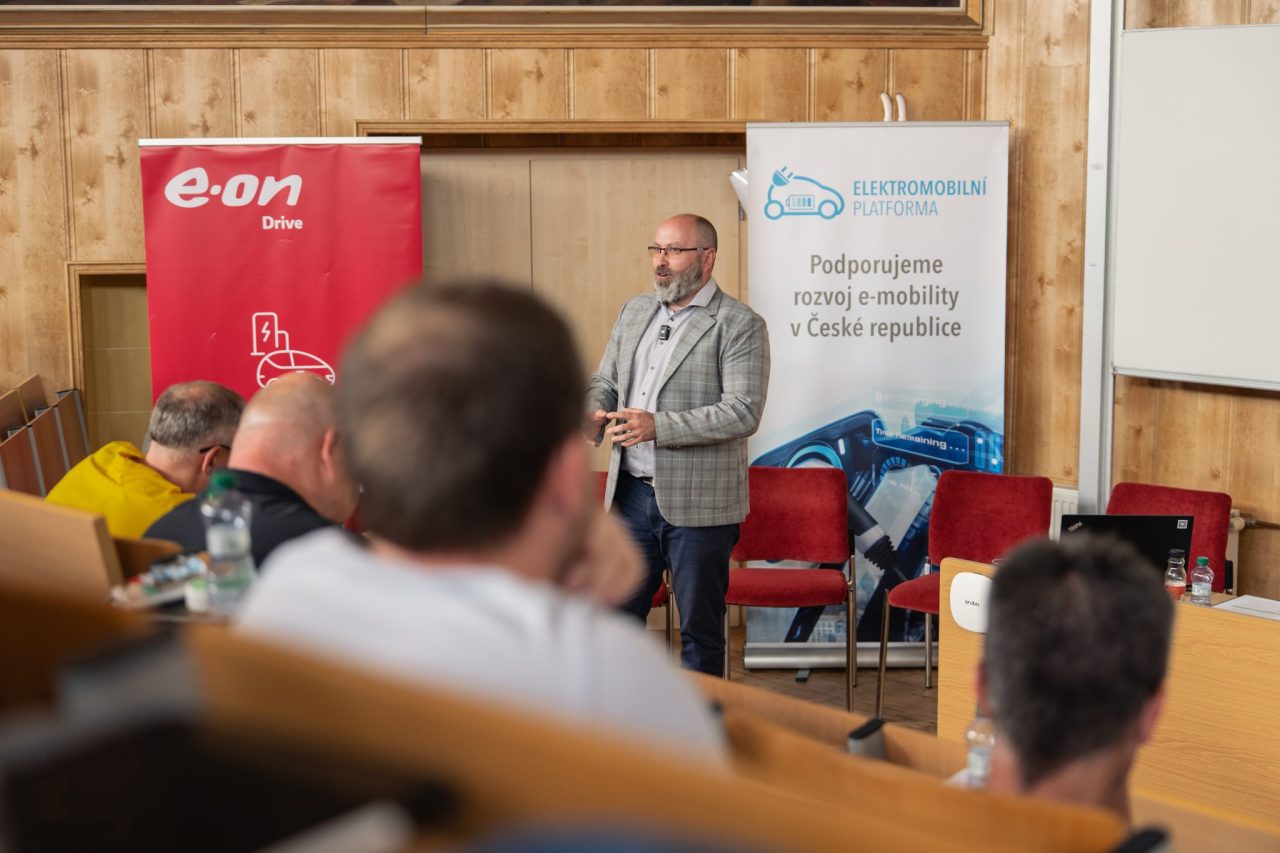
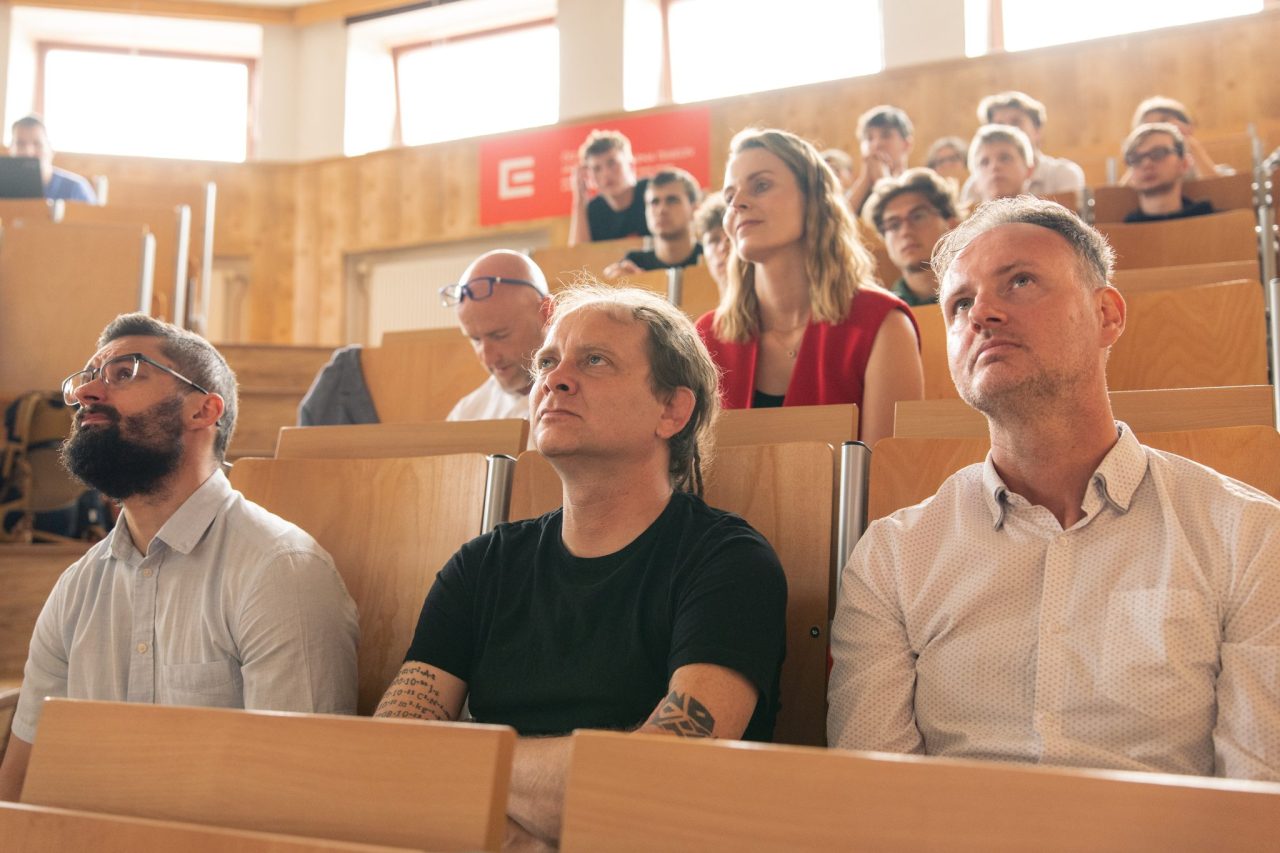
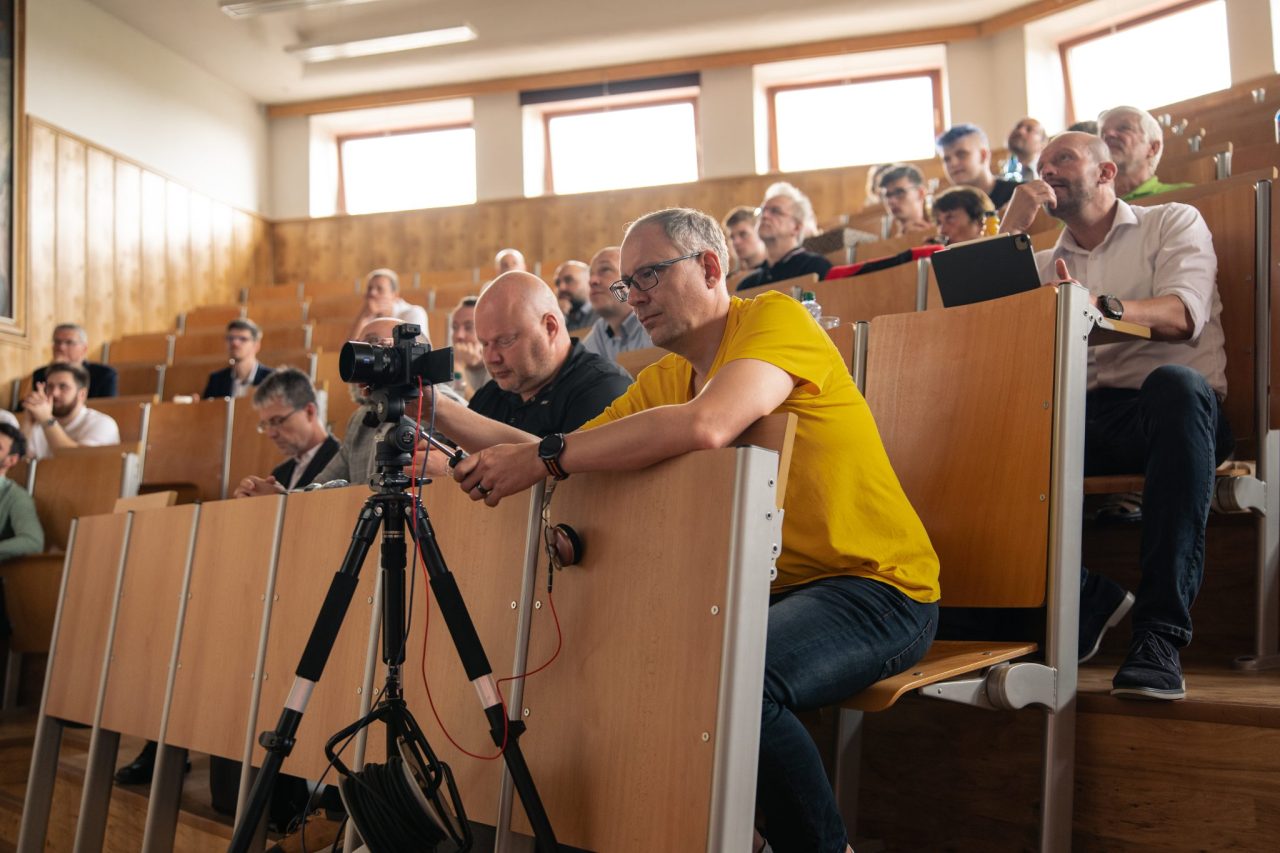
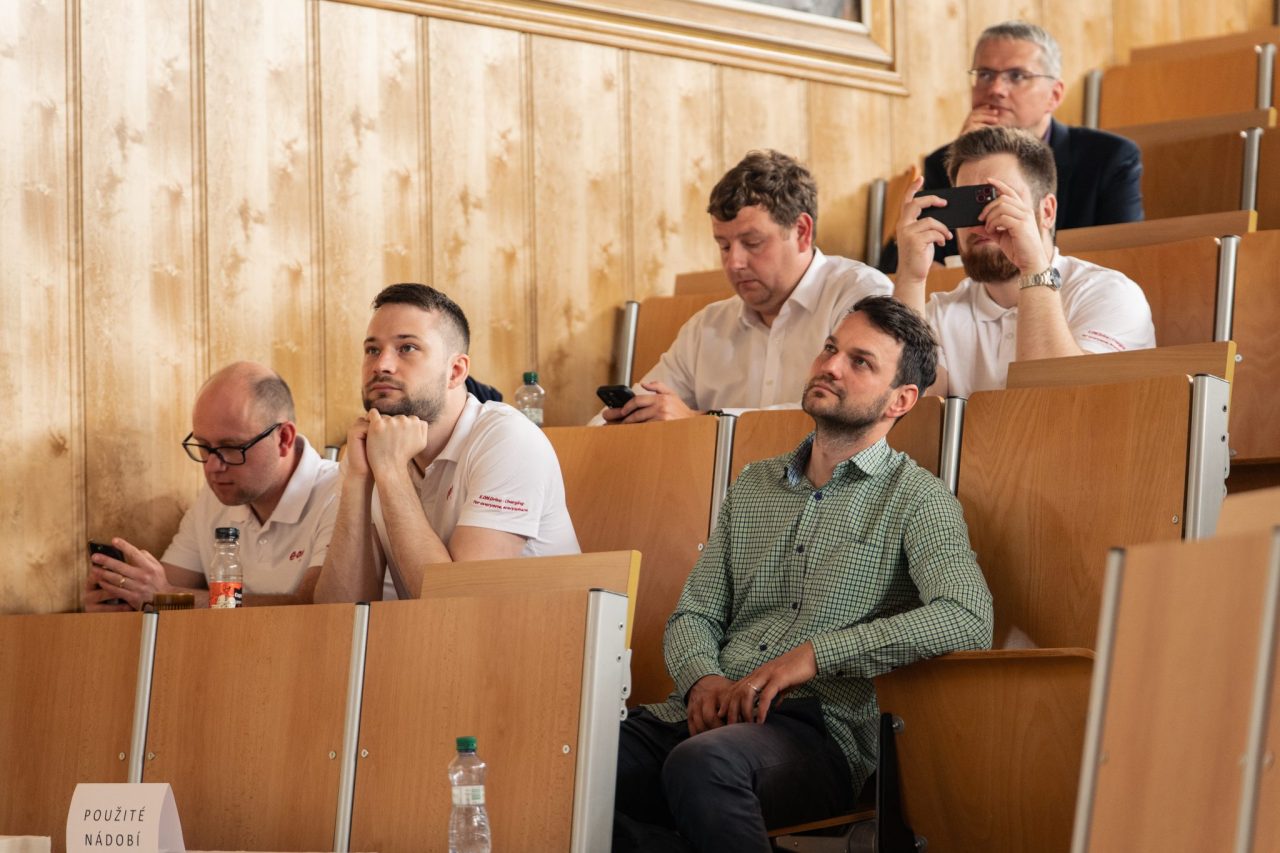
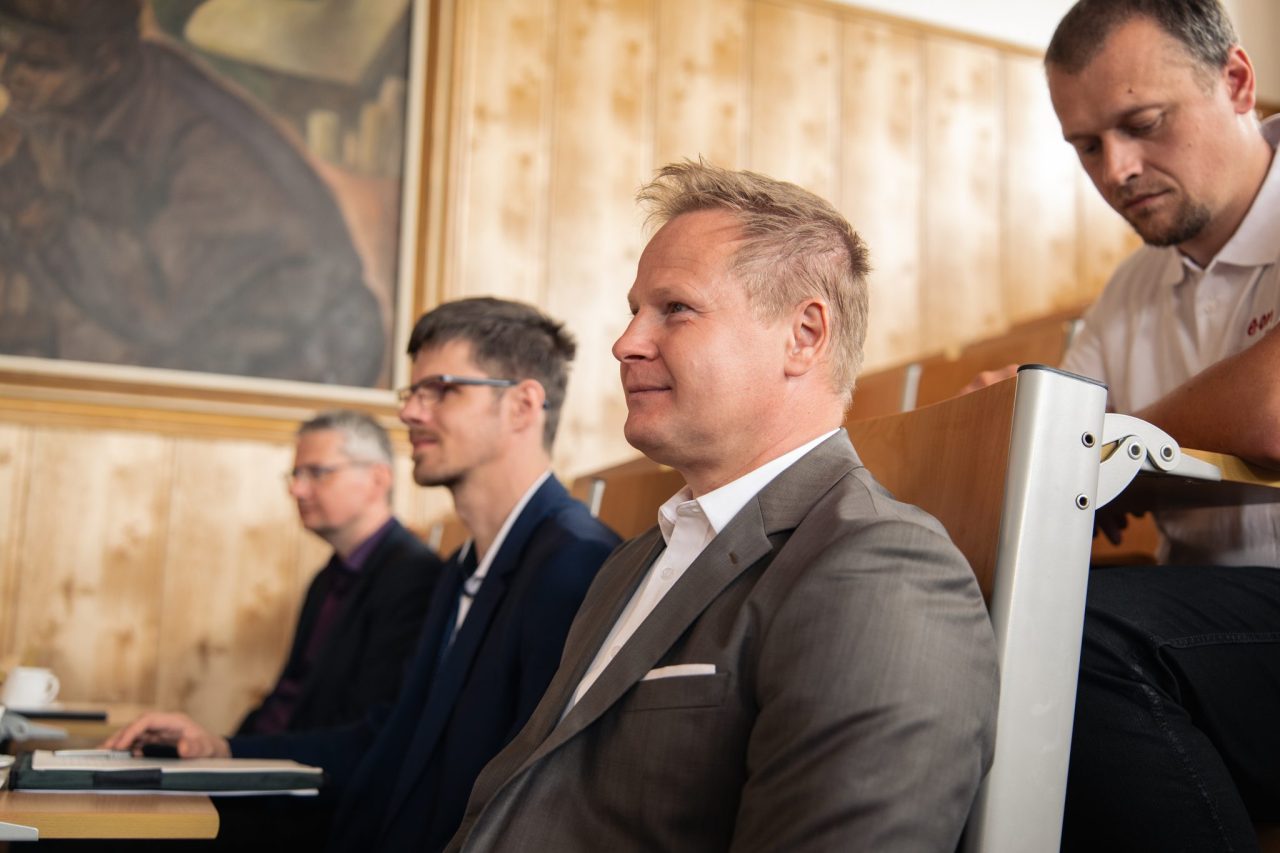
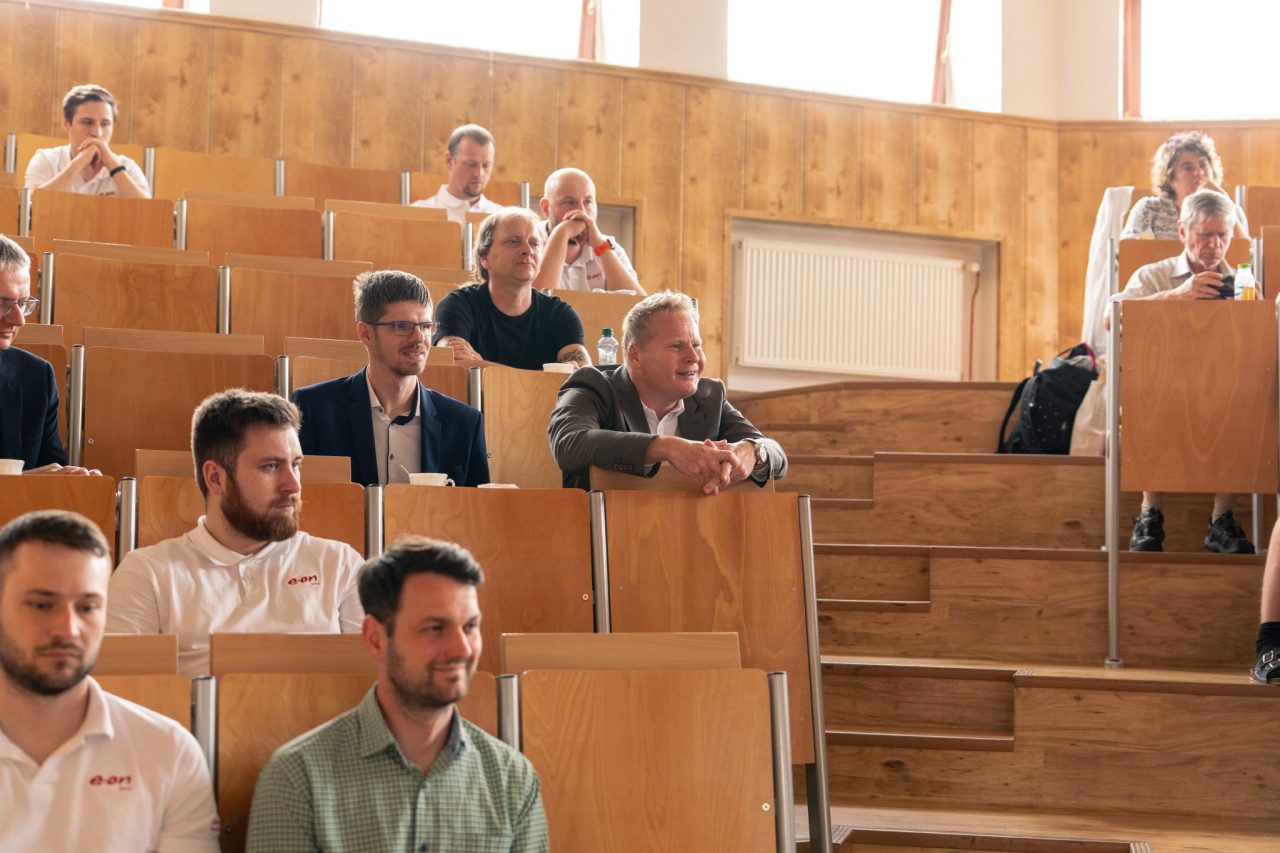
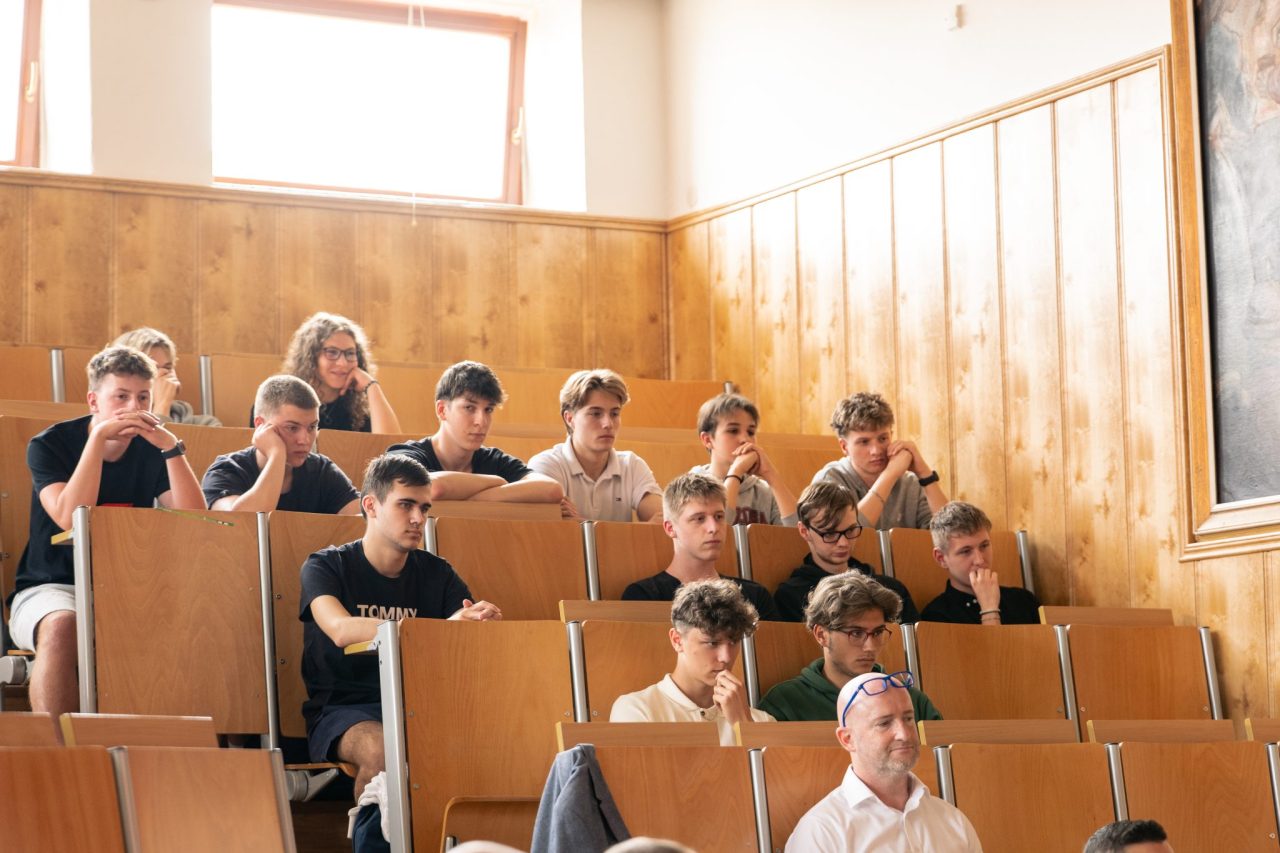
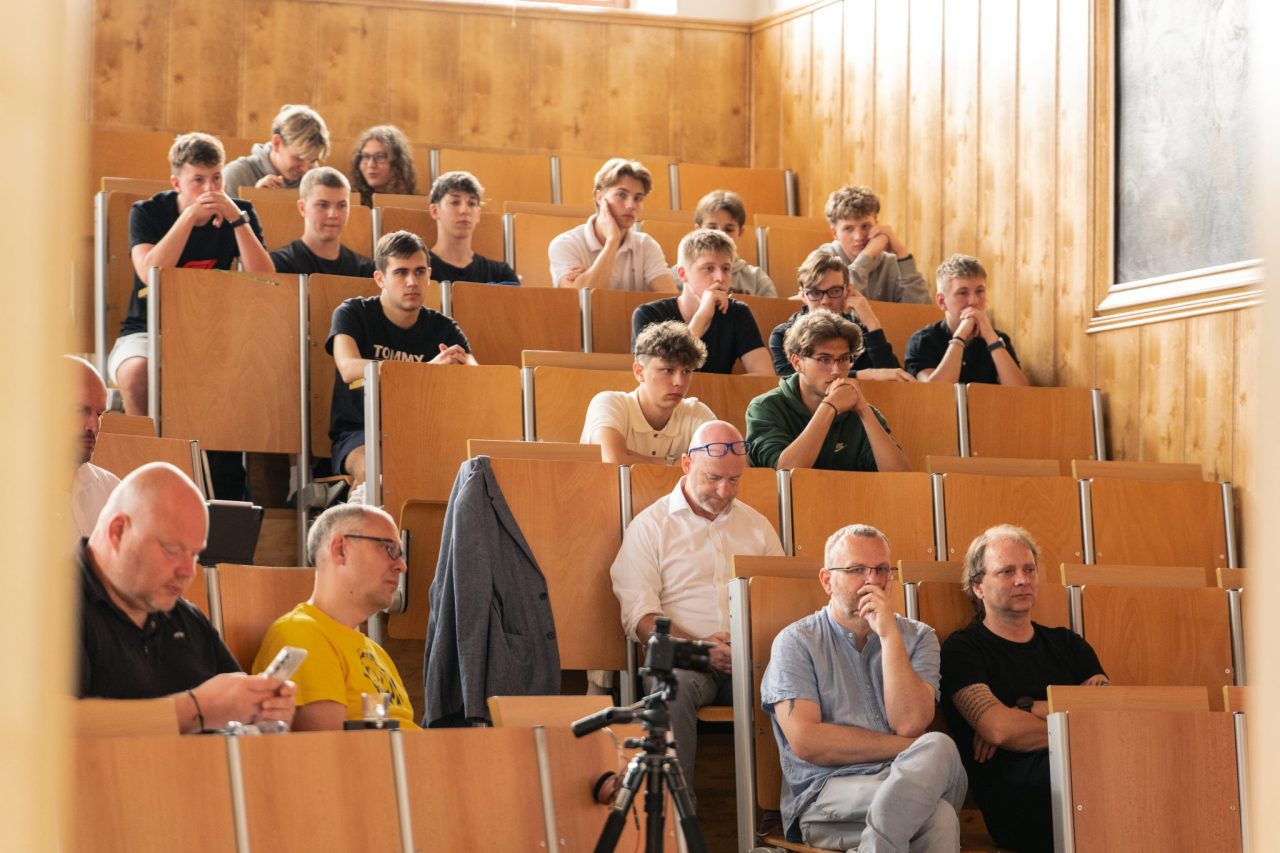
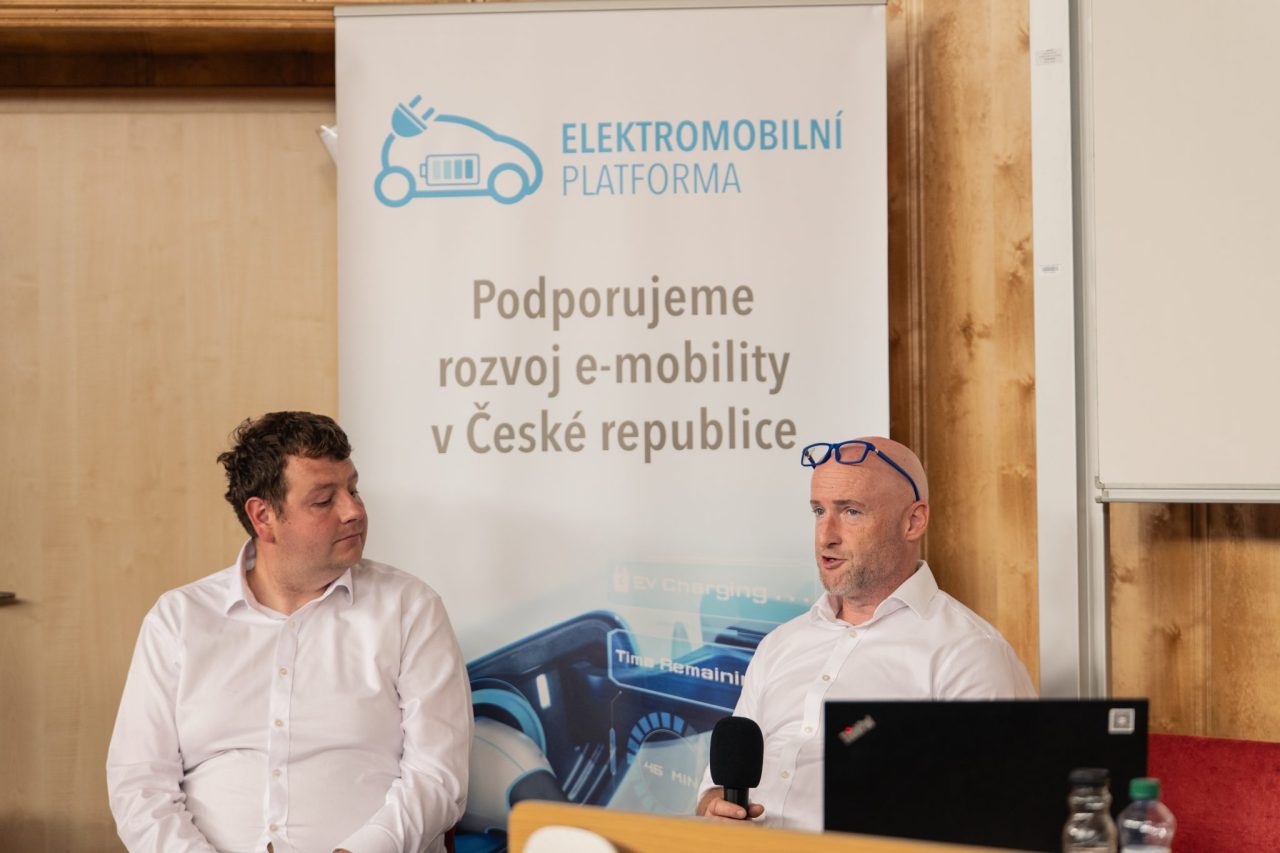
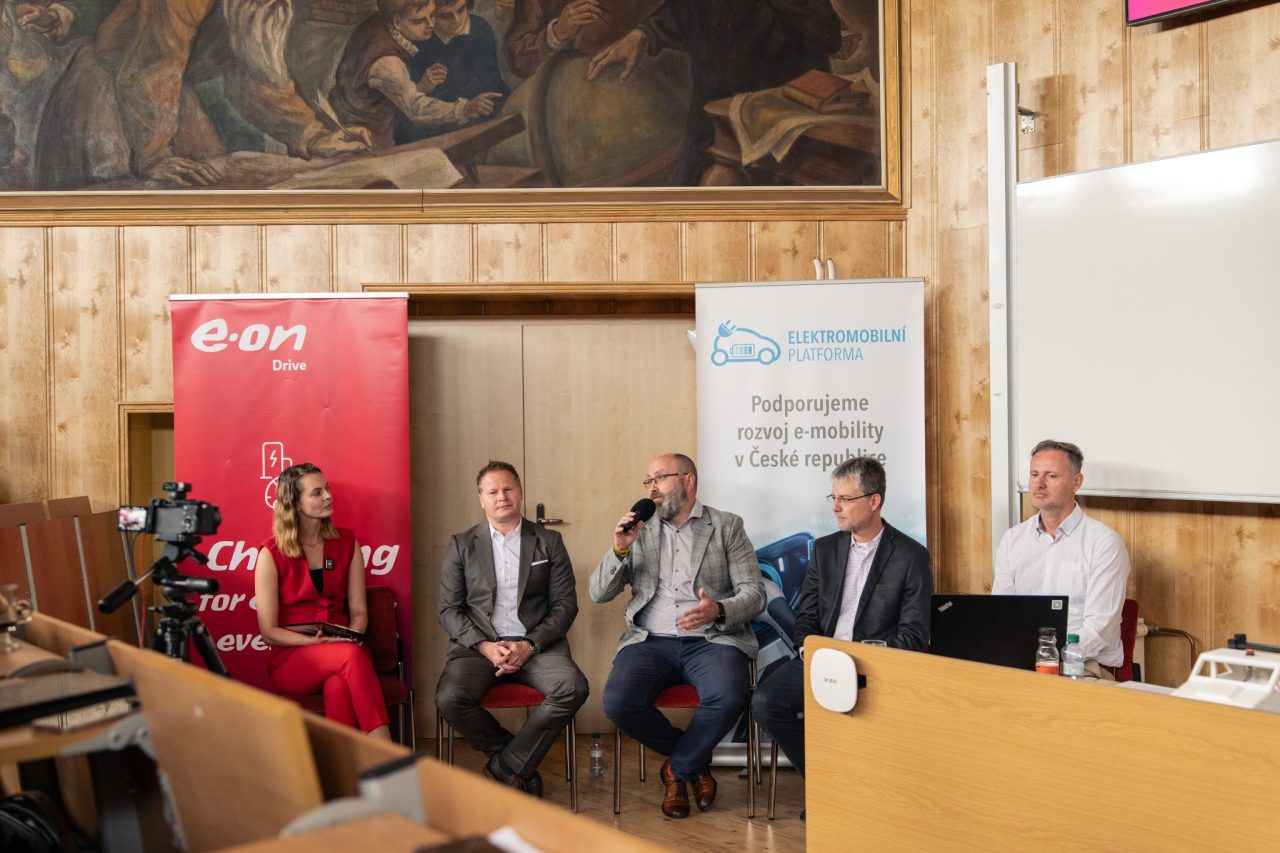
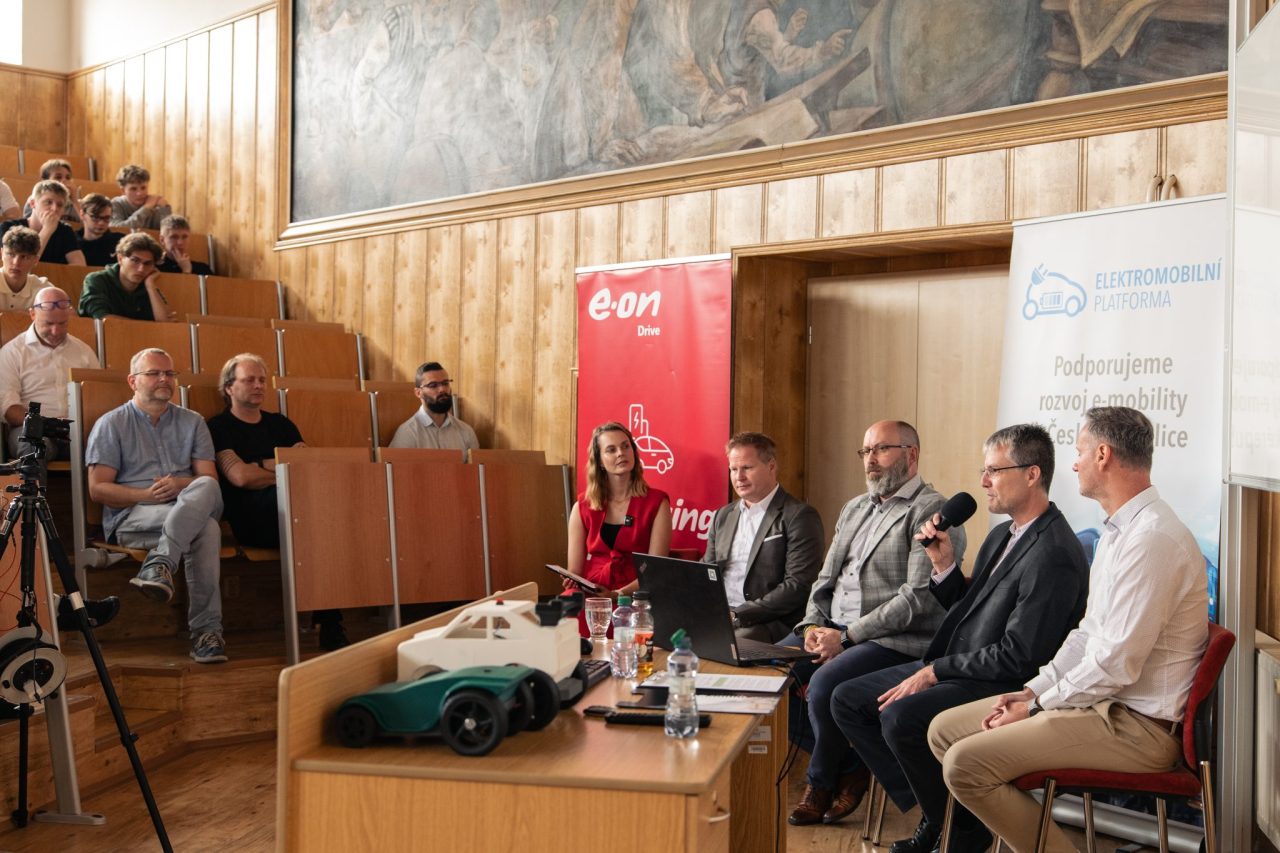
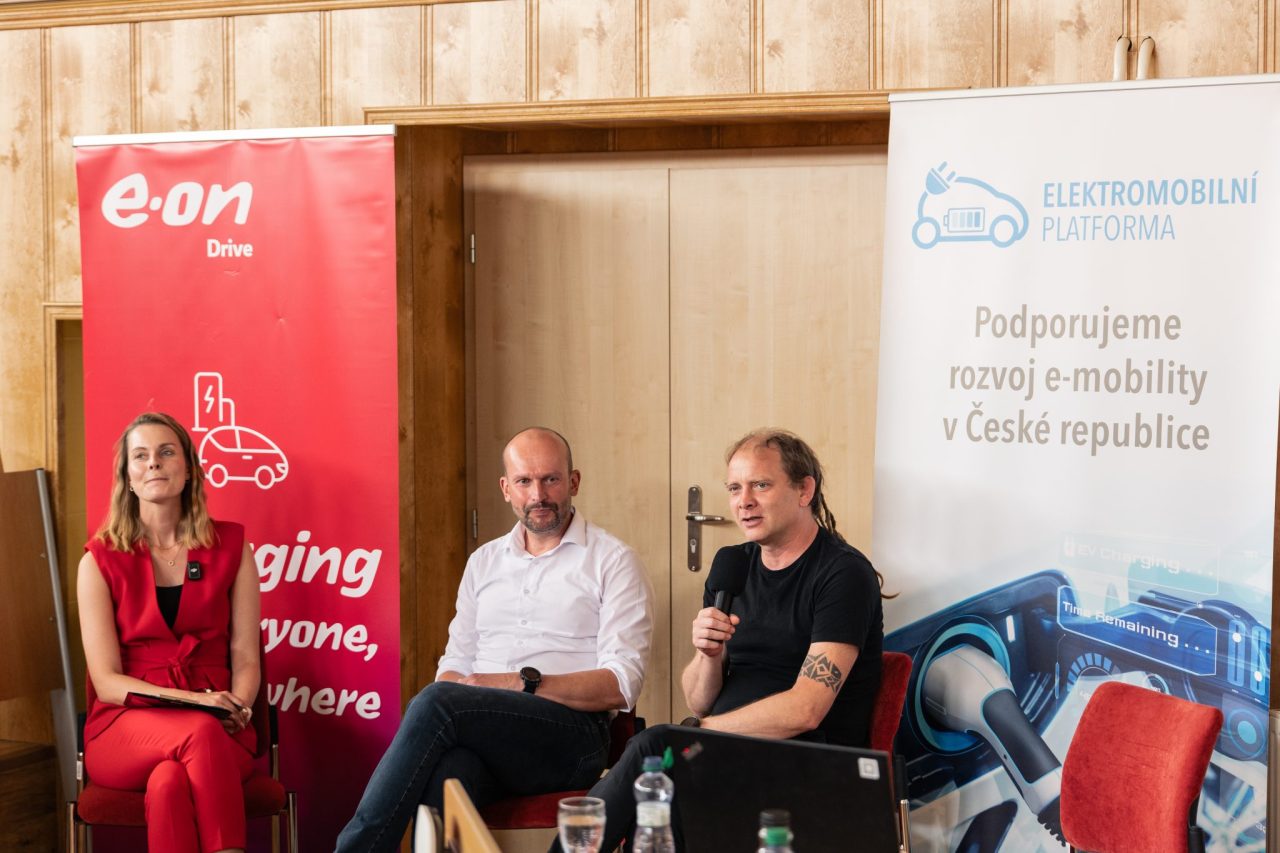
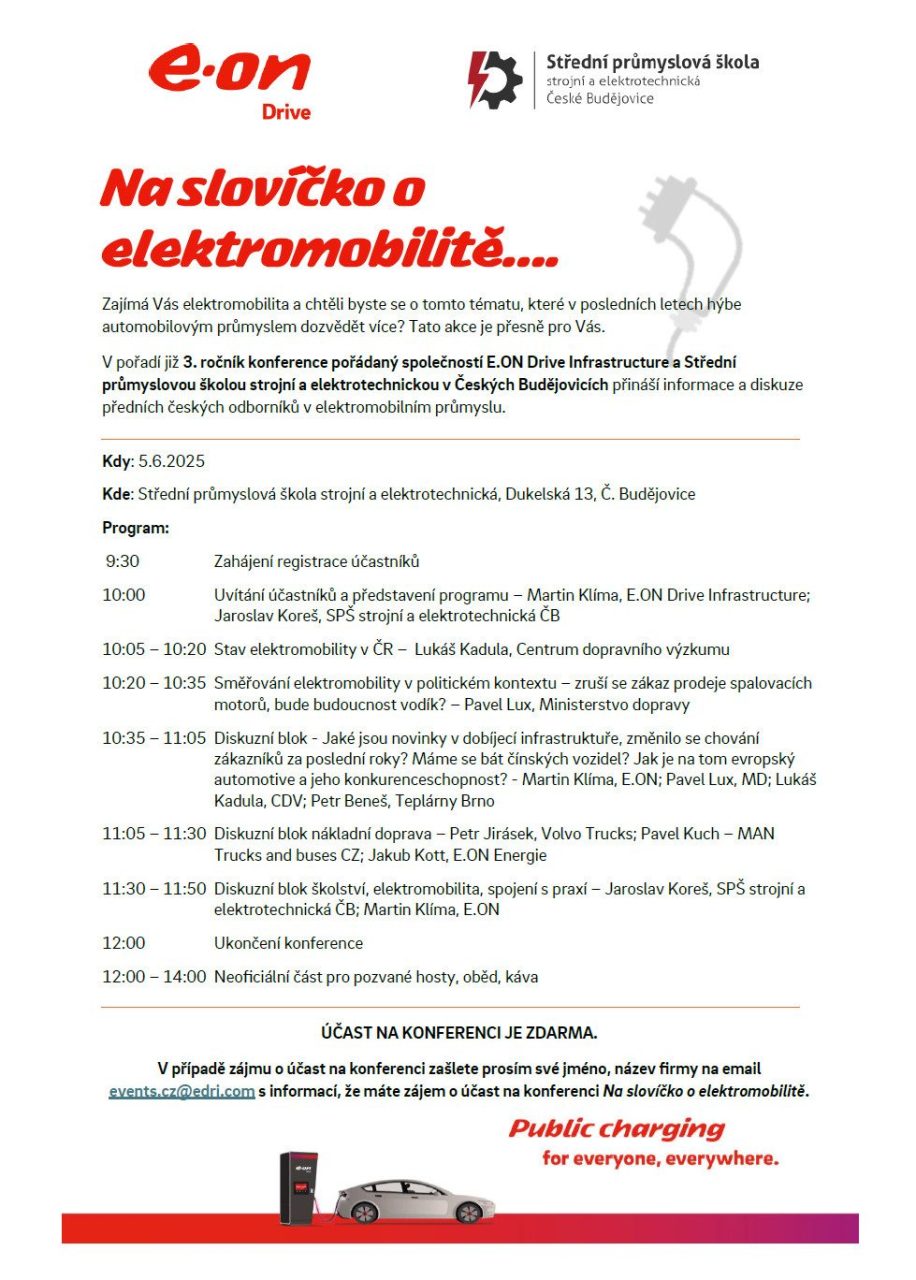
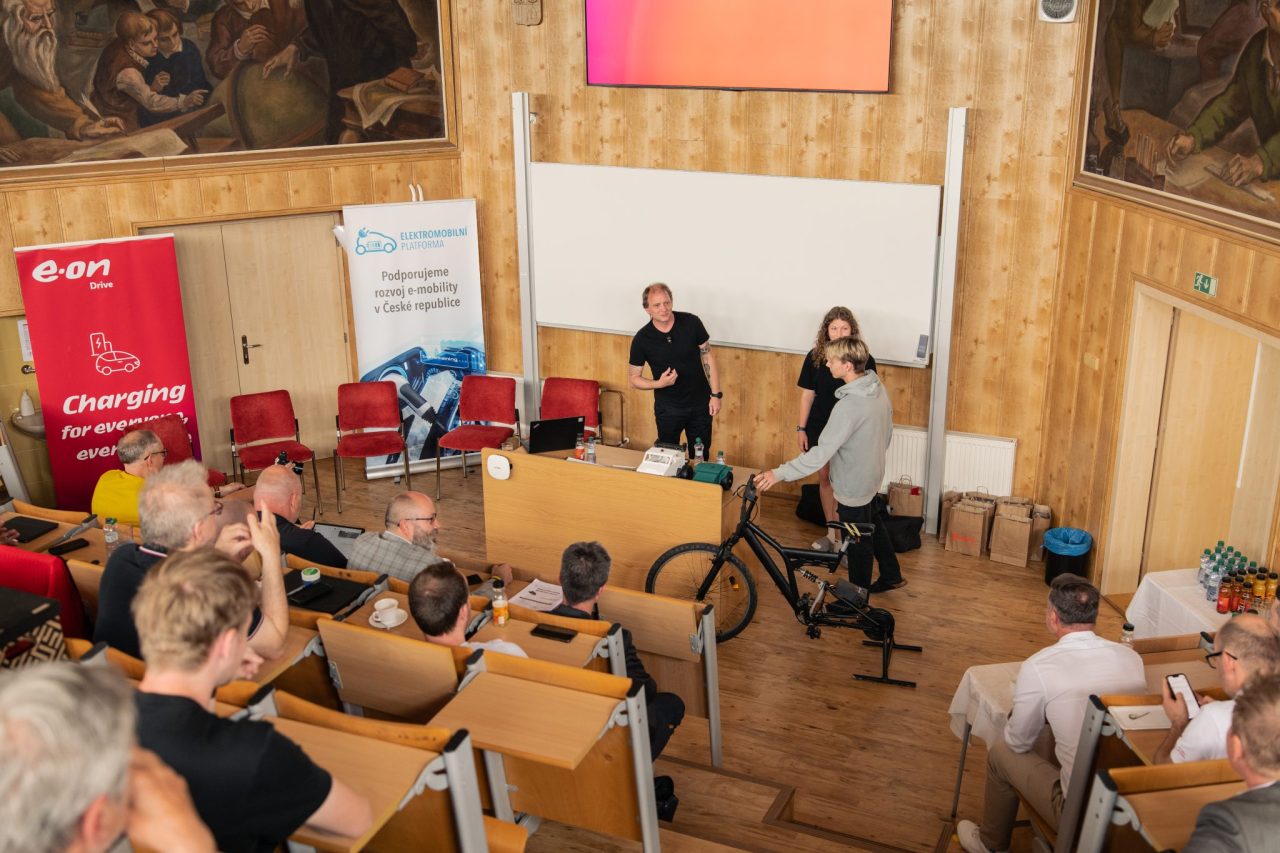
On Thursday 5 June 2025, the third "A word about electromobility..." conference took place in the auditorium of our school SPŠ SE, bringing together top experts with enthusiastic students and showing where the automotive industry is heading.
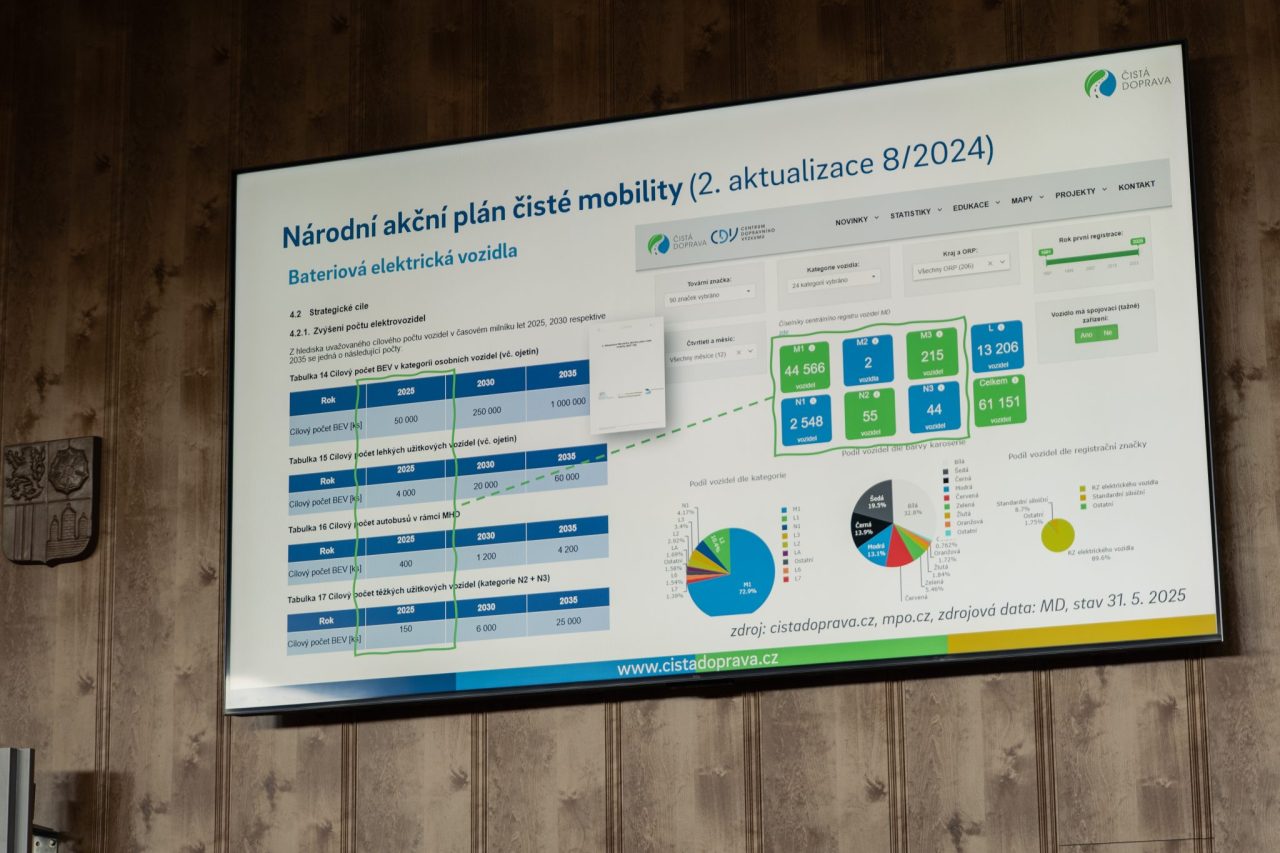
From 9:30, the school auditorium was filled with participants eager to learn about a phenomenon that has been changing the world of transportation in recent years. Leading Czech experts gave their presentations and shared their visions and data - the lectures addressed the current state of electromobility in the Czech Republic, the direction of electromobility in the political context, innovations in charging infrastructure, challenges and opportunities of truck and bus electrification, and last but not least, the connection between education and practice in the field of electromobility.
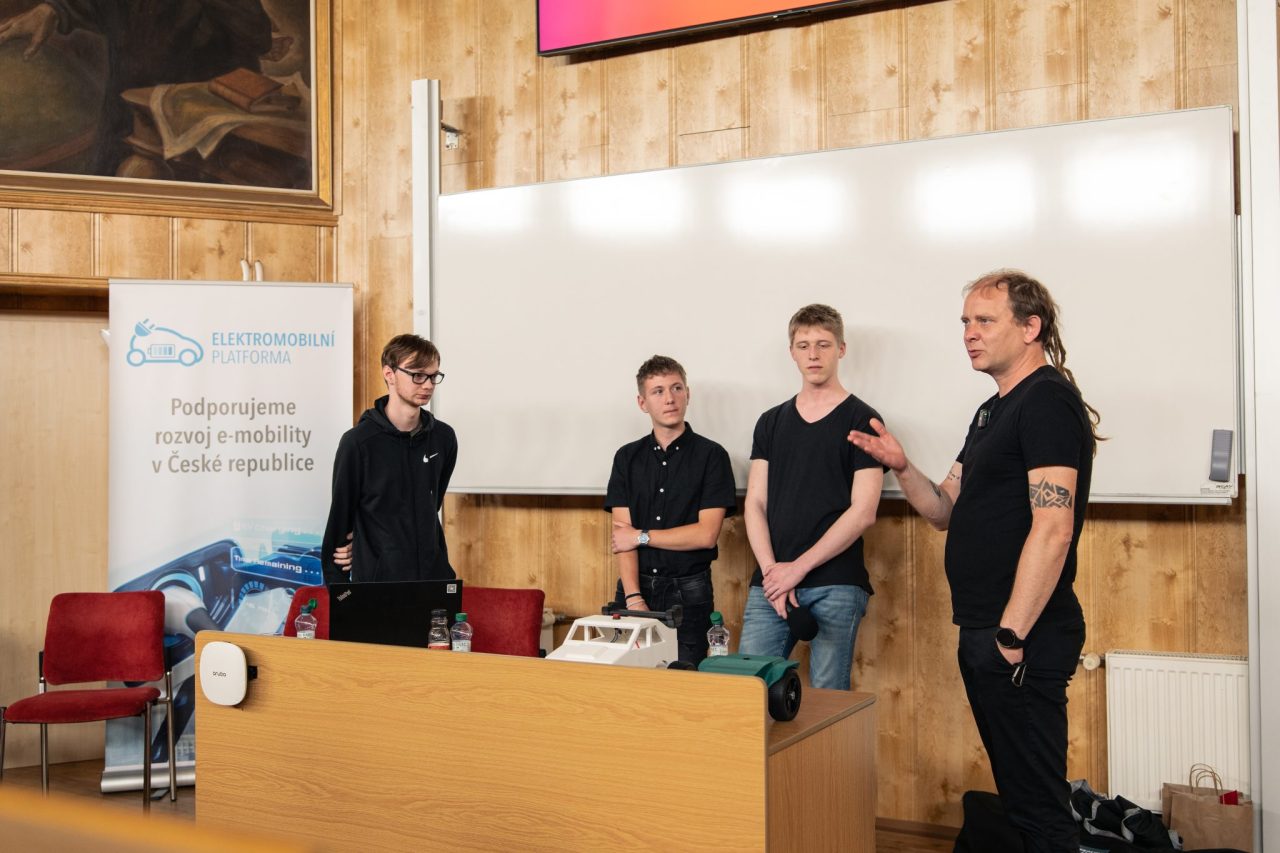
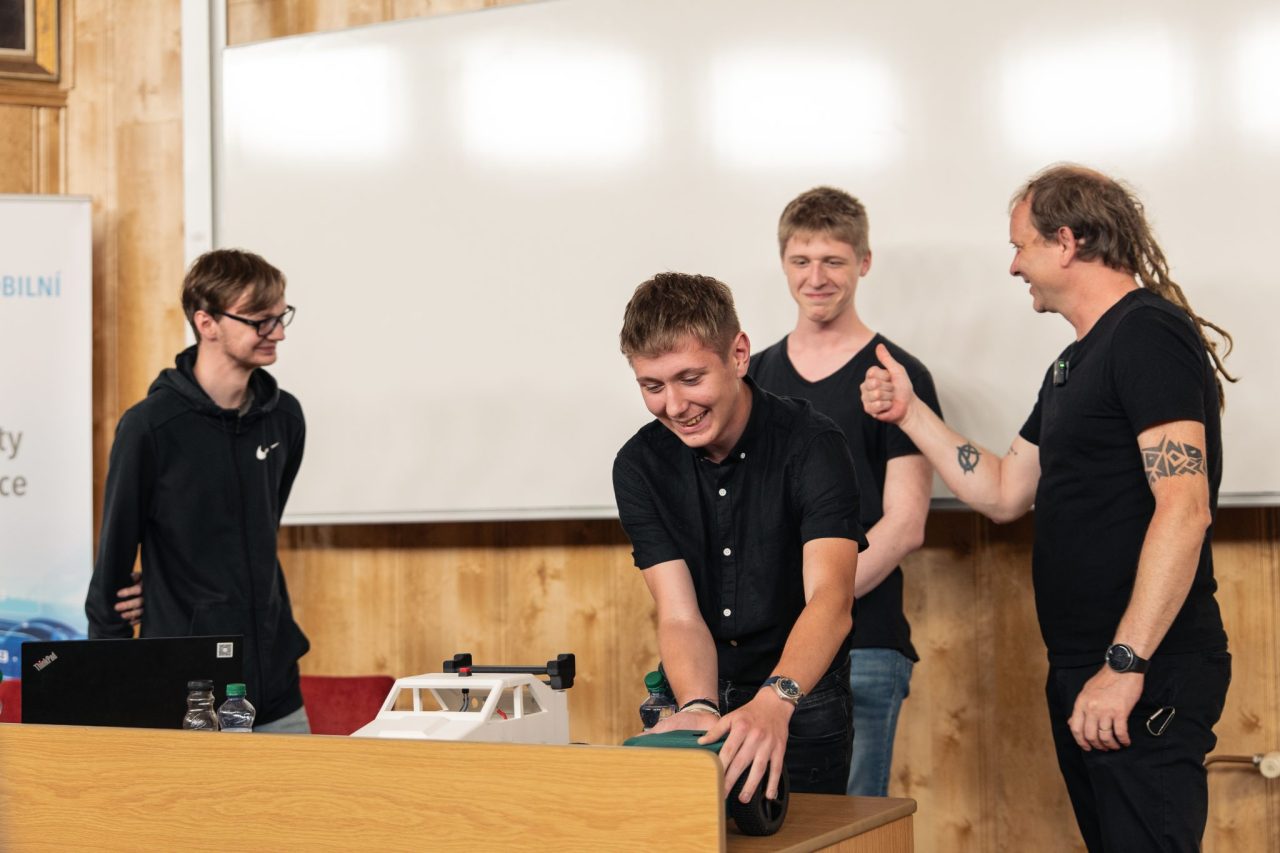
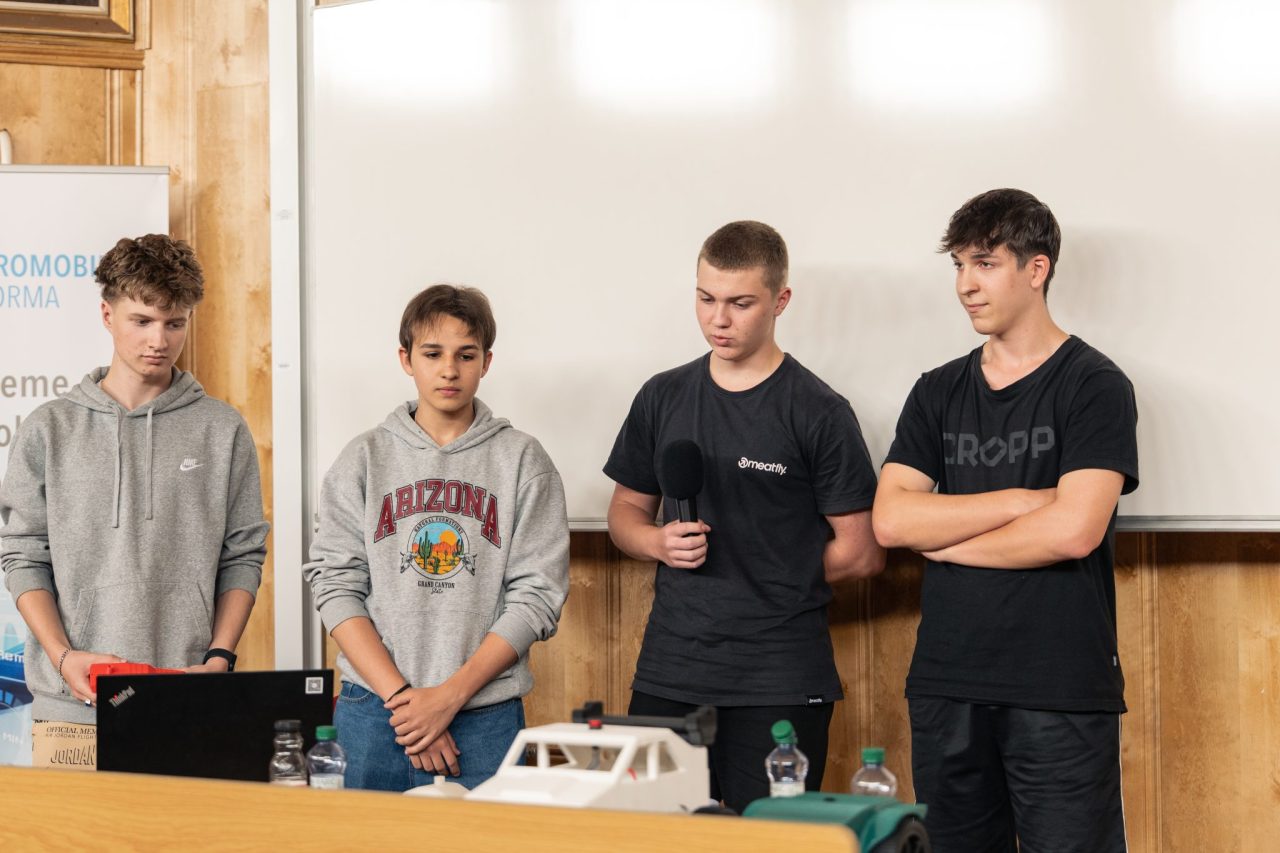
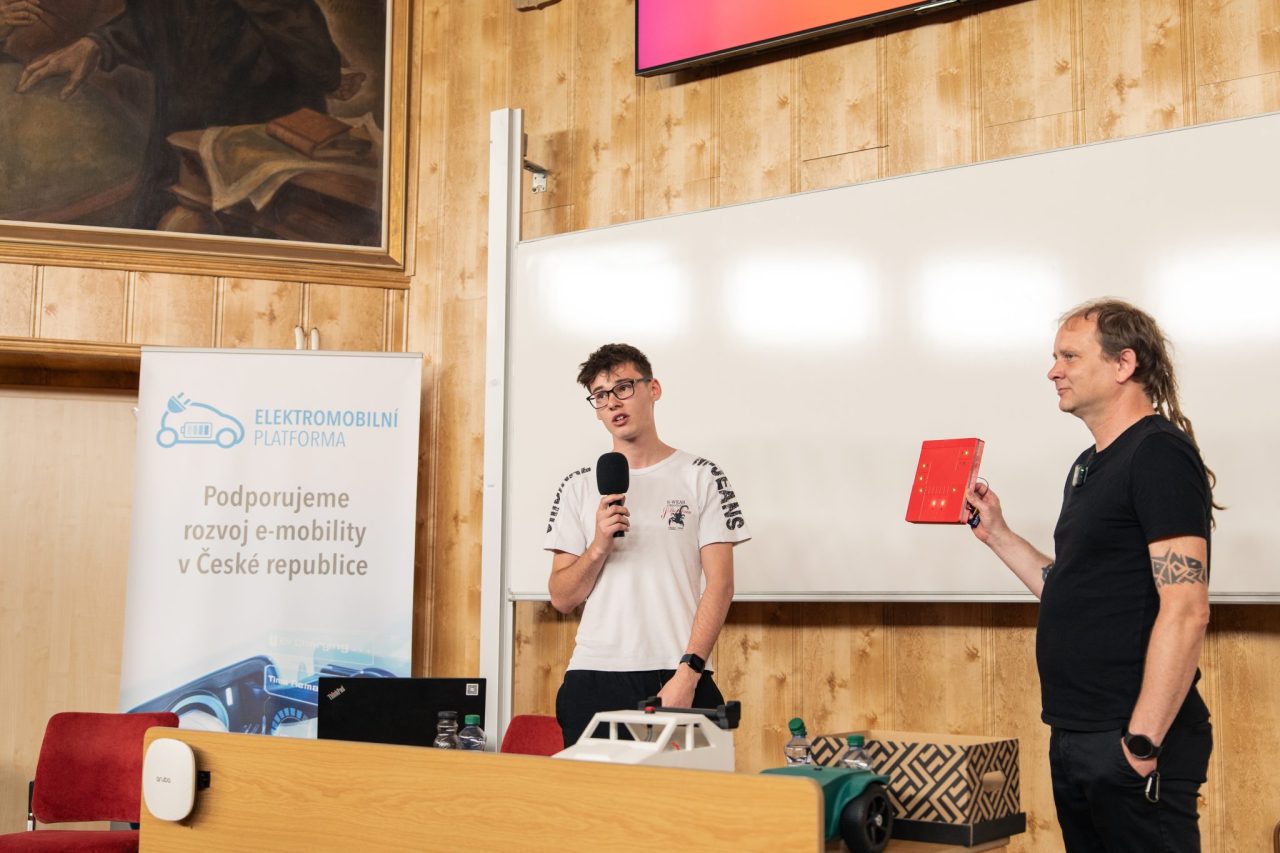
After the morning dose of information and discussions, the conference came to a close - the presentation of student projects. Students in the field of Electromobility gradually showed their year's work and models, combining knowledge of electrical engineering and mechanical engineering:
- Students of the 1st grade presented their independently designed and subsequently printed models of balloon-powered cars, which were not just toys but functional prototypes.
- A model of an intersection simulating traffic control was presented by a 2nd grade student.
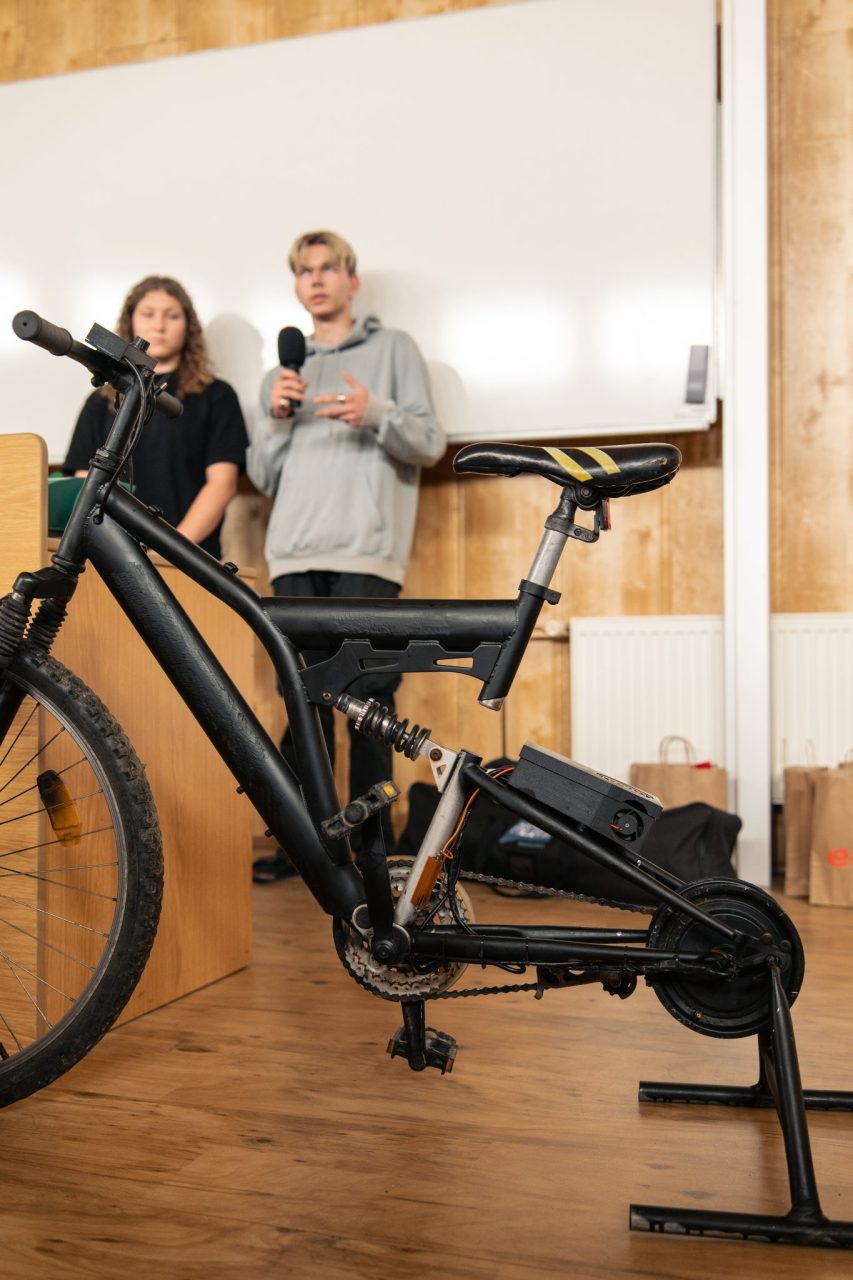
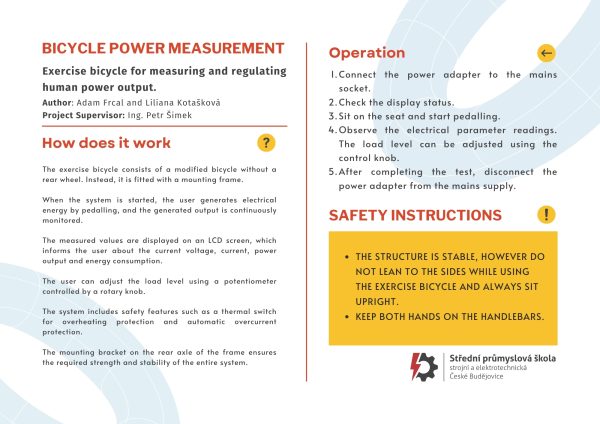
- A bicycle measuring the work done while pedaling, which demonstrated the physical principles of energy conversion, was demonstrated by a pair of 3rd grade students.
These projects have also demonstrated the importance of practical teaching and linking theory to real-world applications.
5. 6. 2025 Round table - conference “A word about electromobility”
The 3rd conference "A Word About Electromobility..." took place on Thursday, June 5, 2025, in the lecture hall of our SPŠ SE school. This conference brought together some of the top experts with enthusiastic students, and gave a glimpse into where the automotive industry is headed.
With the event starting at 9:30 a.m., the school lecture hall filled with attendees looking forward to learning about a phenomenon that has been reshaping transportation in recent years. The presentations were given by prominent Czech experts, who shared insightful data and elaborated on their visions for the future. The lectures addressed the current state of electromobility in the Czech Republic, the direction of electromobility in the political context, news in charging infrastructure, the challenges and opportunities of electrifying trucks and bus transport, and, last but not least, the connection between education and practice in the field of electromobility.
Following the morning session full of useful info and discussions, the conference wrapped up with a presentation of student projects. The Electromobility students showcased their year-long projects and models, combining their knowledge of electrical engineering and mechanical engineering:
- First-year students presented their independently designed and printed fully-functional prototypes of balloon-powered toy cars.
- A second-year student introduced their model of an intersection that simulated traffic control.
- Drawing on the physical principles of energy conversion, a team of two third-year students presented their project - a bicycle that measured the work performed while pedalling.
These projects clearly showed the importance of practical teaching and linking theory with real-world applications.
WP1.2 Legislation | Legislation
18. 2. 2026 Electromobility - legislation, framework curricula, school curricula and concepts for teaching electromobility
First, it is necessary to define the basic concepts related to the educational system of the Czech Republic.
School curriculum (hereinafter referred to as SSP) is a document that each school creates on the basis of the Framework Curriculum. It serves as a basis for teaching, enabling the school to adapt education to its own circumstances and the interests of its pupils. It also contains the timetable, the method of assessment, the rules for the organisation of teaching and other aspects of the educational process. Each school approves its own curriculum and this document must be publicly available.
Framework educational programme (hereinafter referred to as RVP) is a generally binding document that sets the framework for the development of the curriculum at the state level. It defines the objectives, content, forms and duration of education for individual fields and levels of education, including the conditions for the education of pupils with special educational needs. On the basis of the RVP, each school creates its own SPP, which can better reflect its specific focus.
Electromobility and battery industry are key sectors for the future of transport and energy. The rapid development of these technologies is driving increased demand for skilled labour. In the Czech Republic, where the automotive industry plays a strategic role, it is necessary to strengthen vocational training and adapt it to new challenges.
The accelerated development of electric vehicle technology means that traditional automotive products are changing and with them the needs of the industry. Investment in battery technology and the development of new materials and solutions are key to the sustainability of the sector. For this reason, research and training in these areas must be systematically supported.
But what is the current situation?
- Insufficient coverage of modern technologies in vocational schools and universities
- limited cooperation between educational institutions and industrial enterprises and their foreign partners
- Lack of standardisation of professional certifications in battery technology
Unfortunately, the Ministry of Education has not yet succeeded in creating a study course focused on electromobility within vocational apprenticeships, let alone within school-leaving certificate courses.
By creating Act No. 250/2021 Coll. a Government Regulation No. 194/2022 Coll. has ceased to apply Decree No. 50/1978 Coll. For us schools, this means, according to the above legislative frameworks, that pupils can only work with safe voltage in school if they are underage. For the future, this means a necessary change in the legislative framework in the form of allowing pupils to work with higher voltages under the supervision of a teacher. If the legislative change does not take place, it means that underage pupils will only learn on safe models. However, it must always be remembered that safety comes first and is, of course, a priority. Today, electric vehicles are already equipped with 400 V architecture and some even 800 V.
For most people, the concept of electro-mobility is associated with the transition to electric vehicles and the development of autonomous vehicles, which brings a number of technical, regulatory and societal challenges. Charging infrastructure, the long-term sustainability of the supply of critical battery materials, safety issues and the legal framework for autonomous vehicles are just some of the hurdles that need to be overcome. Electric and autonomous vehicles represent a revolution in transport that has the potential to change not only the way we move around, but also our overall quality of life. While electric cars offer a route to cleaner transport, autonomous vehicles promise safer and more efficient travel. Together, they create a vision of a future in which transport systems are sustainable, intelligent and adapted to the needs of the 21st century. But to make this vision a reality, a coordinated effort is needed from manufacturers, policy makers, research institutions and the public. But we want to show our pupils, their parents and the public that it is not just about electric cars.
We are well aware that the rise of electromobility is already unstoppable. The number of electric cars on the road and electric scooters in cities is growing, but there is a lack of an adequate service network for subsequent repairs, the charging station network is still insufficient and, above all, there is a lack of qualified labour. There is a growing interest among parents and pupils, especially in the field of electromobility. Parents see electromobility as the industry of the future. That is why we are working with our social partners on the concept of pilot testing the educational programme of the emerging electrical engineering field with a focus on electromobility, also thanks to our long-term involvement in projects funded by the European Union or the Czech Republic (Erasmus, IROP, OPVK, IKAP and others). Last but not least, it is important to mention the significant support of our founder - the South Bohemian Region, or even the city of České Budějovice itself - where our school is located.
In accordance with the current legislation, we managed to acquire an electric vehicle and a non-public charging station within the cooperation of ČEZ and the founder. Furthermore, an electric car was donated by Škoda a.s. for teaching purposes, which is used by pupils and teachers for practical teaching in school workshops. The aim of this project is to improve the economic situation of the school, reduce air pollution in České Budějovice, promote electromobility and improve the mobility of school teams. Pupils work on projects such as electric scooters, drones, go-karts, etc. Since we have not found a school that has a comprehensive focus on electromobility and since we would like to become a pan-European leader in this field, we have created e-learning materials focused on electromobility. The materials are bilingual (in Czech and English) and their subsequent use extends not only to our region and the Czech Republic, but also to the European Union. Thanks to Erasmus projects, we then transfer our know-how to partner schools in Europe and get feedback from them on this kind of teaching. Last but not least, every year in June we organise a conference on electromobility with the participation of representatives of companies, founders, the Ministry of Transport, the Ministry of Education, etc.
We believe that in this way we are making a significant contribution to promoting the competitiveness of businesses and the sustainability of the Czech economy through the introduction of innovative technologies in the field of electromobility and to increasing the use of more efficient and reliable low-carbon technologies that are not yet commonly used in the Czech Republic.
Last but not least, it should be mentioned that the Czech Republic's education system is unfortunately not fully prepared for dynamic changes Industry 4.0, which include electromobility, charging and battery systems. It is therefore important to promote the rapid adaptation of curricula, scientific programmes and professional courses. In the Czech Republic, there are no supporting materials or a unified concept to coordinate the sub-activities aimed at providing qualified personnel for the electromobility and battery industry. School management, teachers, students and their parents currently lack information about educational and career opportunities in the field of e-mobility and batteries.
However, first pilot projects are emerging to change this situation: for example, the creation and development of TPBeMobility - Battery and E-mobility Technology Platform, whose mission will be to support the conceptual development of education in the field of battery electromobility in the Czech Republic. TPBeMobility will focus on providing comprehensive support to meet the educational and qualification needs of the electric vehicle and battery industry in the Czech Republic, thereby contributing to the conceptual development of electromobility in the Czech Republic. The main focus will be on awareness raising, appropriate setting of related legislation, educational activities and the overall building of a strong ecosystem of battery electromobility in the Czech Republic by linking individual actors - companies with educational institutions, state administration and local government. TPBeMobility will continue to seek and create new partnerships, especially with similar technology platforms in the EU and beyond, for mutual discussion, information sharing, preparation of common themes and projects contributing to the understanding and development of electromobility not only in the Czech context but also internationally.
We firmly believe that our activities and projects in the field of electromobility will contribute to a more effective solution to the issue of electromobility within the Czech Republic and the European Union and that our activities will also contribute to the refutation of myths and misinformation about electromobility that often appear in the public space.
18. 2. 2026 Electromobility - legislation, curriculum framework and school educational programs, the concept of electromobility education
First, it is necessary to specify the basic terms that are connected with the educational system in the Czech Republic.
The school education program (hereinafter referred to as the SEP) is a document that each school creates based on the curriculum framework.It serves as a foundation for teaching, allows the school to adapt education to its conditions and the interests of the pupils, and contains the layout of the curriculum, the method of assessment, rules for the organization of teaching and other aspects of the educational process. Each school approves its own SEP, and it must be publicly accessible.
Curriculum framework (hereafter referred to as CF) is a generally binding document that establishes the framework for the creation of school educational programs (SEP) at the state level.It defines the goals, content, forms and duration of education for individual fields and levels, including the conditions for the education of pupils with special educational needs.Based on the CF, each school creates its own SEP, which can better consider its specific focus.
Electromobility and the battery industry are key sectors for the future of transport and energetics. The rapid development of these technologies causes an increased demand for skilled labor. In the Czech Republic, where the automotive industry plays a strategic role, it is necessary to strengthen vocational education and adapt it to new challenges.
The accelerated development of electric vehicle technologies means that traditional automotive products are changing, and with them, the needs of the industry. Investments in battery technology and the development of new materials and solutions are key to the sustainability of the sector. For that reason, it is necessary to systematically support research and education in these areas.
But what is the current status?
- Insufficient coverage of modern technologies in the offer of vocational schools and universities.
- Limited cooperation between educational institutions and industrial enterprises as well as their foreign partners.
- Lack of standardization of professional certifications in the field of battery technology.
Unfortunately, the Ministry of Education and Culture has so far failed to establish a field focused on electromobility within vocational-apprenticeship education, let alone vocational-baccalaureate education.
With the creation of Act No. 250/2021 Coll. and NV No. 194/2022 Coll. Decree No. 50/1978 expired. For us schools, this means, according to the mentioned legislative frameworks, that pupils can only work at a safe voltage at school, unless they are of legal age. In the future, this means a necessary change in the legislative framework in the form of the possibility for pupils to work with higher voltage, under the supervision of the teacher. If a change in the legislative framework is not adopted, then this means that minors will learn only on safe models. Always remember that safety comes first and is of course a priority. Today, electric vehicles are already equipped with 400V architecture, and some even with 800V.
Most people associate the term electromobility with the transition to electric cars and the development of autonomous vehicles, which brings a number of technical, regulatory and social challenges. Recharging infrastructure, long-term supply sustainability of critical battery materials, safety concerns and the legal framework for AVs are just some of the hurdles to overcome. Electric cars and autonomous vehicles represent a revolution in transportation that has the potential to transform not only the way we move, but also our overall quality of life. While electric cars offer a path to cleaner transport, autonomous vehicles promise safer and more efficient journeys. Together they create a visionary future in which transport systems are sustainable, intelligent and adapted to the needs of the 21st century. However, making this vision a reality requires a coordinated effort by manufacturers, politicians, research institutions and the public. However, we want to show our pupils, their parents and the public that it is not just about electric cars.
We are very well aware that the rise of electromobility is already unstoppable, the number of electric cars on the road, electric scooters of the cities, etc. is increasing, but there is a lack of a adequate service network for subsequent repairs, the network of charging stations is still insufficient, and above all, there is a lack of qualified labor. We note the increasing interest of parents and pupils especially in the field of electromobility, parents perceive electromobility as the industry of the future. That is also why we are working with our social partners on the concept of pilot verification of the educational program of the emerging field of electrical engineering, focusing on electromobility, thanks also to our long-term involvement in projects financed by the European Union or the Czech Republic (Erasmus, IROP, OPVK, IKAP and others). Last but not least, it is important to mention the significant support of our establisher - the South Bohemian region, or even the city of České Budějovice itself, in which our school is based.
In accordance with the current legislation, we managed to purchase an electric car and a non-public charging station within the framework of cooperation between ČEZ and the establisher. Furthermore, for teaching purposes, an electric car was donated to us by Škoda a.s., pupils and teachers use it as part of practical lessons in school workshops. The aim of this project is to improve the economic situation at the school, reduce air pollution in České Budějovice, promote electromobility and improve the mobility of school teams. Pupils work on projects such as electric scooters, drones, go-karts, etc. Since we did not come across a school that was dedicated to electromobility comprehensively and we would like to be a Pan-European leader in this field, we created electronic educational materials for teaching focused on electromobility. The materials are bilingual - they are both in our mother tongue and in English, the subsequent use of which goes beyond the scope of not only our region and the entire Czech Republic, but also the European Union. Thanks to the Erasmus projects, we then transfer our know-how to partner schools in Europe and obtain feedback from them on the teaching conceived in this way. Last but not least, every year in June we organize a conference focusing on electromobility with the participation of company representatives, founders, the Ministry of Transport and Ministry of Education, etc.
We believe that in this way we contribute significantly to supporting the competitiveness of businesses and the sustainability of the Czech economy through the introduction of innovative technologies in the field of electromobility, and to increasing the use of more efficient and reliable low-carbon technologies that are not yet commonly used in the Czech Republic.
Lastly, the education system of the Czech Republic is unfortunately not fully prepared for the dynamic changes of Industry 4.0, which include electromobility, rechargeable and battery systems. Therefore, it is important to support the rapid adaptation of curricula, scientific programs and professional courses. In the Czech Republic, there are no background materials or a unified concept that would coordinate partial activities aimed at securing qualified workers for the electromobility and battery industry. School management, teachers and students and their parents currently do not have enough information about educational and career opportunities in the field of e-mobility and batteries.
There are the first pilot projects that are supposed to change this - for example, the TPBeMobility Technology Platform - Battery and E-mobility Technology Platform will be created and developed, the mission of which will be to support the conceptual development of education in the field of battery electromobility in the Czech Republic.TPBeMobility will be focused on comprehensive support for the provision of educational and qualification needs for the electromobility and battery industry in the Czech Republic and thereby contribute to the conceptual development of electromobility in the Czech Republic. The focus is mainly aimed at awareness, appropriate setting of related legislation, educational activities and overall building of a strong ecosystem of battery e-mobility in the Czech Republic by connecting stakeholders - businesses with educational institutions, state administration and self-government.Furthermore, within the framework of TPBeMobility, new partnerships will be sought and created, especially with similar technological platforms in the EU and abroad for mutual discussions, information, preparation of common topics and projects contributing to the understanding and development of electromobility not only in Czech conditions, but also on an international scale.
We firmly believe that our activities and projects in the field of electromobility will contribute to a more efficient solution to the issue of electromobility within the Czech Republic and the EU, and with our activity we will contribute to dispelling myths and misinformation about electromobility that are often mentioned in the public space.
WP1.3 Meeting of partners | Meeting of partners
25 Sep 2025 Working visit to a partner school in Norway (Odda vidaregåande skule)
Mutual visits of the project implementers were planned within the project. On 25th September a visit of the project team members to the Norwegian school - Odda vidaregåande skule was planned.
The director Mgr. Jaroslav Koreš, Ph.D. - as a representative of WP1. During the visit he visited both the school itself and the nearby museum - the Tyssedal hydroelectric power station.
During the visit, he also met with the school management, saw the school's facilities and was introduced to the range of study fields on offer. Odd School is more of a catchment school and struggles with fewer applicants. The school has about 200 students and offers a wide range of courses - mechanical engineering, electrical engineering, general education, nursing and carpentry. Odda sees the cooperation with our school as an opportunity to offer students a new field of education, inspired by our electromobility field.
A large part of the visit was devoted to the project itself, discussing specific ideas for the fulfilment of the objectives, the possibilities of involving pupils from both schools, the linking of eTwinning projects and exhibits for the planned energy exhibition.
It was interesting to compare the approach to pupils with special educational needs - in the Norwegian school there is an 8-member counselling department that is dedicated to pupils with special needs. The aim is not to lead pupils to a successful graduation, but to prepare them for life in society. Education is not a goal for the Norwegian school and this does not create pressure among pupils who may perceive the simplification of studies for pupils with special needs as unfair.
During the tour of the partner school, the headmaster was able to compare the facilities of both schools and in his opinion each school has something to offer. The equipment of our school is both more modern and more varied, for example, work with CNC machines is rather marginal at the Norwegian school. On the other hand, the facilities for pupils and teachers in the Norwegian school are of a much better standard.
Both from the visit of the teachers from Norway to our school and from the visit to Odda, we have the gratifying knowledge that our school is an inspiring partner for the partners in Norway with advanced technical background, skilled pupils and successful previous outcomes. In the coming year, we plan to prepare the next continuation of this project with the involvement of another foreign school and would like to be a European leader in technology education and in electromobility in particular.
25. 9. 2025 Working visit of our partner school in Norway (Odda vidaregåande skule)
Mutual visits by project partners were also organized as part of the project. On September 25, members of the Czech project team visited the Norwegian school - Odda vidaregåande skule.
Our director, Mgr. Jaroslav Koreš, Ph.D., visited our partner school as a representative of WP1. As part of his visit, he toured the school areal, as well as a nearby museum - the Tyssedal hydroelectric power plant.
He met with the school management, viewed the school facilities, and was introduced to the range of study programs on offer. Being a catchment school, Odda School has a smaller number of applicants in its area. The school has approximately 200 students and offers a wide range of fields of study, including engineering, electrical engineering, general education, nursing, and carpentry. The cooperation with our school provides Odda with an opportunity to introduce a new field of study to its students, inspired by our field of electromobility.
A large part of the visit was devoted to planning of the project itself, with discussions focusing on specific ideas for achieving the objectives, opportunities for involving pupils from both schools, links in the form of eTwinning projects, and exhibits for the planned energy exhibition.
An interesting aspect of the Norwegian educational system is their care for special needs students. Norwegian schools have an eight-member counselling team that provides support to pupils in need. In comparison to our system, the goal of Norwegian education is not to lead students to successfully complete their studies by fulfilling the curricular objectives, but to prepare them for life in society. By backgrounding academic performance in favour of better social inclusion, the simplification of studies for students with special needs is not perceived as unfair by their abled peers.
Our Headmaster was able to compare the equipment at both schools during the tour of the partner school. According to him, the strengths of each school lay in different areas: for example, our school's equipment is both more modern and more diverse, while working with CNC machines is rather marginal at the Norwegian school. On the other hand, the facilities for students and teachers at the Norwegian school are of a much higher standard.
Both from the visit of teachers from Norway to our school and from the visit to Odda, we have gained the encouraging understanding that our school is an inspiring partner for our partners in Norway, with advanced technical facilities, skilled students, and successful previous outputs.
In the coming year, we intend to elaborate on this project with the involvement of another foreign school. Our goal is to become a European leader in the field of education in technology and electromobility.
26 - 27 May 2025 Erasmus+ project Electromobility: working visit from a partner school in Norway
On 26 and 27 May 2025 we welcomed a delegation from our partner school in Odda, Norway. The visit took place within the framework of an international project Education for the Future - Electromobility, Future Transport, Sustainable Transport and focused on sharing learning experiences and coordinating outputs.
The schedule of the visit and the accompaniment was mainly provided by members of WP1 (Koreš, Chochol) and WP4 (Šímová, Marková). During the first day, we presented the school facilities and the practical teaching of Electromobility to the guests (WP2 and WP3). The visitors had a look at Mr. Růžička's computer science classes and visited the specialist classrooms in the new school extension, where their colleague Franta introduced them to historical and modern measuring instruments used in teaching. Colleagues Šimek and Vyhnal (WP2) then introduced the guests to the practical part of the final exam. The presentation of student projects was very well received; the scooter constructed by students in the course of the previous project was presented by colleague Strnad (WP3), the Duklalabs workshops were then guided by students together with colleague Petrášek. The students showed the guests their school and personal projects as well as a working snack vending machine whose software they programmed themselves.
The afternoon part of the programme was devoted to a working meeting of the teams involved in the implementation of the project. In particular, the outputs of WP3 and WP4 were discussed.
The main topic was the direction of the digital gamebook for the field of Electromobility, which both schools will participate in the creation of and which will be used both in teaching and in the interactive Energy Exposition. Furthermore, the timing and organisation of the translation of the materials, which will be done in cooperation with the Norwegian side, was specified.
On the second day of the visit, the Norwegian delegation got acquainted with the school's partner institutions. For example, the colleagues visited the facilities of E.ON, which is one of the important employers in the region and a long-term partner of the school in the field of professional practice and cooperation on the content of teaching.
We are delighted with the interest of the Norwegian school in our teaching and student projects and believe that this cooperation will contribute to the development of modern technical education, promote the internationalisation of both schools and enable the establishment of long-term partnerships across Europe.
26. - 27. 5. 2025 Erasmus+ project Electromobility: working visit of our partner school from Norway
On May 26 and 27, 2025, our school welcomed a delegation from our partner school in the Norwegian town of Odda. The visit took place as part of the international project Education for the Future - Electromobility, Transport of the Future, Sustainable Transport and focused on sharing experiences in vocational education and coordinating project outputs.
The visit schedule and accompanying activities were mainly organized by members of Working Group WP1 (Koreš, Chochol) and WP4 (Šímová, Marková). On the first day, we introduced our guests to the school facilities and showcased examples of practical teaching in the Electromobility program (WP2 and WP3). The delegation observed an IT lesson taught by Mr. Růžička and toured the specialized classrooms in the school's new building, where our colleague Mr. Franta presented both historical and modern measuring instruments used in instruction. Colleagues Mr. Šimek and Mr. Vyhnal (WP2) then introduced the guests to the practical component of the school leaving exam (maturita).
A highlight of the day was the presentation of student projects. A scooter built by students during a previous project cycle was presented by Mr. Strnad (WP3). Guests were also guided through the Duklalabs workshop Mr. Petrášek and his students. The students presented both their school and personal projects, including a functional snack vending machine with software they had programmed themselves.
The afternoon portion of the program was dedicated to a working meeting of the teams involved in the project. Discussions focused primarily on the outputs of Working Groups WP3 and WP4.
The main topic was the direction of the digital gamebook for the Electromobility program, which will be co-developed by both schools and used both in teaching and within the interactive Energy Exhibition. Additionally, the timeline and organizational arrangements for the translation of materials-carried out in cooperation with the Norwegian team-were finalized.
On the second day of the visit, the Norwegian delegation was introduced to the school's partner institutions. For example, they visited the facilities of E.ON, a major regional employer and a long-term partner of the school in the area of vocational training and curriculum collaboration.
We are pleased with the Norwegian school's interest in our teaching and student projects, and we believe that this collaboration will contribute to the advancement of modern technical education, support the internationalization of both schools, and foster the creation of a long-term partnership across Europe.
Electromobility Project – Summary of Activities
As part of the Electromobility project, a number of interdisciplinary learning activities were carried out, involving both vocational students and practical, research-based approaches to sustainability and energy awareness.
Four students from different vocational programmes (Electrical Engineering and Technical and Industrial Production – TIP) took part in a focused activity using a thermal camera. Their task was to explore both the practical use of the equipment and its pedagogical applications. The students developed an English user manual for the thermal camera and worked systematically on its application in teaching. This involved identifying relevant use cases, exploring how thermal imaging can be used in educational contexts, and reflecting on its value as a pedagogical tool in both theoretical and practical instruction.
In addition, sensors were purchased and installed to measure heat loss in classrooms and other areas of the school. A whole TIP class took part in this part of the project. The pupils collected data using the sensors and transferred the results to computers, where they processed and analysed the data. The data collected was then used to produce statistics and visualisations.
The aim of this project was to enhance students’ understanding of climate-neutral buildings and energy efficiency. Through hands-on investigation, they explored how to identify heat loss, understand its causes, and consider measures to reduce emissions. The project combined theoretical knowledge with practical application and included specific examples of how such activities can be incorporated into teaching.
Learning outcomes and impacts from our perspective
The Electromobility project
has contributed to significant learning outcomes for both students and teachers, in line with the objectives of enhancing vocational relevance, raising awareness of sustainability, and promoting innovative teaching practices.
Impact on students
Our students developed practical and transferable skills through hands-on activities involving thermal imaging and sensor-based data collection. They gained a greater understanding of energy efficiency, climate-neutral buildings, and the causes and consequences of heat loss in real-life contexts. The project also strengthened students’ digital skills through data processing, analysis and visualisation, as well as their ability to interpret technical information.
Furthermore, students improved their communication skills, particularly through the development of an English user manual, which supported subject-specific language learning. The interdisciplinary nature of the project encouraged collaboration across vocational programmes, fostering problem-solving skills, critical thinking and a deeper understanding of how theoretical knowledge can be applied in practice.
Impact on teachers and teaching practices
Teachers gained experience in implementing innovative, research-based teaching methods that combine theoretical instruction with practical application. The project supported the development of interdisciplinary approaches, particularly between Electrical Engineering and TIP (Technical and Industrial Production), and contributed to closer collaboration across subject areas.
In addition, the project produced practical teaching resources, including teaching materials, datasets and examples of how thermal cameras and sensors can be used in teaching. These outputs provide lasting value beyond the project period and can be incorporated into future teaching.
Overall, the project enhanced teachers’ skills in sustainability education and demonstrated how climate-related topics can be taught in a practical and engaging way within vocational education and training.
Odda VGS – Project Outputs for Final Reporting
Odda Upper Secondary School has taken part in the Erasmus+ programme Electromobility project through the development and implementation of learning activities relating to smart buildings, energy efficiency and sensor-based learning. The project involved the planning and installation of temperature and motion sensors, data collection and analysis, the use of thermal imaging cameras, and energy monitoring activities within the school building. Students worked with real-world data sets to investigate energy consumption and identify possible measures for improving the building’s efficiency.
Participants, Subjects and Student Groups
The project involved both teachers and pupils at Odda Upper Secondary School. In particular, pupils from the Electrical Engineering and Computer Technology programme and the Technology and Industrial Production (TIP) The programme actively participated in the installation of sensors, data collection, data analysis, and the development of proposals for energy-efficient solutions.
The activities were carried out in collaboration with students from:
- Electrical Engineering and Computer Technology
- Technology and Industrial Production (TIP)
The project combined elements of technology, sustainability, energy management, digital tools and practical problem-solving.
Attached Documents and Outputs
The following materials are included in this submission:
- English presentation: Electromobility – Smart Buildings and Energy-Efficient Use
- Norwegian version/summary of the teaching materials
- Student assignment on energy analysis and smart buildings
- Photographic documentation of sensors, equipment and project activities
- Screenshots of time-series data and visualisations
- Examples of student work and analysis results
- Materials prepared for the Energy Exhibition
- Sample Gamebook Scenario: The Energy Advisor
- Final summary report on the project activities.
Contribution to Work Packages (WP)
| Work Package | Contribution from Odda VGS |
| WP1 | Planning, coordination, sensor setup and documentation |
| WP2 | Teaching materials on smart buildings, energy efficiency and sensor-based learning |
| WP3 | Student project involving temperature and motion sensors, data collection and energy analysis |
| WP4 | English and Norwegian learning materials, screenshots and a sample gamebook scenario |
Conclusion
Through these activities, Odda Upper Secondary School has helped to enhance pupils’ understanding of energy use, smart building technologies, sensor-based monitoring and sustainable solutions. The project combined practical, hands-on work with technological knowledge and European collaboration, providing pupils with valuable experience in data-driven analysis, energy efficiency and problem-solving in authentic learning environments.
Odda VGS – Project deliverables for the final report
Odda Upper Secondary School has participated in the Erasmus+ project ‘Electromobility’ through the development and implementation of learning activities relating to smart buildings, energy efficiency and sensor-based learning. The project involved the planning and installation of temperature and motion sensors, data collection and analysis, the use of thermal cameras, and activities relating to energy monitoring in the school building. The pupils worked with real-world data sets to investigate energy consumption and identify possible measures to improve the building’s energy efficiency.
Participants, subjects and student groups
The project involved both teachers and pupils at Odda Upper Secondary School. In particular, pupils from the electrical engineering and IT programmes, as well as the Technology and Industrial Studies (TIP) programme, played an active role in sensor installation, data collection, data analysis and the development of proposals for energy-efficient solutions.
The activities were carried out in collaboration with pupils from:
- Electrical and IT Technology
- Technology and Industrial Studies (TIP)
The project combines elements of technology, sustainability, energy management, digital tools and practical problem-solving.
Attach documents and deliveries
The following materials are included in this submission:
- Presentation in English: Electromobility – Smart Buildings and Energy-Efficient Use
- Norwegian version/summary of the teaching materials
- Assignment on energy analysis and smart buildings
- Photographic documentation of sensors, equipment and project activities
- Screenshots of time-series data and visualisations
- Examples of pupils’ work and analysis results
- Materials prepared for the Energy Exhibition
- Example of a gamebook scenario: The Energy Advisor
- Final summary report on project activities
| Work package | Contribution from Odda VGS |
| WP1 | Planning, coordination, installation of sensors and documentation |
| WP2 | Teaching materials on smart buildings, energy efficiency and sensor-based learning |
| WP3 | A student project involving temperature and motion sensors, data collection and energy analysis |
| WP4 | English and Norwegian teaching materials, screenshots and an example of a gamebook scenario |
Conclusion
Through these activities, Odda Upper Secondary School has helped to enhance pupils’ understanding of energy use, smart building technology, sensor-based monitoring and sustainable solutions. The project combined practical work with technological knowledge and European collaboration, and provided pupils with valuable experience of data-driven analysis, energy efficiency and problem-solving in authentic learning environments.
Odda VGS Electromobility Project Documentation Report
WP2 Creation and updating of teaching materials | Creation and updating of teaching materials (WP4 - Translation of materials | Translation of materials)
The creation and updating of teaching materials is one of the project’s key activities. The aim was to compare the experiences of Czech and Norwegian partners, update existing educational content and create new electronic teaching materials for vocational training in the fields of electromobility, energy and modern technologies. The resulting materials combine knowledge from mechanical engineering, electrical engineering, energy and the transport of the future. The emphasis is on the practical application of knowledge, solving real-world technical problems, and linking schools with industry. The project outputs are intended not only for pupils at partner schools, but can also serve as inspiration and support for other schools wishing to develop modern technical education and prepare students for the professional challenges of the future.
The creation and updating of educational materials is one of the project’s key activities. The aim was to compare the experiences of Czech and Norwegian partners, update existing educational content, and create new digital educational materials for vocational training in the fields of electromobility, energy, and modern technologies. The resulting materials integrate knowledge from mechanical engineering, electrical engineering, energy, and the transport of the future. Emphasis is placed on the practical application of knowledge, solving real-world technical problems, and connecting schools with industry. The project’s outputs are intended not only for students at partner schools but can also serve as inspiration and support for other schools seeking to develop modern technical education and prepare students for the professional challenges of the future.
Teaching Materials
🔗Classification and Types of Road Vehicles 🔗Construction Structure of Road Vehicles and Basic Vehicle Specifications🔗Vehicle Bodies and Frames🔗Safety and Testing of Road Vehicles🔗Road Vehicle Axles🔗Vehicle Suspension and Damping System 🔗Steering Mechanisms of Road Vehicles 🔗Braking System of Road Vehicles 🔗Wheels and Tyres of Road Vehicles 🔗Single-track motor vehicles
🔗Milling 🔗Turning 🔗Machining 🔗Planning and Shaping 🔗Finishing operations in Machining 🔗Drilling and boring 🔗Grinding 🔗Broaching and Extrusion 🔗Additive Technologies 🔗Composite Materials 🔗Modern Technologies 🔗Plastics 🔗Unconventional Machining Methods
🔗 Introduction to Electromobility 🔗Electric drives - Energy and Mobility 🔗 History of Electromobility 🔗 Radio Telephone Systems 🔗 Navigation 🔗Traction in Railway Transport 🔗 Dependent Traction in Railway Transport 🔗Signalling and Safety Systems in Railway Transport 🔗Road Electromobility 🔗Model Railways 🔗 Protection 🔗 Synchronous Motor 🔗 Asynchronous Motor
🔗 Fundamentals of Automation Technology 🔗 System Descriptions 🔗 Basic Standard Elements - Static Systems 🔗 Basic Standard Elements – Astatic Systems 🔗 Basic Standard Elements – Derivative Systems 🔗 Block Algebra 🔗 Transfer Functions in a Control Loop 🔗 Controllers 🔗 Implementation of Controllers 🔗 Controlled Plants 🔗 Controller Tuning 🔗 Stability of Control Loops 🔗 Sensors 🔗 Accuracy and Quality Control 🔗 Temperature Sensors 🔗 Introduction to Electronics 🔗 Electronic Circuits 🔗 Circuit Components 🔗 Electrical Sources 🔗 Resistors 🔗 Capacitors 🔗 Inductors 🔗 Transformers 🔗 Solutions to Electronic Circuits 🔗 Conductivity of Semiconductors 🔗 PN junction 🔗 Semiconductor Diode 🔗 Types of Diodes 🔗 Optoelectronic Components 🔗 Semiconductor Switches 🔗Operational Amplifier
Summary: Introduction to Thermography and the Use of Thermal Cameras
This presentation introduces thermography and the use of thermal cameras as tools for visualizing and analyzing temperature differences in the environment. Thermal cameras detect infrared radiation emitted by objects and convert this information into images where temperature variations are represented by different colors or shades.
The presentation explains the fundamental principles of heat transfer, infrared radiation, and how thermal cameras operate. Emphasis is placed on the fact that all objects with a temperature above absolute zero emit thermal energy, which can be detected by thermal sensors. Participants gain an understanding of how reflections and environmental conditions can influence measurements and why accurate interpretation of thermographic images is essential.
The presentation also demonstrates how thermal cameras can be applied in practice for energy efficiency and smart building management. Thermal imaging can reveal heat loss through poorly insulated building components, thermal bridges, air leakage, moisture problems, and faults in technical installations. Through practical examples, students learn how thermography can help identify energy waste and support the development of measures for more efficient energy use.
In addition, the presentation highlights the use of thermography for technical maintenance and troubleshooting. Abnormally hot electrical components, overloaded circuits, or mechanical parts affected by excessive friction can be detected before they develop into serious failures. This makes thermography an important tool in electrical engineering, industry, and building operations.
Finally, students are introduced to the safe and correct use of thermal cameras, as well as methods for documenting and analyzing thermographic observations. The overall aim is to provide students with a basic understanding of modern measurement technology and its applications in energy management, sustainability, and technical systems. Through practical activities, theoretical knowledge is linked to real-world challenges related to energy efficiency and smart building operation.
Sammendrag: Introduksjon til termografi og bruk av termiske kameraer
Denne presentasjonen introduserer termografi og bruk av termiske kameraer som verktøy for å visualisere og analysere temperaturforskjeller i omgivelsene. Termiske kameraer registrerer infrarød stråling som sendes ut av objekter, og omdanner denne informasjonen til bilder der temperaturvariasjoner representeres med ulike farger eller nyanser.
Presentasjonen forklarer de grunnleggende prinsippene for varmeoverføring, infrarød stråling og hvordan termiske kameraer fungerer. Det legges vekt på at alle objekter med en temperatur over det absolutte nullpunkt sender ut termisk energi som kan registreres av termiske sensorer. Deltakerne får en forståelse av hvordan refleksjoner og omgivelsesforhold kan påvirke målinger, og hvorfor nøyaktig tolkning av termografiske bilder er avgjørende.
Presentasjonen viser også hvordan termiske kameraer kan anvendes i praksis for energieffektivisering og smart bygningsdrift. Termografering kan avdekke varmetap gjennom dårlig isolerte bygningskomponenter, kuldebroer, luftlekkasjer, fuktproblemer og feil i tekniske installasjoner. Gjennom praktiske eksempler lærer studentene hvordan termografi kan bidra til å identifisere energisløsing og støtte utviklingen av tiltak for mer effektiv energibruk.
I tillegg belyser presentasjonen bruken av termografi til teknisk vedlikehold og feilsøking. Unormalt varme elektriske komponenter, overbelastede kretser eller mekaniske deler påvirket av for høy friksjon kan oppdages før de utvikler seg til alvorlige feil. Dette gjør termografi til et viktig verktøy innen elektroteknikk, industri og bygningsdrift.
Avslutningsvis introduseres studentene for trygg og riktig bruk av termiske kameraer, samt metoder for å dokumentere og analysere termografiske observasjoner. Det overordnede målet er å gi studentene en grunnleggende forståelse av moderne måleteknologi og dens anvendelser innen energiledelse, bærekraft og tekniske systemer. Gjennom praktiske aktiviteter kobles teoretisk kunnskap til reelle utfordringer innen energieffektivisering og smart bygningsdrift.
Odda VGS Electromobility Smart Buildings
Energy Audit of a School Building Using a Thermal Camera
Energikartlegging av skulebygg med termisk kamera
WP3 Energy Exposition | Energy Exposition (WP4 Translation of panels in the exhibition | Translation of panels in the exhibition)
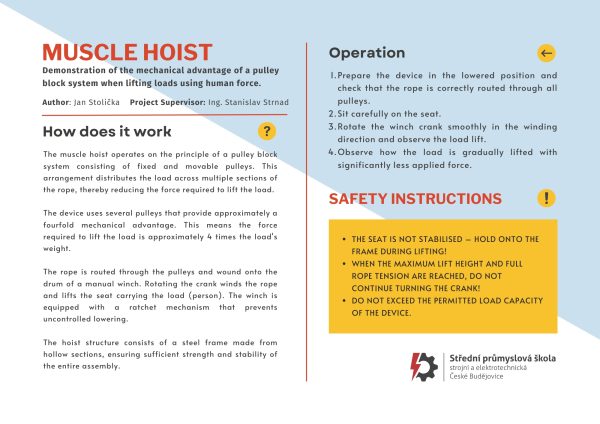
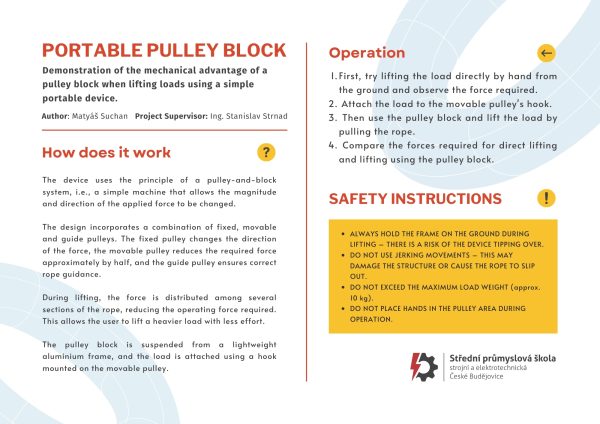
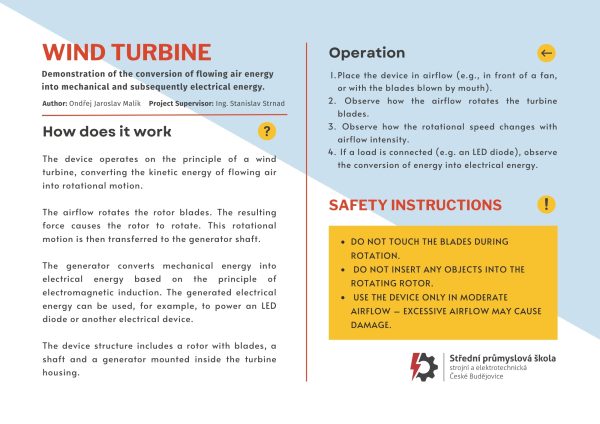
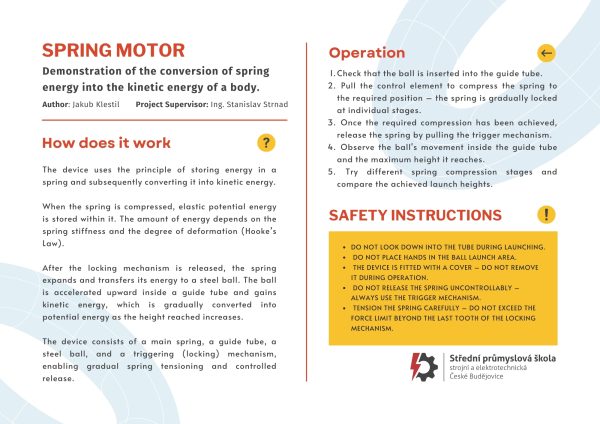
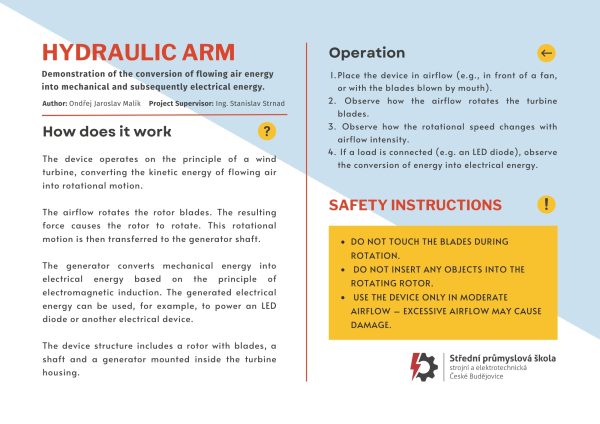
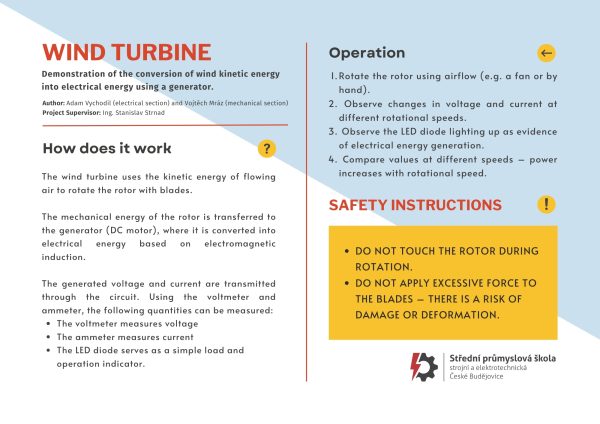
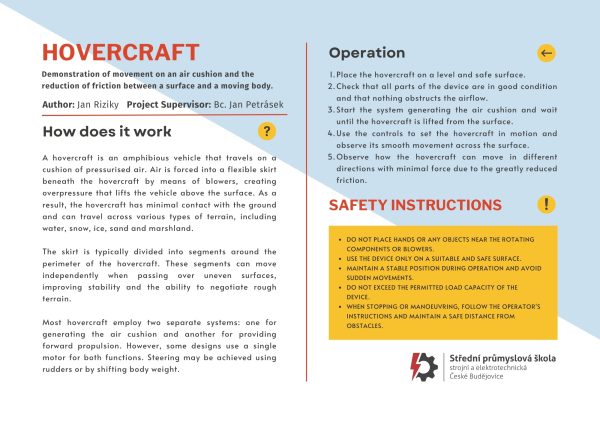
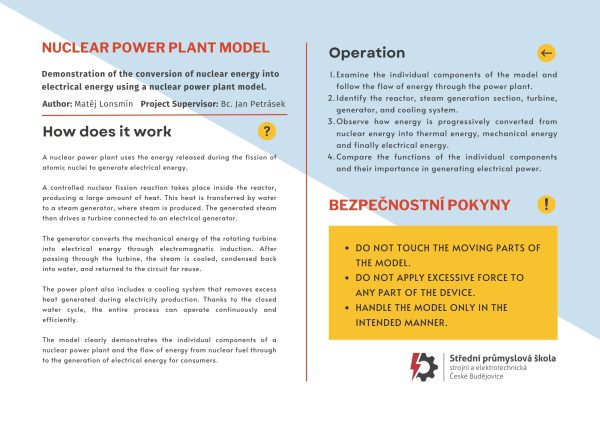
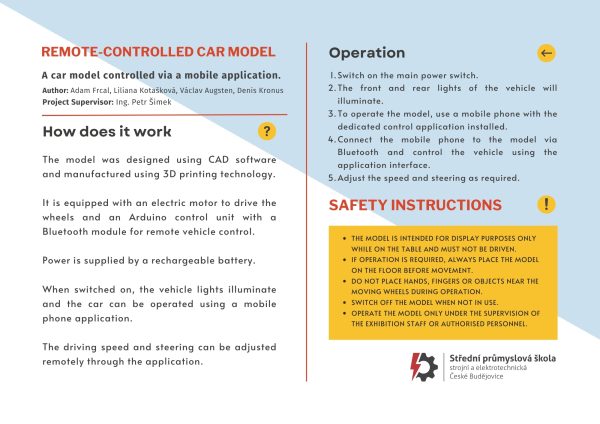
The Energy Exhibition features interactive models and devices designed and built by students, which allow visitors to gain hands-on experience of the basic physical principles relating to energy, power and the transmission of force. As part of the Energy Exhibition, visitors can also explore an interactive adventure book.
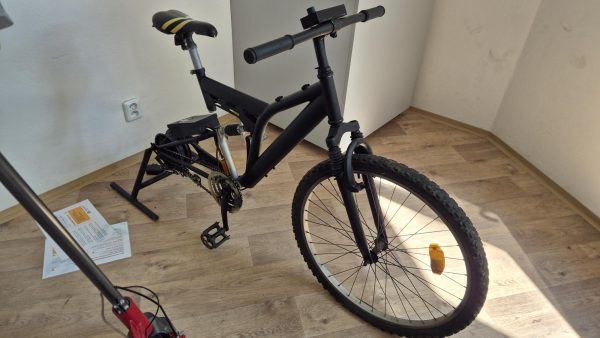
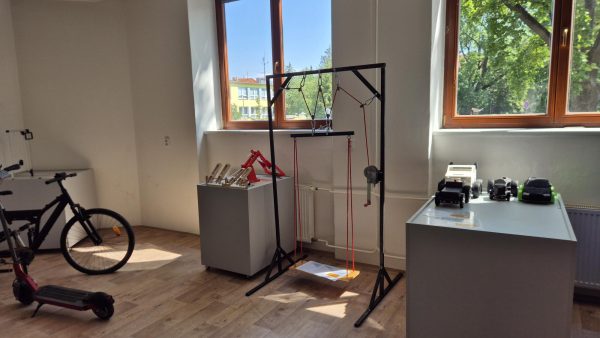
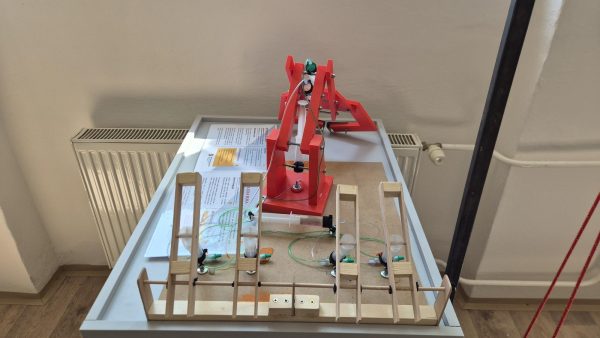
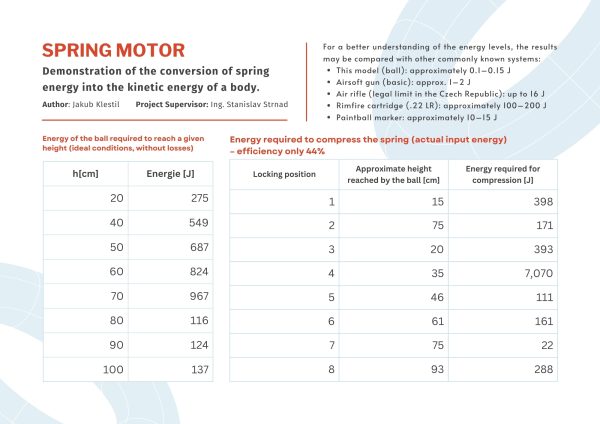
The exhibition includes, for example, pulley systems demonstrating mechanical advantage, a hydraulic arm utilising Pascal’s law, a spring-powered motor illustrating the conversion of potential energy into kinetic energy, wind turbines generating electricity, and an exercise bike for measuring human performance. The exhibition serves as an interactive classroom for primary and secondary school pupils, as well as a space for promoting technical education, energy, electromobility and the sustainable use of energy.
Captions for the exhibits in the Energy Exhibition
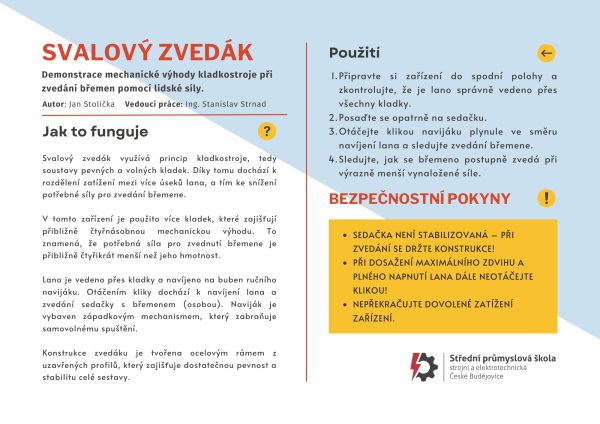
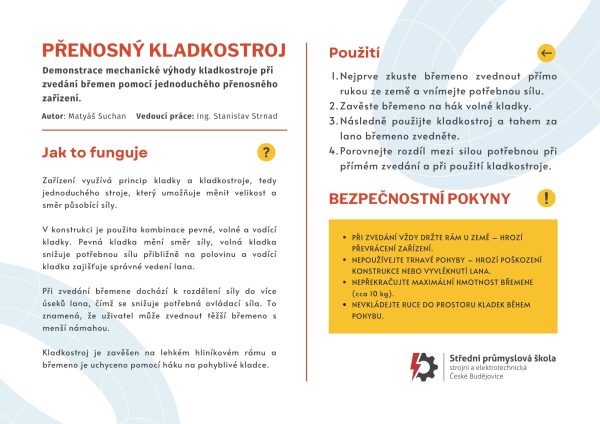
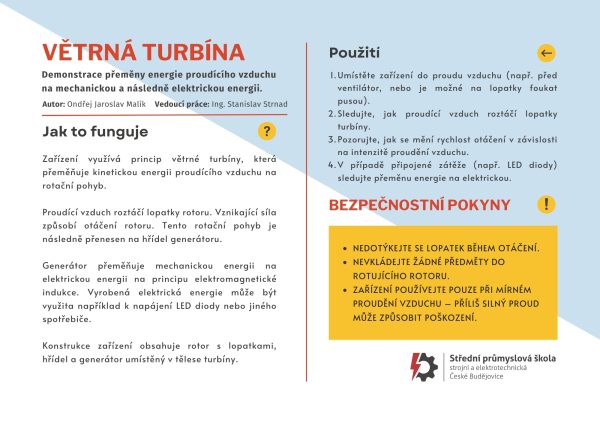
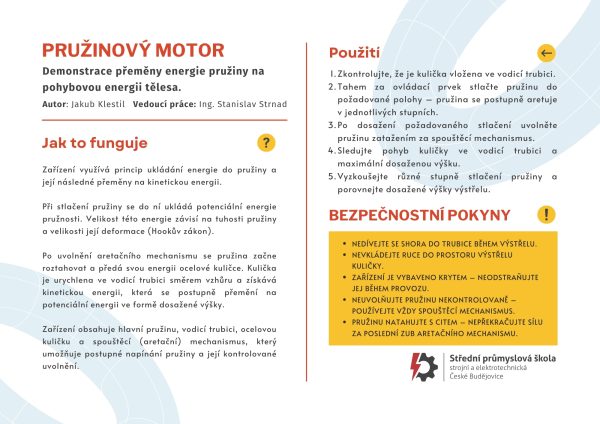
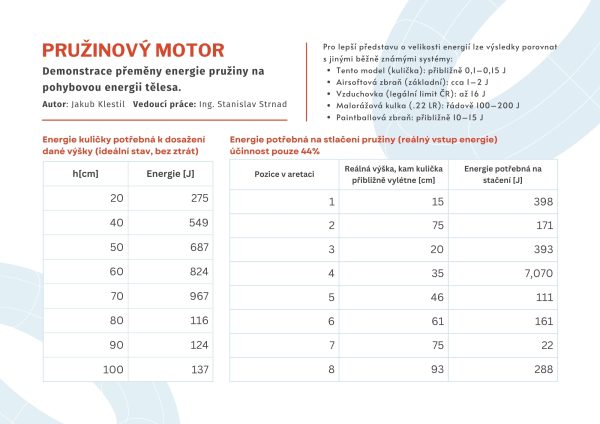
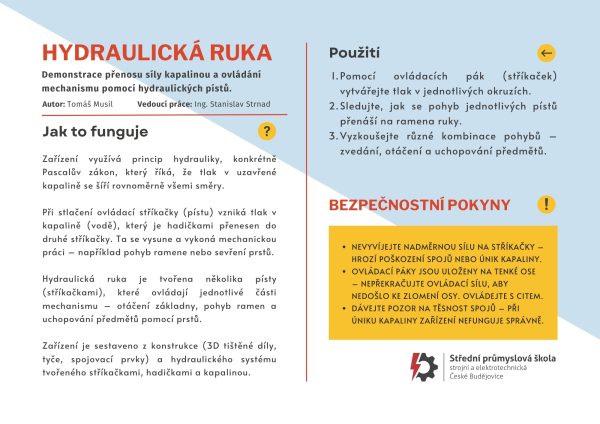
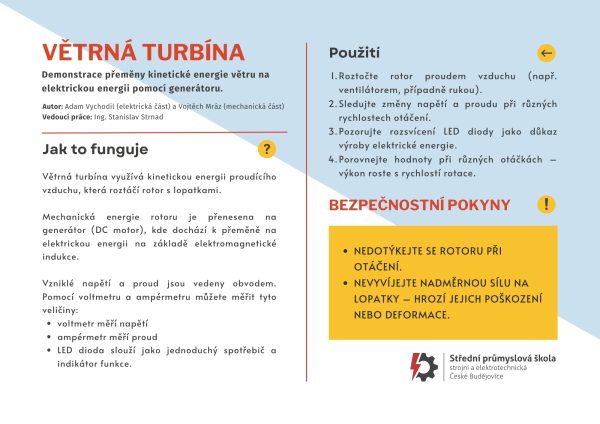
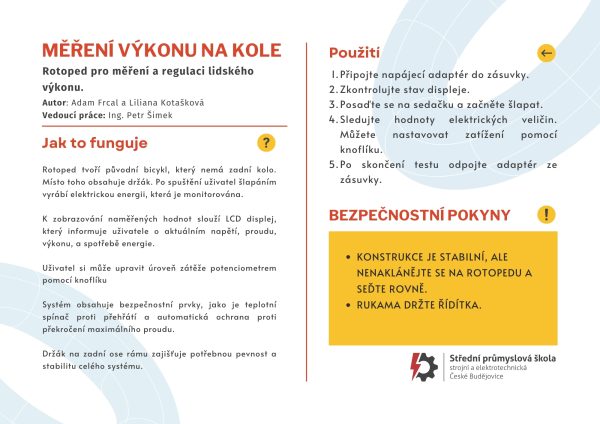
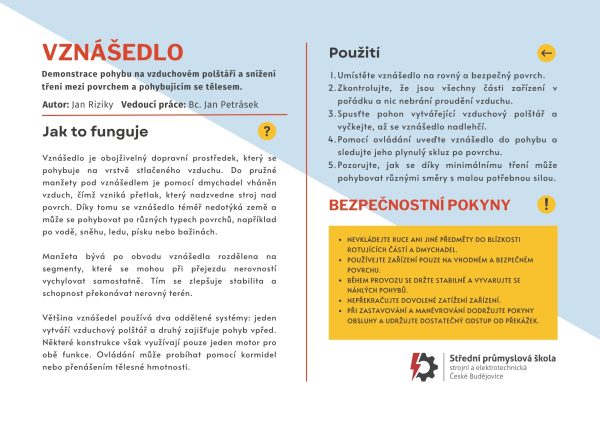
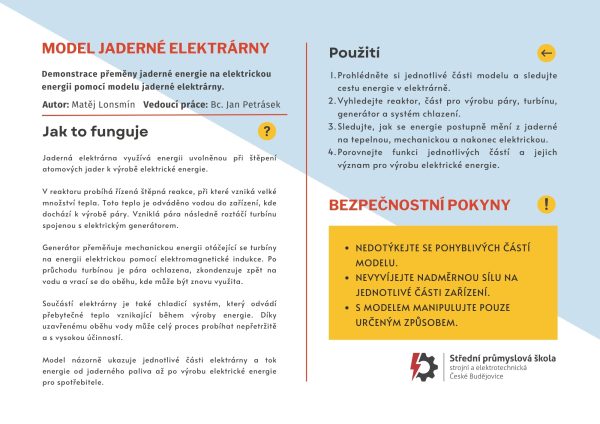
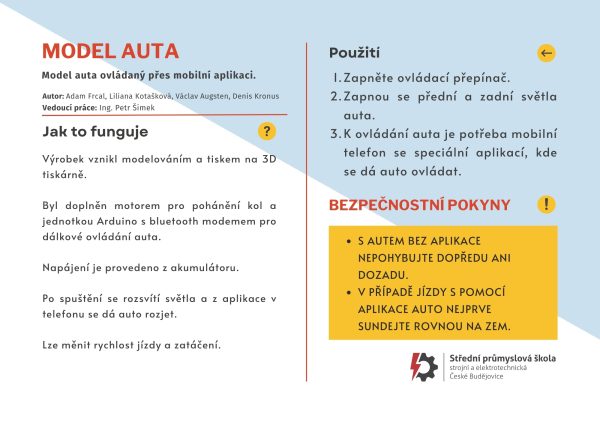
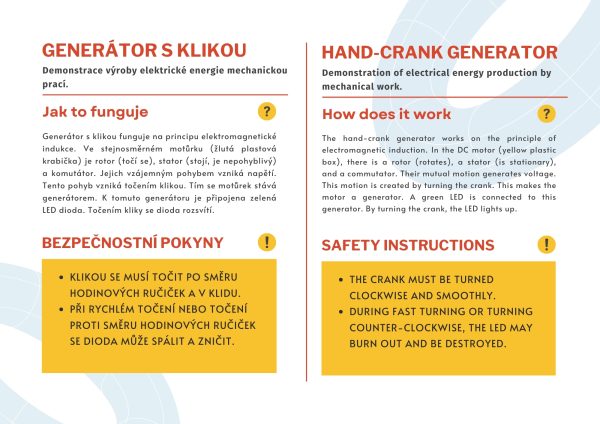
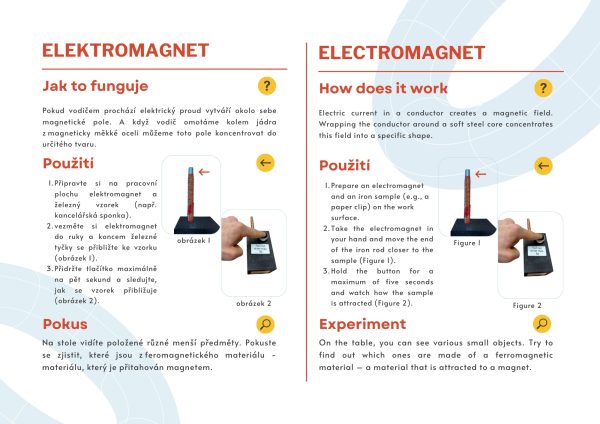
The Energy Exhibit features interactive models and devices designed and built by students, allowing visitors to explore the basic physical principles related to energy, power and the transmission of force through hands-on activities.
The exhibition includes, for example, pulley systems demonstrating mechanical advantage, a hydraulic arm utilising Pascal’s law, a spring-powered motor showing the conversion of potential energy into kinetic energy, wind turbines generating electricity, and an exercise bike for measuring human power output. The exhibition serves as an interactive classroom for primary and secondary school pupils, as well as a space for promoting technical education, energy, electromobility and sustainable energy use.
Exhibition Labels: Energy Exhibition
Results of the School Project of the Norwegian Partner
The students received both theoretical and practical training in the use of thermal cameras. Through the project, they developed an understanding of the relationship between infrared radiation and temperature measurement, and they learned how thermal imaging can be applied in building technology, electrical engineering, energy efficiency, and search-and-rescue operations.
During the practical phase, the students installed the necessary software, connected the thermal cameras, and carried out their own thermal investigations. They documented temperature differences in various objects and environments, analyzed the results, and presented their findings through images, written reports, and oral presentations.
The project also resulted in user guides developed by the students, explaining how the equipment works and how it can be used safely and effectively. This strengthened both their technological understanding and their ability to produce professional technical documentation.
Through reflection and discussion, the students became more aware of how thermography can contribute to sustainable solutions, for example by identifying heat loss and improving energy efficiency. At the same time, they gained insight into ethical issues related to privacy and the responsible use of technology.
Overall evaluation: The project provided students with valuable practical skills, enhanced their digital competence, and improved their understanding of how modern sensor technology can be used to address challenges in energy, environmental, and technical fields.
Resultater fra studentprosjektet
Studentene fikk både teoretisk og praktisk opplæring i bruk av termiske kameraer. Gjennom prosjektet utviklet de en forståelse av sammenhengen mellom infrarød stråling og temperaturmåling, og de lærte hvordan termografi kan anvendes innen bygningsteknologi, elektroteknikk, energieffektivisering og søk- og redningsoperasjoner.
I den praktiske fasen installerte studentene nødvendig programvare, koblet til de termiske kameraene og utførte egne termiske undersøkelser. De dokumenterte temperaturforskjeller på ulike objekter og i ulike omgivelser, analyserte resultatene og presenterte funnene sine gjennom bilder, skriftlige rapporter og muntlige presentasjoner.
Prosjektet resulterte også i brukerveiledninger utarbeidet av studentene, som forklarer hvordan utstyret fungerer og hvordan det kan brukes trygt og effektivt. Dette styrket både deres teknologiske forståelse og deres evne til å utarbeide profesjonell teknisk dokumentasjon.
Gjennom refleksjon og diskusjon ble studentene mer bevisste på hvordan termografi kan bidra til bærekraftige løsninger, for eksempel ved å identifisere varmetap og forbedre energieffektiviteten. Samtidig fikk de innsikt i etiske problemstillinger knyttet til personvern og ansvarlig teknologibruk.
Samlet vurdering: Prosjektet ga studentene verdifulle praktiske ferdigheter, styrket deres digitale kompetanse og forbedret forståelsen av hvordan moderne sensorteknologi kan brukes til å møte utfordringer innen energi, miljø og tekniske fagområder.
WP4.1 Creation of the gamebook Electromobility and Energy | Creation of the gamebook Electromobility and Energy
15 January 2026 – We have completed an interactive gamebook for teaching about electromobility
One of the key outputs of the Erasmus+ project has been an interactive gamebook focusing on electromobility, energy and transport, which has recently been successfully completed. Teachers of IT, English and specialist subjects worked alongside the students on its development. The gamebook was created as part of Work Package 4 and builds on other teaching materials developed within the project. In an entertaining way, it introduces students to the basics of car and electric vehicle design and helps them better understand how they work.
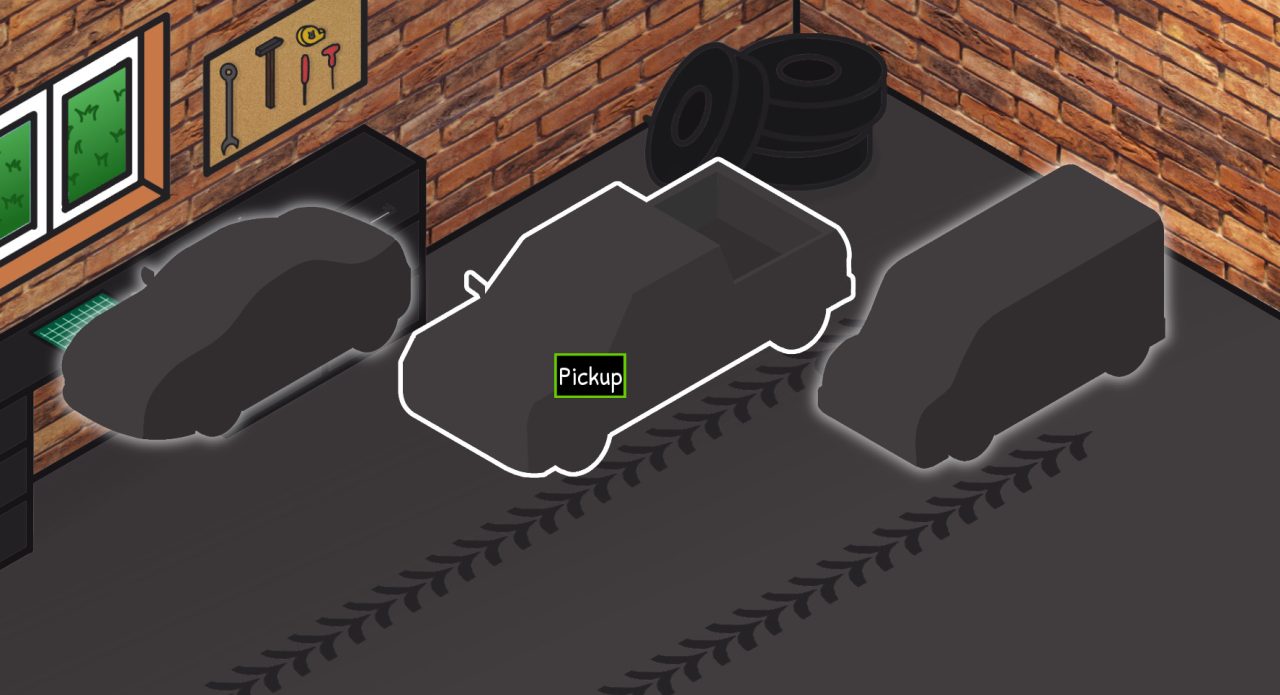
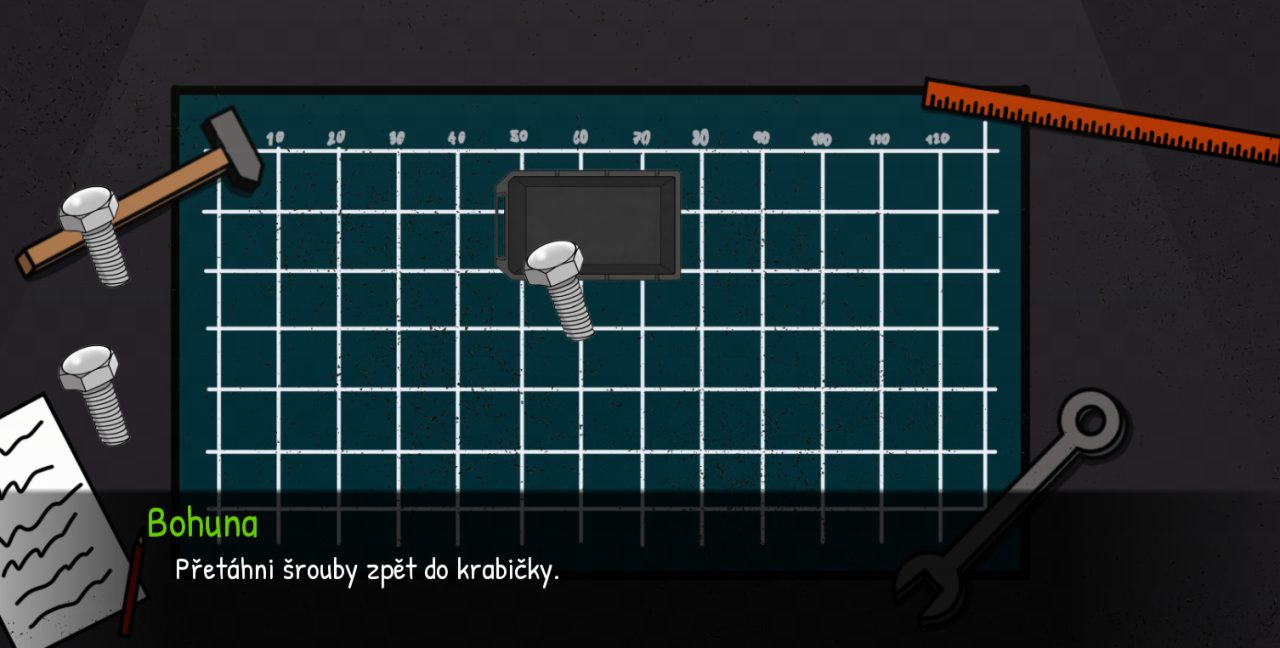
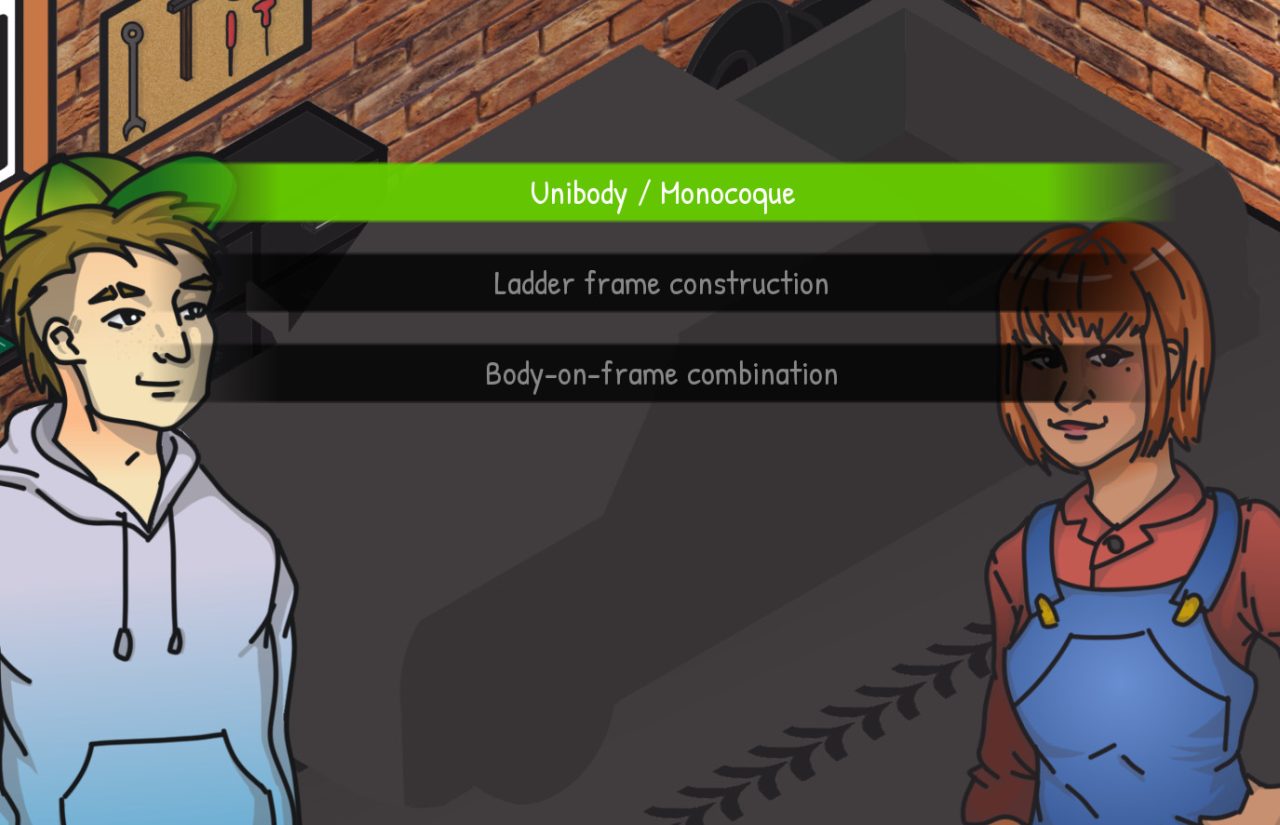
Before the story begins, pupils should first be introduced to the basic parts of a car and their functions. They will then use this knowledge to tackle the game’s main challenge. At the start of the game, they choose one of three types of vehicle, and their aim is to select the correct components so that the resulting car is fit for its intended purpose and fully functional. The gamebook also includes interactive mini-games, which add variety as they progress through the story. Through a combination of narrative, decision-making and gameplay elements, pupils learn to think actively about technical concepts rather than simply memorising information.
Gamebook is a modern teaching aid that can be used both in regular lessons and during project days or school presentations to the public. It helps develop pupils’ digital skills and supports engaging teaching of topics related to electric mobility and sustainable transport. Gamebook forms part of the online resources and the Energy Exhibition. The app can be found on the website gamebook.spssecb.cz.
15 January 2026 – We have completed an interactive gamebook for teaching about electromobility
One of the key outputs of the Erasmus+ project is an interactive gamebook focusing on electromobility, energy and transport, which was recently successfully completed. Teachers of computer science, English and specialist subjects collaborated with students on its development. The gamebook was created as part of Work Package 4 (WP4) and builds on other educational materials developed within the project. In an entertaining way, it introduces pupils to the basics of car and electric vehicle design and helps them better understand how they work.
Before delving into the story itself, pupils should first familiarise themselves with the basic parts of a car and their functions. They will then apply this knowledge to solve the game’s main challenge. At the start of the game, they choose one of three vehicle types, and their aim is to select the correct components so that the resulting car fulfils its intended purpose and is fully functional. The gamebook also includes interactive mini-games that add variety to the story. Thanks to the combination of narrative, decision-making and game elements, students learn to think actively about technical concepts rather than simply memorising information.
The gamebook is a modern teaching tool that can be used in regular lessons, during project days, or for school presentations to the public. It helps develop pupils’ digital skills and supports engaging teaching on topics related to electromobility and sustainable transport. The gamebook will be included in the online resources as well as in the Energy Exhibition.
15. 12. 2025 Gamebook as an educational tool
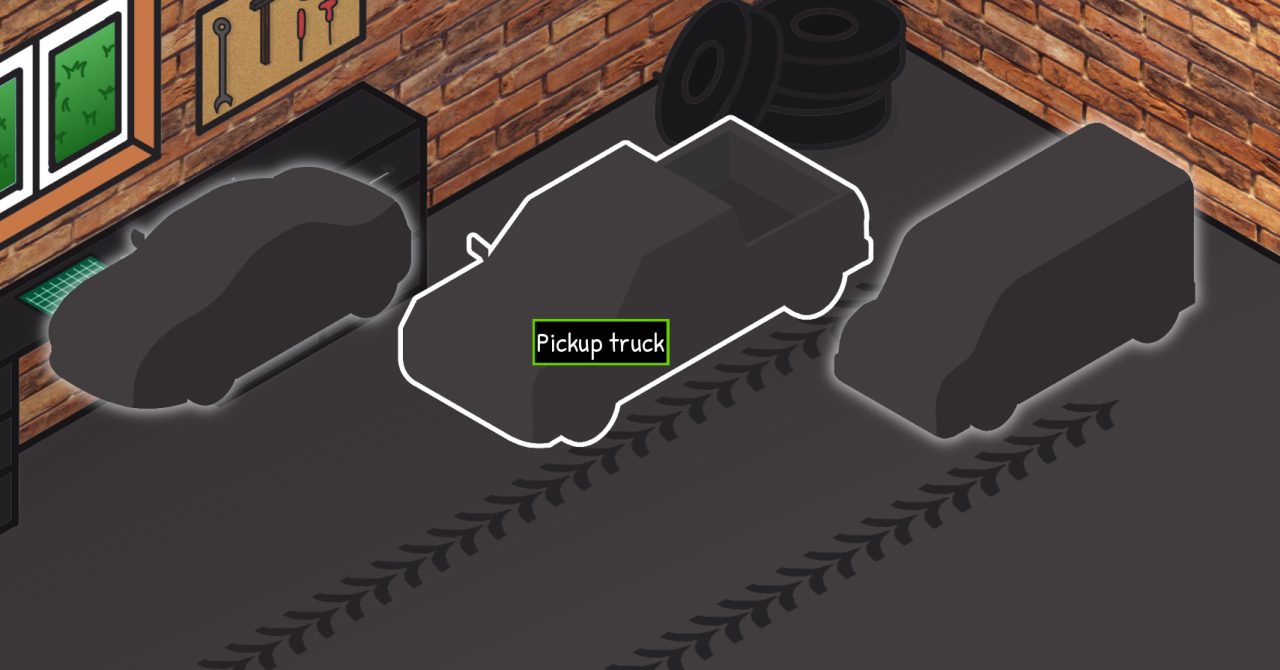
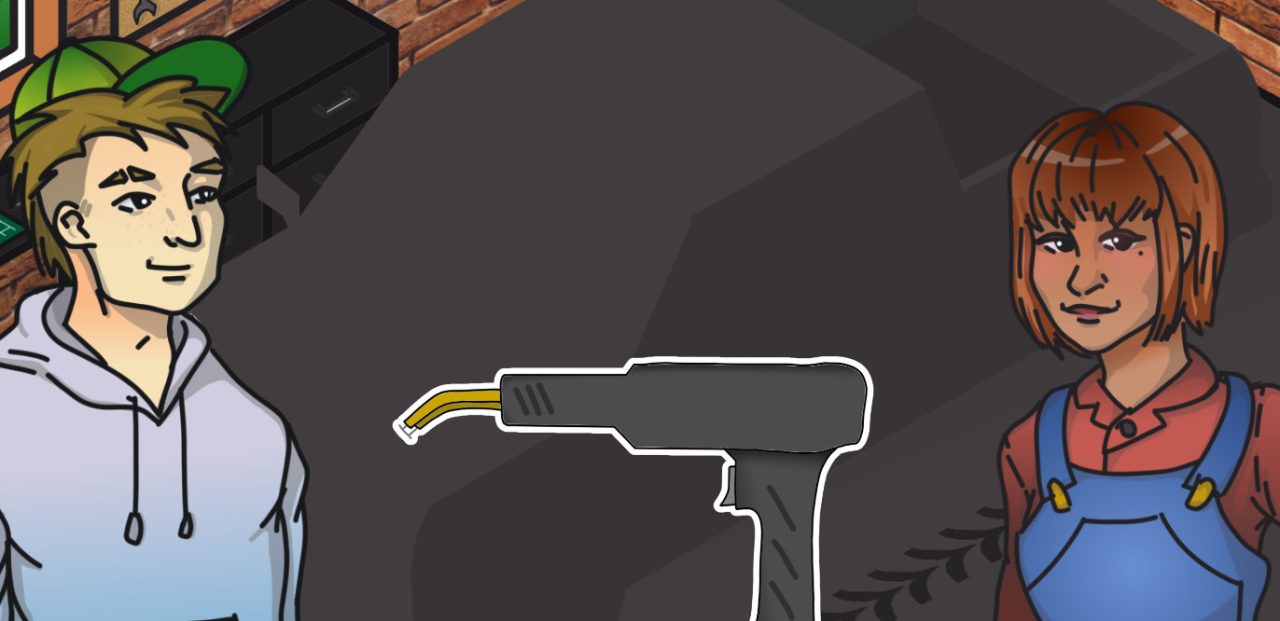
One of the outcomes of the collaboration is the creation of an educational gamebook that contains some of the basic principles of electromobility. The aim of the gamebook is to introduce its players to the field by showing them how the expertise can be applied in a simulated task. Using a non-linear fiction format, the gamebook tasks students/players with the task of building a car through branching decisions and mini-games.
To this end, a group of our students is working on the creation of this teaching material. The students are working on the gamebook as part of a club, and some have even decided to dedicate their year's work to this collaborative project.
Their tasks include:
- choice of the program in which the gamebook will be created
- writing a story script
- creating a branching story diagram with all possible paths
- provision of the necessary audiovisual components
- programming the gamebook
- beta testing of the product
- publishing the final version online to make it easily accessible to all those interested in the field of electromobility
The benefits of the project are many. In addition to producing a final product for the public, the creative process itself also provides our students with the opportunity to learn new skills according to their interests. By working directly together to design and create the gamebook, they can gain extensive experience with a variety of software, platforms, and media. At the same time, they can significantly influence the content of the gamebook at every stage to make it relevant to the target audience - their peers. Last but not least, their skills will contribute to the transfer of knowledge, as they will be able to share their know-how with other students (from our or partner schools).
15. 12. 2025 Gamebook as a learning tool
One of the outputs of the collaboration is the creation of an educational gamebook to cover some of the essential principles of electromobility. The objective of the gamebook is to acquaint the player with the field by showing them how to implement the specialised knowledge in a simulated task. Employing the format of non-linear fiction, the gamebook entrusts the students/players with building a car through a series of decisions and minigames.
To this end, a group of our students has been working on bringing this learning material to life. They are currently working on the gamebook as part of their extracurricular activity, some have even decided to dedicate their year-long project to this joint effort.
Their tasks include:
- selecting an engine to run the gamebook in
- drafting a script of the storyline
- creating a story-chart with all the possible routes
- obtaining the necessary audio-visual components
- programming the gamebook
- beta-testing the product by playing through various paths
- placing the finalised product online for an easy access to anybody interested in the field of electromobility
The benefits of the project are manifold; aside from the final product being brought to life for the public to enjoy, the creative process provides a learning opportunity for our students. By working closely on designing and creating the gamebook, they can gain extensive experience with varied software, platforms, and media. Moreover, they can significantly impact the gamebook's content at every step, making it relevant to the target audience - their peers. Lastly, their skills will contribute to knowledge transfer, as they will be able to share their know-how with other (our or partner school) students.
Funded by the European Union. The views expressed are those of the author and do not necessarily reflect the official position of the European Union or the European Agency for Education and Culture (EACEA). Neither the European Union nor the EACEA accepts responsibility for the views expressed.
Funded by the European Union. Views and opinions expressed are however those of the author(s) only and do not necessarily reflect those of the European Union or the European Education and Culture Executive Agency (EACEA). Neither the European Union nor EACEA can be held responsible for them.
 English
  Czech
Czech