Energetics Hospital České Budějovice
On Friday, April 10, students met at 8:00 a.m. at the school. The aim of the excursion was the Energetics of the Hospital České Budějovice. The pupils walked to the hospital because it is located near the school. The excursion included a tour of the energy facilities of the Hospital České Budějovice. The pupils had the opportunity to see, for example, a transformer, a substation, a diesel backup power supply and backup batteries. After arriving at the hospital, they first saw the main substation. The programme also included an explanation of the total electricity consumption and costs of the hospital. Afterwards, the Chief IT Specialist explained the principle on which the hospital networks work and how they are secured. Afterwards, the pupils were given a short tour of the whole site, where they were shown and explained how the backup security works in case the hospital is disconnected from the main power supply. The return to school was uneventful. At 11:00, dismissal followed and the pupils were free to go to lunch or home.
Sokol Island hydroelectric power plant
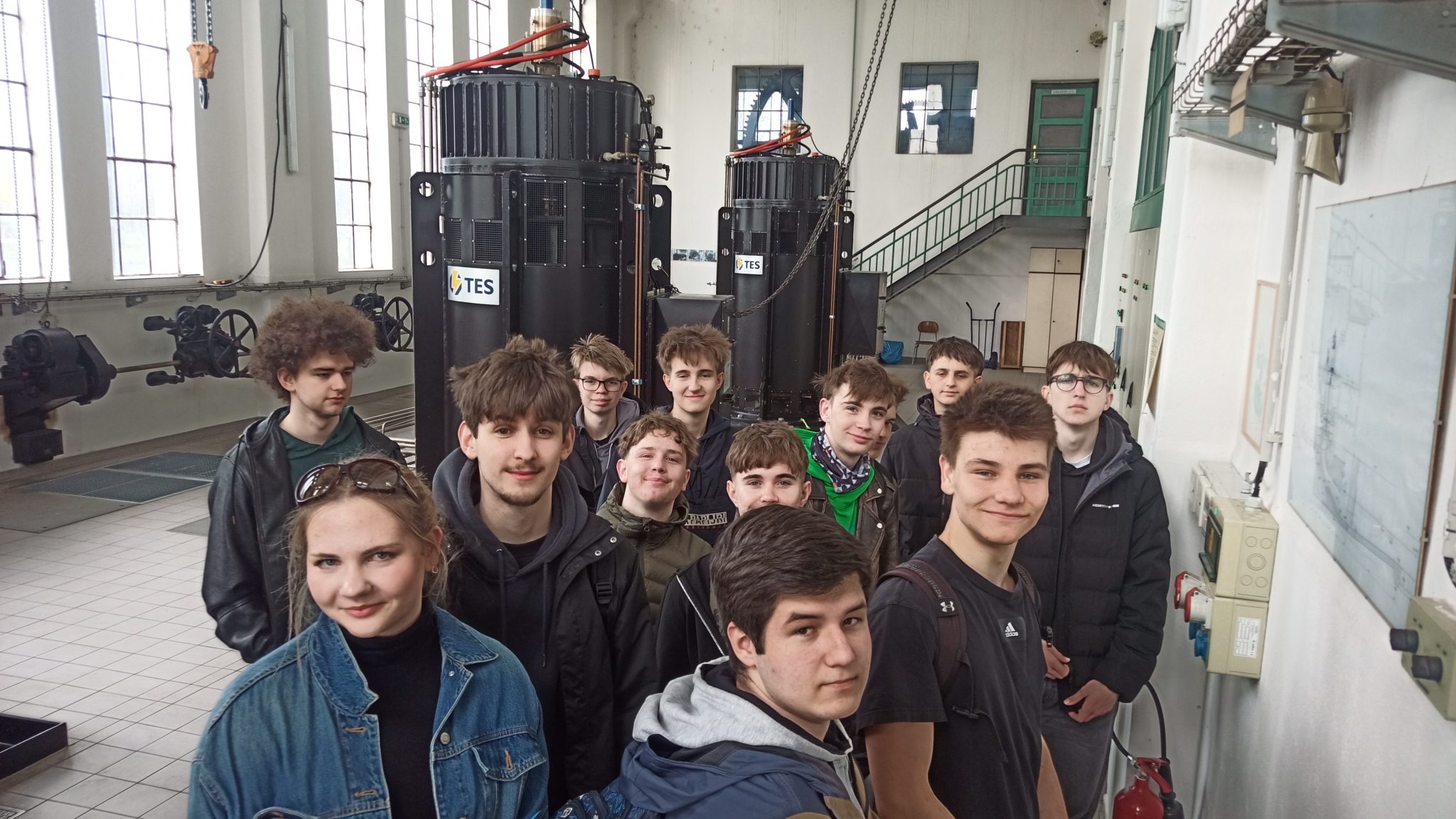
On Monday, April 13, we met again at the school at 8:00 am. The pupils went to Sokolovsky Island, where there is a hydroelectric power station on the banks of the Vltava River. Only one turbine was in operation at the time of arrival, but even that was of interest to the pupils. The head of the power plant explained the principle on which the turbines work and how much electricity they produce. The pupils also learned that a different turbine was used before, which was much less efficient. Thanks to Škoda, which produced new turbines for the power plant, this problem was gradually solved.
Laboratory of Clean Electricity
Next came a trip to the Clean Energy Laboratory. Here, the students were divided into three groups and a video was prepared for each group to highlight the importance of safety when working with electricity. This was followed by a polygon where pupils could try out how to measure the current in substations to identify any problems. They also used a device worth more than CZK 25 000, which was essentially an improved multimeter. At the third station, an explanation was given about the functioning of photovoltaic panels and things related to their distribution.
The return to school took place at 12:00 and the dismissal followed. This time the pupils hurried home, because there was a sleepover at school scheduled for later, for which they wanted to prepare.
(Lukáš Ambrož, 2.EE, modified)



 English
  Czech
Czech